Bluesky, championed by Jack Dorsey, was supposed to be Twitter 2.0. Can it succeed?
Advertisement
Read this article for free:
or
Already have an account? Log in here »
To continue reading, please subscribe:

Digital Subscription
One year of digital access for only $205*
- Enjoy unlimited reading on winnipegfreepress.com
- Read the E-Edition, our digital replica newspaper
- Access News Break, our award-winning app
- Play interactive puzzles
*First annual payment billed as $205.00 + GST for one year. This annual subscription will automatically renew at $233.00 + GST every 52 weeks (10% off the regular annual price of $259.35). Offer available to new and qualified returning subscribers only. Cancel any time.
To continue reading, please subscribe:
Add Free Press access to your Brandon Sun subscription for only an additional
$1 for the first 4 weeks*
- Enjoy unlimited reading on winnipegfreepress.com
- Read the E-Edition, our digital replica newspaper
- Access News Break, our award-winning app
- Play interactive puzzles
*Your next Brandon Sun subscription payment will increase by $1.00 and you will be charged $17.95 plus GST for four weeks. After four weeks, your payment will increase to $24.95 plus GST every four weeks.
Read unlimited articles for free today:
or
Already have an account? Log in here »
Hey there, time traveller!
This article was published 06/06/2023 (1211 days ago), so information in it may no longer be current.
Bluesky, the internet’s hottest members-only spot at the moment, feels a bit like an exclusive club, populated by some Very Online folks, popular Twitter characters, and fed up ex-users of the Elon Musk-owned platform.
Musk is not on it — and this might be part of the appeal for those longing for the way things were before the Tesla billionaire bought Twitter and upended nearly everything about the social network, from rules against harassment to content moderation to its system for verifying prominent users’ identities. It also helps that Bluesky grew out of Twitter — a pet project of former CEO Jack Dorsey, who still sits on its board of directors.
“It was designed to replace Twitter,” said Sol Messing, who worked at Twitter as a data scientist until January and is now associate professor at New York University’s Center for Social Media and Politics. “And you can see it in the way that the the system is designed. It works like Twitter.”
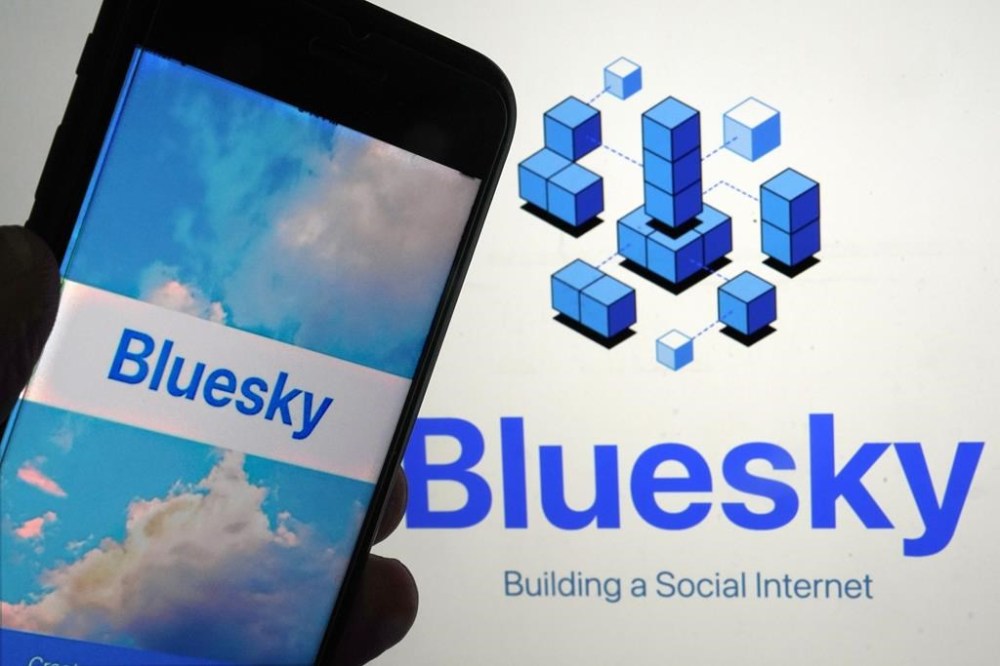
But can Bluesky replace Twitter? Prominent Twitter users such as the model Chrissy Teigen, U.S. Rep. Alexandria Ocasio-Cortez, and Dril, a humorous account that grew out of “weird Twitter” and has been poking fun at Musk since the billionaire took over the platform, are active users. Journalists, academics and politicians — the users who helped make Twitter into the culture’s zeitgeist — are also flocking to the app (if they can score invite codes).
“Really wondering about where the line is to leave the other place,” wrote — or “skeeted” Ocasio-Cortez recently, expressing concern about how Musk’s Twitter will handle next year’s presidential elections. “There’s a line where the harm of unchecked disinfo exceeds the benefits of direct, authentic communication. It’s really sad.”
Bluesky, though, has bigger ambitions than to simply supplant Twitter. Beyond the social network itself, it is building the technical foundation — what it calls “a protocol for public conversation” — that could make social networks work more like email, blogs or phone numbers.
In computer science, protocols are technical rules for processing and transmitting data, shared standards to which everyone agrees to adhere. Without the TCP/IP protocol, for instance, we wouldn’t have the internet.
When you call someone on the phone, it doesn’t matter if they use Verizon or AT&T or Cricket Wireless — as long as their phone has service, they can pick up and talk to you. But on Facebook, or TikTok, or Twitter, you can’t cross over to another social network to leave a comment on someone’s account. Twitter users must stay on Twitter and TikTok users must stay on TikTok if they want to interact with accounts on those services.
There’s no crossing over — no interoperability. Big Tech companies have largely built moats around their online properties, which helps serve their advertising-focused business models. Your Twitter friends are your Twitter friends, and if you move on to a new social network, you can’t easily bring them with you — if you can bring them at all. Bluesky is trying to reimagine all this. Moonshot or delusion, what is clear is that invites to the Bluesky social networking app are hot commodity, some even offered on eBay for $100 or more.
But as everyone — including Musk, who paid $44 billon for Twitter — knows, a social network’s value is not simply in the technology behind it. It is in the people — the network of people who use and contribute to a platform. And getting people, especially people who aren’t teenagers, to move to a new social network, is quite a challenge. Just ask Mastodon, Truth Social or any other alternative network that’s sprung up more recently.
“We are all active on Twitter because we are all active on Twitter. And so it’s very, very difficult to to migrate to a different social media platform once you have thousands of followers on Twitter,” said Messing, who also worked on data science at Facebook and the Pew Research Center.
While it seems unlikely that Bluesky could replace Twitter as a global information conduit any time soon, it is more intuitive and easy to use than 7-year-old Mastodon, which not long ago was touted as a possible Twitter replacement but which many find befuddlingly complicated and lacking in important features. While it looks and feels similar to Twitter, Bluesky lacks many of the features Twitter has built out over the years. There is no way to send direct messages, for instance, and there is no verification system.
For now, Bluesky is like the back room at a house party where the cool kids and misfits found refuge from the increasingly rowdy rager out front — at least until it, too, is enveloped by chaos. Fewer than 100,000 people are on it right now. That’s by design.
“Once you open it up and allow different forms of content moderation to dominate, it’s going to be a very different platform,” Messing said.
Bluesky’s approach to content moderation is similar to its approach to algorithms to decide what users see. That is, giving users a choice in what they see. The app launched with a chronological feed, meaning you see posts in the order they are posted in. Other social platforms like TikTok, Facebook, Instagram or Twitter use secretive algorithms to show you what you’re more likely to be interested in. Bluesky also has “custom feeds,” which let users pick the algorithm that controls what they see.
“Imagine you want your timeline to only be posts from your mutuals, or only posts that have cat photos, or only posts related to sports — you can simply pick your feed of choice from an open marketplace,” CEO Jay Graber wrote in a recent blog post. Bluesky did not respond to a request for comment.

It’s an open question whether Bluesky will soar or remain a pie in the sky. But some of Twitter’s earliest supporters are cautiously optimistic. After all, Twitter started out similarly small, and along the way both its creators and users learned a lot.
“There’s a whole community of people doing these experiments at these projects that are all learning from each other and sharing things back and forth and with the overall hope and idea that we cannot make the same mistakes we made last time,” said Evan “Rabble” Henshaw-Plath, who worked on Twitter predecessor Odeo with Dorsey and is now CEO of Planetary.Social, another decentralized social network.
“In some ways, we democratized the media. We changed the world. We gave everyone a voice. But we didn’t figure out what to do with that,” he said. “We didn’t give ourselves great tools to handle it.”
Could Bluesky be the Twitter do-over it was set up to be?
“I would like to see these guys figure out a smart way to maintain data portability, without losing the ability to essentially moderate content,” Henshaw-Plath said. “And yeah, that might be impossible, but that’s what I would ultimately like to see.”
Related Articles
Elon Musk imposes daily limits on reading posts on Twitter

Advertisement Advertise With Us
Advertisement Advertise With Us