As conservatives target schools, LGBTQ+ kids and students of color feel less safe
Advertisement
Read this article for free:
or
Already have an account? Log in here »
To continue reading, please subscribe:
Digital Subscription
One year of digital access for only $1.44 a week*
- Enjoy unlimited reading on winnipegfreepress.com
- Read the E-Edition, our digital replica newspaper
- Access News Break, our award-winning app
- Play interactive puzzles
*Billed as $5.77 plus GST every four weeks. After 52 weeks, price increases to the regular rate of $19.95 plus GST every four weeks. Offer available to new and qualified returning subscribers only. Cancel any time.
To continue reading, please subscribe:
Add Free Press access to your Brandon Sun subscription for only an additional
$1 for the first 4 weeks*
- Enjoy unlimited reading on winnipegfreepress.com
- Read the E-Edition, our digital replica newspaper
- Access News Break, our award-winning app
- Play interactive puzzles
*Your next Brandon Sun subscription payment will increase by $1.00 and you will be charged $17.95 plus GST for four weeks. After four weeks, your payment will increase to $24.95 plus GST every four weeks.
Read unlimited articles for free today:
or
Already have an account? Log in here »
Hey there, time traveller!
This article was published 06/06/2023 (1229 days ago), so information in it may no longer be current.
NOLENSVILLE, Tenn. (AP) — The first encounter with racism that Harmony Kennedy can remember came in elementary school. On a playground, a girl picked up a leaf and said she wanted to “clean the dirt” from Harmony’s skin.
In sixth grade, a boy dropped trash on the floor and told her to pick it up, “because you’re a slave.” She was stunned — no one had ever said anything like that to her before.
As protests for racial justice broke out in 2020, white students at her Tennessee high school kneeled in the hallways and chanted, “Black lives matter!” in mocking tones. As she saw the students receive light punishments, she grew increasingly frustrated.
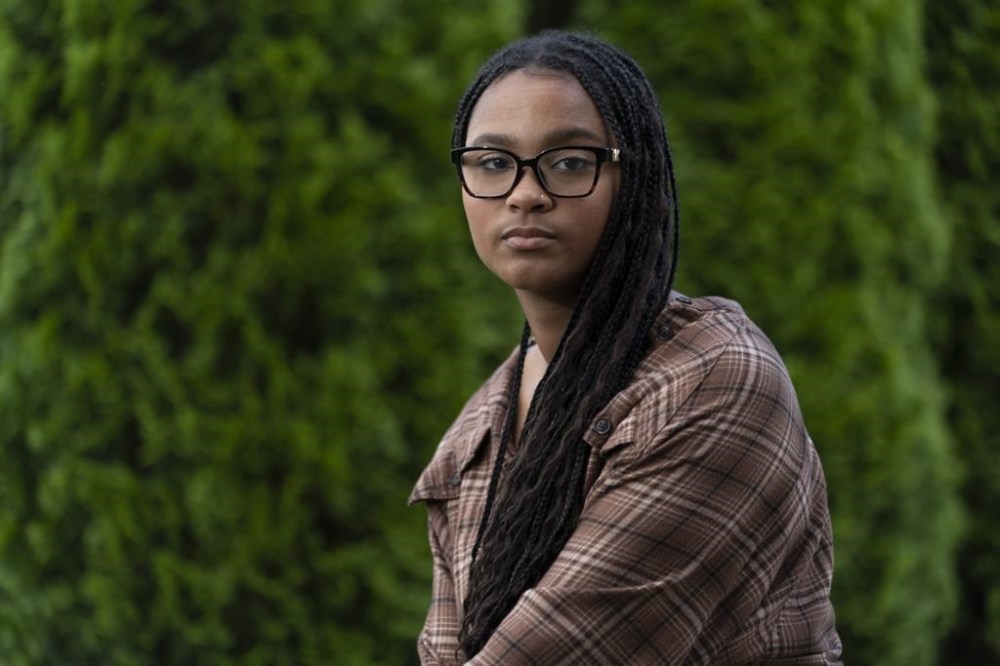
So when Tennessee began passing legislation that could limit the discussion and teaching of Black history, gender identity and race in the classroom, to Harmony, it felt like a gut punch — as if the adults were signaling this kind of ignorant behavior was acceptable. The law was broad, but to her, the potential impact was crushing.
“When I heard they were removing African American history, banning LGBTQ, I almost started crying,” said Harmony, 16. “We’re not doing anything to anybody. Why do they care what we personally prefer, or what we look like?”
As conservative politicians and activists push for limits on discussions of race, gender and sexuality, some students say the measures targeting aspects of their identity have made them less welcome in American schools — the one place all kids are supposed to feel safe.
Some of the new restrictions have been championed by conservative state leaders and legislatures, including Florida Gov. Ron DeSantis, who say they are necessary to counter liberal influence in schools. Others have been pushed by local activists or school boards arguing teachers need more oversight to ensure classroom materials are appropriate.
Books have been pulled from libraries. Some schools have insisted on using the names transgender students had before they transitioned. And teachers wary of breaking new rules have shied from discussions related to race, gender and other politically sensitive topics, even as students say they desperately need to see their lived experiences reflected in the classroom.
Among them are a transgender student at a Pennsylvania school where teachers are directed to use students’ birth names, a bisexual student in Florida who sensed a withdrawal of adult support, and Harmony, a Black student outside Nashville alarmed by efforts to restrict lessons on Black history.
For these and other students of color and LGBTQ+ kids, it can feel like their very existence is being rejected.
___
‘NEUTRALITY’ POLICY MAKES SCHOOL FEEL LESS SAFE
In late 2020, during the pandemic school closures, Leo Burchell started using different pronouns, trying on new clothes and shorter hair. The changes felt right.
At school outside Philadelphia, Leo started telling teachers about using a different name and they/them pronouns, and the teachers were immediately accepting. A shift to using he/him pronouns followed.
“I changed my name to Leo, and for a while it was tough,” he said. “I told some of my friends. I told the people close to me, but I wasn’t ready to come out to everybody yet … and I had the space to do that in my own time.”
To tell his parents, Leo shared a poem he had written about his transition. He worried it would be hard for them, as parents who had always identified as “girl parents” to three daughters. His mom, dad, older and twin sister were all supportive.
Then, over the last year, the Central Bucks School District’s board barred staff from using students’ chosen names or pronouns without parental permission.
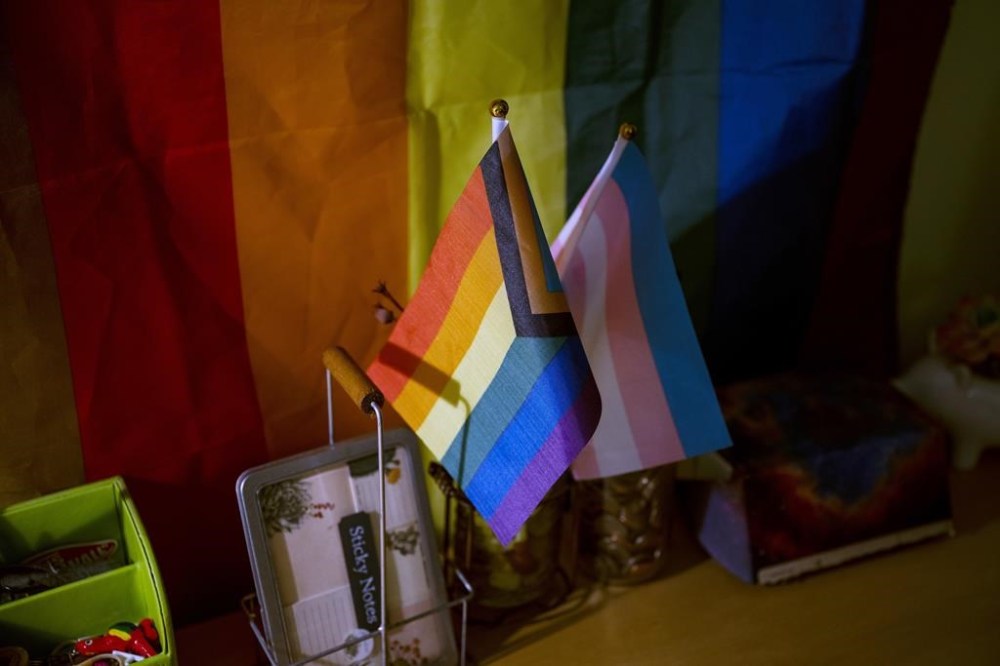
The board passed what it called a “neutrality” policy that bars social and political advocacy in classrooms — a measure opponents have seen as targeting Pride flags and other symbols teachers use to signal support for LGBTQ+ students. Reviews of the appropriateness of books have mostly targeted LGBTQ+ literature.
Each step felt like chipping away at the spaces that made Leo feel safe enough to explore his gender identity.
Across the district, parents and students told the board stories of slurs, hate speech and sometimes violence directed toward transgender children. But other adults pressed forward in their effort to restrict inclusion. During one board meeting when a transgender student was speaking, rather than listening, a group of parents whispered to each other. One adult audibly asked: “Is that a girl?”
One man told the school board transgender people posed a risk of violence in bathrooms. Leo expected another adult in the room to interrupt what felt to him like hate speech. No one did.
So at the next board meeting, Leo spoke up. “Attacking students based on who they are or who they love is wrong,” he said. Leo has spoken regularly at meetings since.
Leo worries about what school will be like for younger transgender students.
“I don’t want my friends to be misgendered and deadnamed every single day just because they don’t want to come out to their parents,” Leo said. “It really just breaks my heart to know that some of my friends, you know, might not want to go to school anymore.”
___
NEW FLORIDA LAWS ‘TOOK THE AIR OUT OF ME’
Jack Fitzgerald, a high school student in Broward County, Florida, came out to friends by accident at first.
At a book club meeting, he blurted out: “I don’t really like romance books unless they’re gay.” He hadn’t told anyone he was bisexual, but it came out easily in a place where he felt comfortable and safe.
Later, he would come out to his mother while watching television.
“So, I am bi,” he told her.
“And why are you telling me this?” she said. A lifelong conservative, his mother told him she had long known about his sexuality. It was not a problem.
The confidence and relief he felt led Jack to start his school’s gender and sexuality alliance club. Last year, as a junior, he led a school walkout to protest a new law that banned instruction on sexual orientation and gender identity for kindergarten to third grade. The law, part of the anti-LGBTQ+ legislation pushed by DeSantis, was dubbed “Don’t Say Gay” by critics and recently expanded to encompass all grades.
Jack was surprised by two things. Most students initially knew little about the bill. And once they learned about it, support for the walkout was overwhelming.
Teachers have been more cautious.
Jack remembers talking to his debate teacher about covering some controversial topics. “You have to realize, … teachers have families,” he told Jack, who took it as a comment on teachers worried about losing their jobs.
In another class, Jack recalls an environmental teacher told the class she could not answer a question during a discussion on climate change or she would be seen as “too woke.”
There also was a school board member, Debra Hixon, who won Jack’s admiration when she spoke last year at a town hall event for teens. Hixon, who became widely known after her husband was killed in the 2018 Parkland school shooting, expressed support for LGBTQ+ students.
“I think I even told my mom. I was like, ‘Oh, we’ve got to vote for her next time because she seems so impassioned, and she genuinely came across like she cared,’” he said.
When Jack asked her in April how the school district would react to the new laws, Hixon said they were going to comply with the law.
The response shocked Jack. He thought back to how the district had stood up to the DeSantis administration over COVID-19 policies like mask mandates. When it came to protecting LGBTQ+ students, it seemed, there was no appetite for defiance.
“They didn’t even try to act like they were going to try, you know?” he said. “And it was so disappointing. It really took the air out of me.”
Hixon said she felt badly that Jack had the impression she was not defending LGBTQ+ students.
“We have a lot of new laws to navigate, and I am still processing what they mean for our district, so I don’t want to overstep and say something that is incorrect or inappropriate,” she said. “I am more guarded with my responses, but I promise I will continue to defend our students to ensure they feel safe and welcome in our schools.”
___
AFTER SPEAKING UP, SOME STUDENTS FACE BACKLASH
In Harmony’s freshman-year English class, a boy started playing with his mask and joked, “I can’t breathe, just like George Floyd,” Harmony recalled.
“I was really upset. And I called him out on it. And I was like, ‘Are you kidding me? Someone died,'” she said.
She told her teacher, who said she was sorry it happened but there was not much she could do. Nothing happened to the boy, Harmony said.
To be a Black student in this environment, and to see efforts to minimize the teaching of Black history, Harmony said, is a reminder of why it’s important that a full version of history is taught. A law passed by Tennessee in 2021 banned schools from teaching several concepts on race and racism, leading many teachers to avoid discussions related to race.
“If people are taking this out of schools, it’s making the ignorance go on, because they’re not understanding the pain and agony we have to go through,” she said.
The incident led Harmony to join the Forward Club, which works to promote cultural and racial inclusion at her predominantly white high school. The club’s members come from a diverse array of backgrounds — including the children of some adults who have disparaged the group.
At times, students who speak out against new policies have been targeted for harassment. In Williamson County, Tennessee, where Harmony goes to school, a political action committee accused another high school’s Black student union of promoting segregation. The PAC posted the time and place of the student group’s meeting on social media. Elsewhere, trans and nonbinary students who have spoken up about bullying have faced only more insults on social media.
For some, the hostility can be exhausting. Milana Kumar, a rising senior in Collierville, Tennessee, who is genderqueer, is comfortable with their identity among friends. But it’s not a conversation they bring up at school, where they said teachers and other students often do not respect chosen pronouns.
“I’ve never tried to navigate that, I think just as a response to save myself from a lot of hurt that would happen,” Milana said.
Recently, Tennessee passed a bill that would protect teachers from discipline or other consequences if they misgender their students. At the time, Milana was at the Capitol testifying on other legislation. She thought about how routine a day it was.
“Taking away a whole group of people’s right to be who they are, that’s just like, this is a typical day. I think I was more scared that that was a reality than I was sad about the bill itself.”
Attending predominantly white schools means Harmony has had to go out of her way to learn about Black culture and history — often outside of school. That has shaped where she wants to go next. She’d like to attend a historically Black college and pledge a Black sorority.
What Harmony wants, ultimately, is to be able to go to school like any other teenager and focus on learning. To go to a football game without hearing racial slurs. To stand up for herself without being seen as an aggressor.
Meantime, it’s something she’ll continue to speak up for.
“My sister is going to be an incoming freshman this year, and I want her to have a safe learning environment where she doesn’t have to really deal with all the ignorance and things,” she said. “I want her to be able to enjoy high school.”
___
The Associated Press’ reporting around issues of race and ethnicity is supported in part by the Howard Hughes Medical Institute’s Department of Science Education. The AP is solely responsible for all content.