Drawing out meaning
Anonymous Shanghai cartoonist’s dreamlike, wordless sketches pack emotional wallop
Advertisement
Read this article for free:
or
Already have an account? Log in here »
To continue reading, please subscribe:
Digital Subscription
One year of digital access for only $1.44 a week*
- Enjoy unlimited reading on winnipegfreepress.com
- Read the E-Edition, our digital replica newspaper
- Access News Break, our award-winning app
- Play interactive puzzles
*Billed as $5.77 plus GST every four weeks. After 52 weeks, price increases to the regular rate of $19.95 plus GST every four weeks. Offer available to new and qualified returning subscribers only. Cancel any time.
To continue reading, please subscribe:
Add Free Press access to your Brandon Sun subscription for only an additional
$1 for the first 4 weeks*
- Enjoy unlimited reading on winnipegfreepress.com
- Read the E-Edition, our digital replica newspaper
- Access News Break, our award-winning app
- Play interactive puzzles
*Your next Brandon Sun subscription payment will increase by $1.00 and you will be charged $17.95 plus GST for four weeks. After four weeks, your payment will increase to $24.95 plus GST every four weeks.
Read unlimited articles for free today:
or
Already have an account? Log in here »
Hey there, time traveller!
This article was published 10/06/2023 (1232 days ago), so information in it may no longer be current.
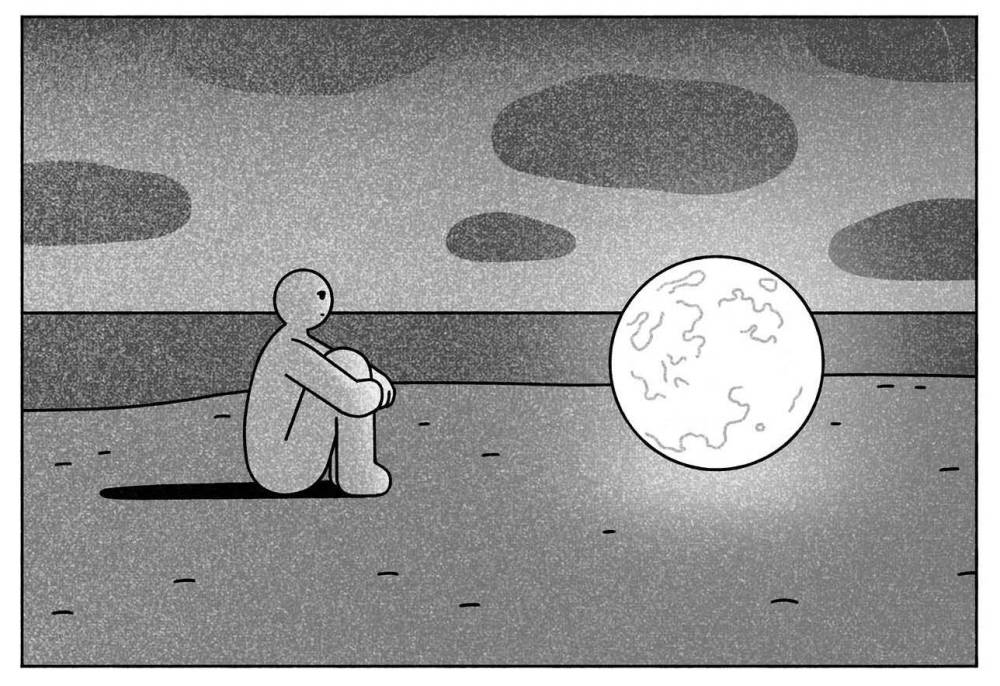
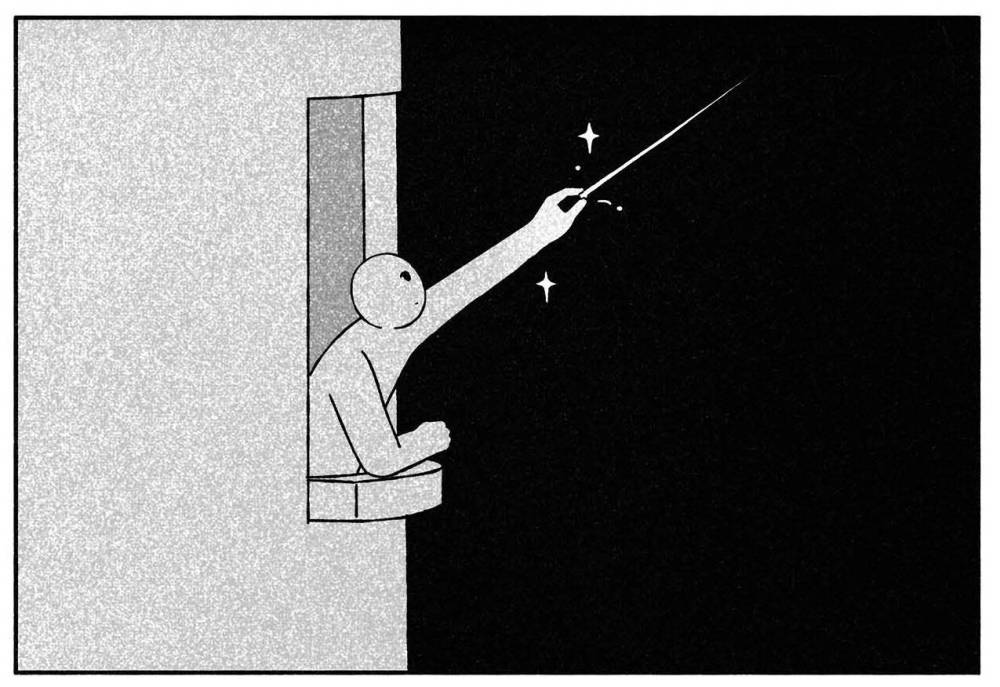
A recurring character in 20KM/H, a new collection from Shanghai-based underground cartoonist Woshibai, best resembles a pictogram seen on a public restroom door, but the situations he finds himself in are all too human. In this book of minimalist, wordless vignettes, the artist combines simple lines with complicated anxieties as characters navigate seemingly mundane situations, often with a surreal twist.
The dreamlike atmosphere presented here extends to the reality in which the stories take place, and the physicality of its characters. The sphere-headed protagonist in many stories is given uncanny, expressive eyes, but possesses no other distinguishing features, perhaps as reflection of the artist himself.
“Woshibai” is a pseudonym, and the artist’s true identity has remained unknown throughout his career thus far, as though he were a Chinese comix Banksy armed with the same incisive wit and scathing social commentary. The story Carving in particular echoes the notorious British artist’s attitude towards art and labour — Woshibai’s stick-figure sculpts a clone of himself out of a marble block, only for the newly minted clone to repeat the process until a new one emerges, ad nauseum.
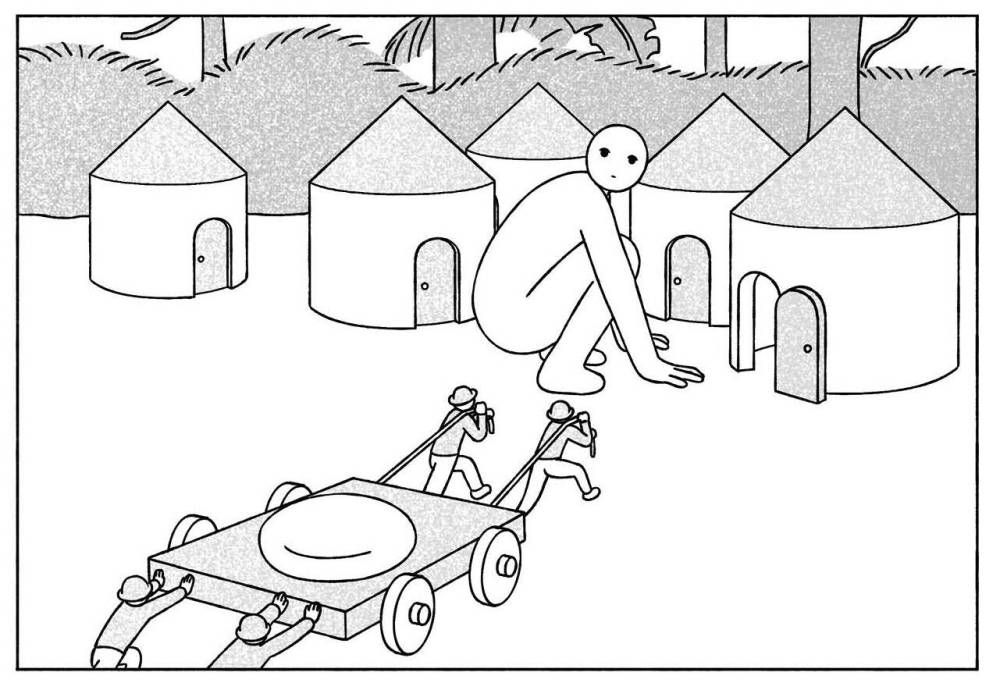
Woshibai’s eye for panels and framing also results in an uncanny, not-quite-comics format — panels are generally presented two to a page, but each drawing exists independently in what it conveys, instead of foregrounding its place in a sequence, as would be the case in a typical comic. A similar uncanniness ensues through his use of repetition and replication to evoke a sense of both solidarity and alienation in a single drawing. In the book’s very first story, Bridge, a stick-figure character on the bridge is rescued from an assembly line of other, similar figures by a rowing crew full of more identical figures. But where did they come from? What makes them different from the others? The story ends, and the fate of all involved remains ominously unknown, even though they are all now literally in the same boat.
Throughout 20KM/H, characters like these both revel and toil in their anonymity, although not all of them are as generic-looking — some are rendered with slightly more detail, featuring an occasional baseball cap or a simple hairstyle. Though these flourishes are just enough to signify difference, the book’s wordlessness still works to obscure their identity and their motivations.
To further challenge the reader’s interpretation, the artist also exploits scale and perspective to throw their assumptions even further off-balance, with Zoo and Danger Crossing being particularly good examples here. Generally, the result of a Woshibai story elicits either a chuckle or genuine devastation, and the likelihood of either is not apparent until the very last panel — or sometimes not at all.
Such narrative tricks mean the stories here fall somewhere between a riddle in pictures and an airport safety pamphlet, the intent of the latter being much more obvious than the type of puzzle presented in the former. Since absurdity makes up a large part of this collection, these narrative puzzles are not solvable per se, but not all of them are tongue-in-cheek either, causing the few, more heartfelt vignettes to evoke an even bigger emotional impact. In Roped In, a baseball-cap clad youth seeks a partner for a string game of Cat’s Cradle. A willing participant happens to be a stranger on a bridge who is dangerously contemplating their existence, perhaps just wishing for a random human connection.

Similarly, 20KM/H invites the reader to connect by doing the work to unpack its wordless stories, often with a human-looking character as their only point of reference in the narrative. It’s also no accident that Woshibai’s characters are rarely rewarded for doing what’s logically expected, while any fleeting moments of agency and joy derive from observing one’s surroundings instead of waiting to be told what they see.
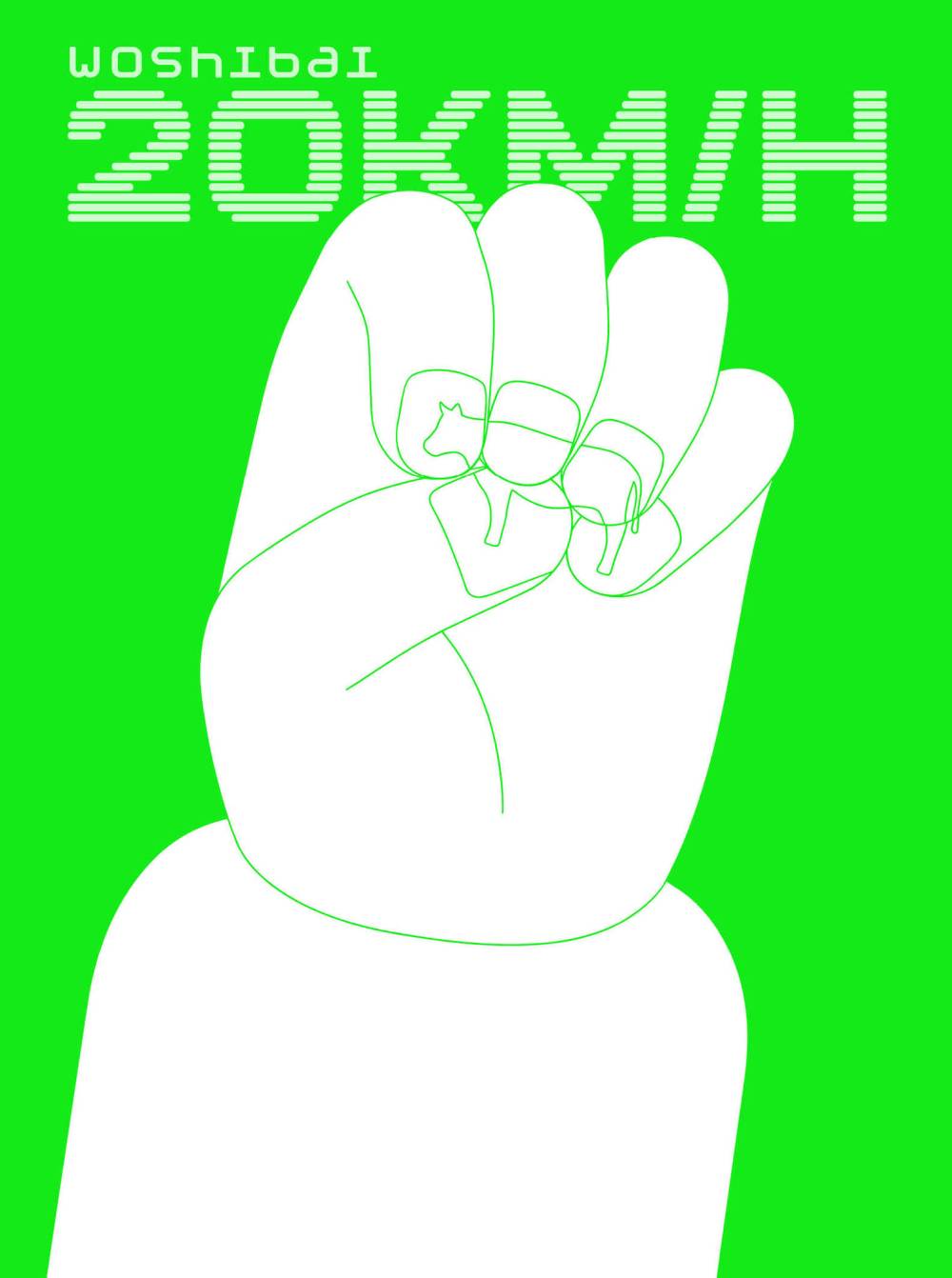
20 KM/H
Nyala Ali writes about race and gender in contemporary narratives.