

Canadian credit crunch
Borrowers owe a record $2 trillion
Advertisement
Read this article for free:
or
Already have an account? Log in here »
To continue reading, please subscribe:

Digital Subscription
One year of digital access for only $205*
- Enjoy unlimited reading on winnipegfreepress.com
- Read the E-Edition, our digital replica newspaper
- Access News Break, our award-winning app
- Play interactive puzzles
*First annual payment billed as $205.00 + GST for one year. This annual subscription will automatically renew at $233.00 + GST every 52 weeks (10% off the regular annual price of $259.35). Offer available to new and qualified returning subscribers only. Cancel any time.
To continue reading, please subscribe:
Add Free Press access to your Brandon Sun subscription for only an additional
$1 for the first 4 weeks*
- Enjoy unlimited reading on winnipegfreepress.com
- Read the E-Edition, our digital replica newspaper
- Access News Break, our award-winning app
- Play interactive puzzles
*Your next Brandon Sun subscription payment will increase by $1.00 and you will be charged $17.95 plus GST for four weeks. After four weeks, your payment will increase to $24.95 plus GST every four weeks.
Read unlimited articles for free today:
or
Already have an account? Log in here »
Hey there, time traveller!
This article was published 10/06/2023 (1181 days ago), so information in it may no longer be current.
There’s no way to sugar-coat it.
Canadians now owe more than two trillion dollars.
And we’re not talking about debt accumulated by the federal and provincial governments combined—though that too is estimated at over $2 trillion.
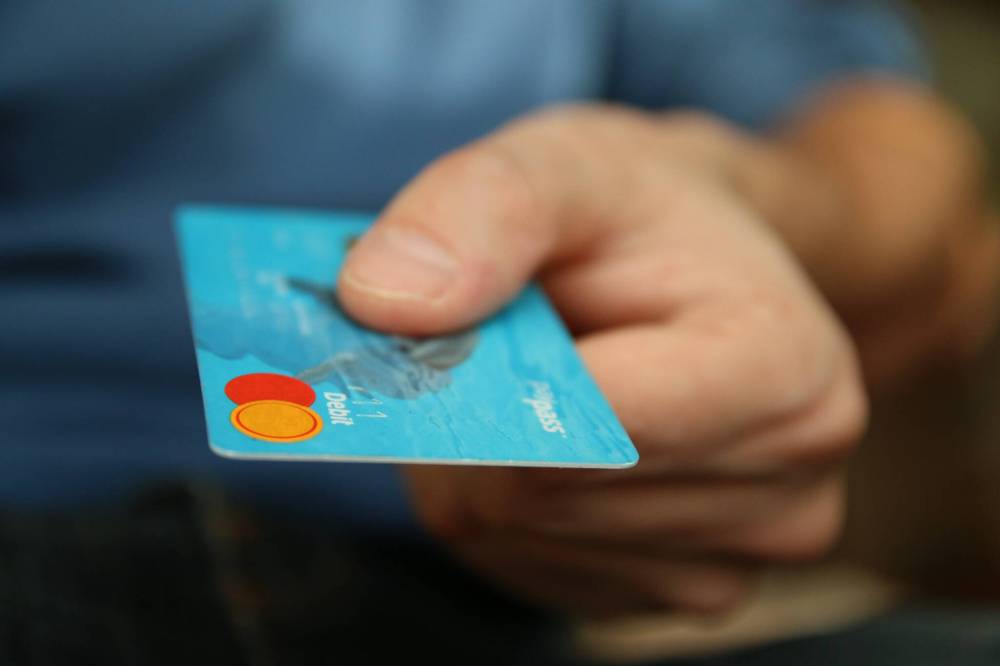
Pixabay / Pexels
Canadians are drowning in a sea of red but financial experts say since the economy is growing, people’s wealth in increasing too.
Rather, between mortgages, lines of credit, credit cards, car loans, student loans and other debt, Canadians consumers owe a record $2.32 trillion—a 5.6 per cent increase from last year. The latest findings from TransUnion—a credit reporting bureau—also note the number of Canadians with access to credit grew to nearly 31 million by the end of March this year.
Essentially each one of these borrowers’ share of the $2.32 trillion debt pie is about $75,000, which doesn’t seem nearly as bad when considering the average size of new mortgage loans in Canada: about $223,000, based on Canada Mortgage and Housing Corporation (CMHC) data.
Heck, even that sum seems not all that weighty compared with the average Canadian home price of more than $700,000.
Not surprisingly, most debt is mortgage debt, a recent CMHC report shows, making up about three-quarters of what Canadian households owe.
While not a shock to those making mortgage payments, what is notable is household debt when compared with the nation’s GDP (gross domestic product).
The CMHC reports that household debt in Canada was 107 per cent of Canada’s annual economic output, the highest among G7 nations and other developed economies, trailing only Australia at 119 per cent.
So, what should we make of all this debt?
Are many Canadians at risk of, or already drowning in, a sea of red?
It’s not as cut and dried as one might think.
“It’s a lot of debt for sure, but the contrast to the picture I would offer is the growth in average household wealth at the same time,” says Matt Fabian, director of financial services research and consulting at TransUnion Canada.
“So yes, people have been taking on a lot of debt, but the economy has been growing too, and people’s wealth with it.”
Statistics Canada data for 2022 show household net worth in Canada was more than $15 trillion.
As well, we should not lose sight of the fact Canadians carry a lot of debt because our economic system is fuelled by borrowing.
It’s a scheme that works well—so long as there’s confidence that most debts will be repaid. That’s why the U.S. government can keep borrowing trillions.
It’s also why the world teetered on the brink of economic collapse when its politicians threatened to let the U.S. government default on debt payments recently.
After all, if the world’s biggest borrower doesn’t make good on its debt, confidence would undoubtedly be deeply shaken across the entire market-based economic system.
A strong argument can be made that Canadians are in good financial shape, given their assets far outweigh their debts. But other TransUnion report findings may point to trouble.
Those include data on credit card balances, which now exceed $100 billion again—a figure first reached in 2019 only to fall to $80 billion during the pandemic.
“During COVID, people stopped spending on big-ticket items,” Fabian explains. Once the pandemic largely ended, he adds, Canadians “revenge spent”: going on vacations, buying cars and renovating homes.
Then inflation hit 40-year highs, and interest rates rose rapidly to tame it—a doubly painful scenario for the indebted.
Groceries cost more, mortgages cost more and so, perhaps, the growth in credit card debt is the bleeding edge of trouble ahead as more Canadians struggle to keep up financially.
“It’s definitely busier, which means it’s not better,” says Winnipeg debt counsellor Sandra Fry at Credit Counselling Society.
She is referring to her practice helping indebted individuals today versus even just six months ago.
“Often when they come to us, they’ve already been using credit cards to survive, and so now they’re struggling to keep up with those.”
This is not new, given some credit card companies have built businesses off balance transfers, whereby consumers move 20 per cent credit card debt to another card offering a zero per cent interest for 12 months.
It can be a sound strategy to eliminate high-interest debt quickly, says Natasha Macmillan, business director of everyday banking at Ratehub.ca.
“You do pay a percentage on the balance transfer, but you will still be saving money over that time period,” she says, noting the transfer is about one to three per cent of the debt.
Of course, this approach only works if consumers pay off the debt, and Fry has seen many who owe even more 12 months later.
Often these consumers have not taken the steps to track their spending. They then set a budget that reduces costs, increases cash flow, and allows them to divert as much money as possible to paying off debt.
When it comes to attacking the debt, individuals have two key overarching strategies: snowball and avalanche, Macmillan adds.

“The snowball method focuses on paying the smallest debt off first and then moving onto the next smallest.”
Macmillan adds this approach provides some individuals with more motivation as they see tangible progress.
Yet the avalanche method is generally more effective where individuals focus on paying off the highest-interest debt first.
Of course, for those feeling their debt is insurmountable, they can always seek help from non-profits like Credit Counselling Society, which offer debt repayment plans, in which interest charges are eliminated or dramatically reduced, Fry says.
“If those high-debt servicing costs are part of your struggle to make ends meet, then it’s really important to reach out.”