

In Uganda, a recent ban on charcoal making disrupts a lucrative but destructive business
Advertisement
Read this article for free:
or
Already have an account? Log in here »
To continue reading, please subscribe:
Digital Subscription
One year of digital access for only $1.44 a week*
- Enjoy unlimited reading on winnipegfreepress.com
- Read the E-Edition, our digital replica newspaper
- Access News Break, our award-winning app
- Play interactive puzzles
*Billed as $5.77 plus GST every four weeks. After 52 weeks, price increases to the regular rate of $19.95 plus GST every four weeks. Offer available to new and qualified returning subscribers only. Cancel any time.
To continue reading, please subscribe:
Add Free Press access to your Brandon Sun subscription for only an additional
$1 for the first 4 weeks*
- Enjoy unlimited reading on winnipegfreepress.com
- Read the E-Edition, our digital replica newspaper
- Access News Break, our award-winning app
- Play interactive puzzles
*Your next Brandon Sun subscription payment will increase by $1.00 and you will be charged $17.95 plus GST for four weeks. After four weeks, your payment will increase to $24.95 plus GST every four weeks.
Read unlimited articles for free today:
or
Already have an account? Log in here »
Hey there, time traveller!
This article was published 11/06/2023 (1224 days ago), so information in it may no longer be current.
GULU, Uganda (AP) — The charcoal makers in the forests of northern Uganda fled into the bush, temporarily abandoning their precious handiwork: multiple heaps of timber yet to be processed.
The workers were desperate to avoid capture by local officials after a new law banned the commercial production of charcoal. They risked arrest and beatings if they were caught.
But what’s really at stake for the charcoal makers is their livelihood.
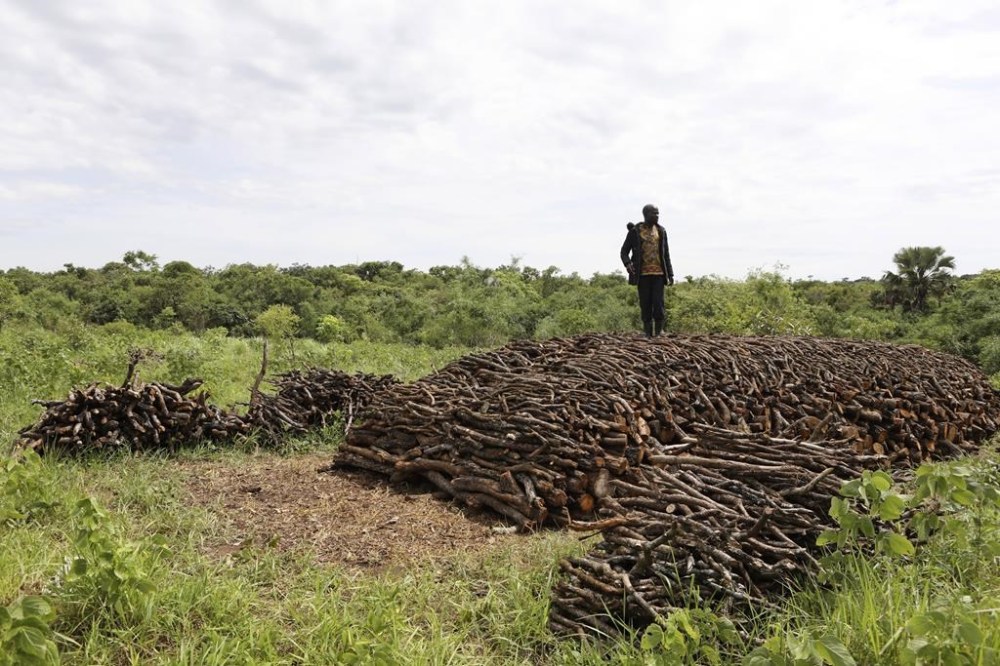
“We are not going to stop,” said Deo Ssenyimba, a bare-chested charcoal maker who has been active in northern Uganda for 12 years. “We stop and then we do what? Are we going to steal?”
The burning of charcoal, an age-old practice in many African societies, is now restricted business across northern Uganda amid a wave of resentment by locals who have warned of the threat of climate change stemming from the uncontrolled felling of trees by outsiders. In reality, not much has changed as charcoal producers skirt around the rules to keep supply flowing and watchful vigilantes take matters into their own hands.
Much of northern Uganda remains lush but sparsely populated and impoverished, attracting investors who desire the land mostly for its potential to sustain the charcoal business. And demand is assured: charcoal accounts for up to 90% of Africa’s primary energy consumption needs, according to a 2018 report by the U.N. Food and Agriculture Organization.
Before the charcoal ban, local activists formed vigilante groups in districts such as Gulu, where a former lawmaker recently led an attack on a truck that was dispossessed of 380 bags of charcoal. Although Odonga Otto was then charged with aggravated robbery, the country’s chief justice praised him as a hero.
“I have not heard anybody who is destroying our environment being charged,” said Chief Justice Alfonse Owiny-Dollo, who is from northern Uganda. “If you steal from a thief, are you a thief?”
The week after Owiny-Dollo’s public comments, President Yoweri Museveni issued an executive order banning the commercial production of charcoal in northern Uganda, disrupting a national trade that has long been influenced by cultural sensibilities as much as the seeming abundance of idle land. Commercial charcoal production is still permitted in other regions.
The ban follows a climate change law, enacted in 2021, that empowers local authorities across the country to regulate activities deemed harmful to the environment. Trees suck in planet-warming carbon dioxide from the air, but burning charcoal emits the heat-trapping gas instead.
Days after Museveni’s order, a team of Associated Press journalists walked into a charcoal-burning enclave in a remote part of Gulu, 335 kilometers (208 miles) from the Ugandan capital of Kampala.
One local official, Patiko Sub-County Chairman Patrick Komakech, gave chase when he heard fleeing footsteps. A small patch of bamboo opened up to an almost bare patch where trees were being cut, juicy stumps still fresh here and there.
Komakech was agitated and on the verge of tears.
Timber had been heaped like contraband ivory in different spots, and grey smoke rose from one pile being processed. Beside it stood loaded bags of charcoal. The charcoal makers slept in little tarp tents draped in dry leaves.
“I am completely perturbed (by) all this destruction,” Komakech said, speaking of charcoal makers who “are actually imported and put in this community, and they do this thing without the mercy of leaving any vegetation.”
He kicked at felled logs, saying they were those of the African Shea tree, a plant prized by the region’s Acholi people for its fruit as well as its oil, often used in cosmetics.
The charcoal burners eventually approached Komakech, who wished to destroy the heaps of timber with kerosene, and said they were simply earning a living and responding to demand.
Uganda’s population explosion has heightened the need for cheap plant-based energy sources, especially charcoal. In this east African country of 45 million people, charcoal is preferred in households across the income spectrum but especially in those of the urban poor — seen as ideal in the preparation of certain dishes that require slow cooking. Middle-class families maintain both gas cookers and charcoal stoves.
“Even those policemen who are coming to beat us, they are cooking with charcoal,” said Peter Ejal. “We are not here to spoil the environment. We are here by their orders, those people who are selling these trees.”
His colleague, the ragtag charcoal maker Ssenyimba, said bluntly, “When we finish this place we will go to another place.”
One charcoal maker asserted that charcoal from northern Uganda was likely used even in the State House. Others charged that they were cutting the trees with the complicity of landlords who sell charcoal-making rights by the acre to interested dealers.
The industry can be lucrative for landowners and investors.
In nearby towns a bag of charcoal fetches about $14, but the price rises further as the goods approach Kampala. Ssenyimba said he’s paid about $3 for every bag he makes.
An acre of property with plenty of trees goes for up to $150 in Gulu, although the sum can be much smaller in remote but vegetation-rich ranches owned by the poorest families. The investors then deploy men armed with power saws and machetes, working over specific places and leaving when they have cut down all the trees they were sold.
District councils in the region raise revenue from licensing and taxes, and corrupt members of the armed services have been protecting charcoal truckers, according to Museveni and Otto, the former lawmaker now leading vigilantes against charcoal makers.
Otto has helped cause the impounding of multiple trucks in recent weeks, including two recently seized ones parked outside a police station where a crowd gathered one recent afternoon, hoping to grab the goods.
He said he plans to serve hundreds of local officials with letters of intent to sue for any lapses in protecting the environment. Otto told the AP his goal is to make the rest of Uganda “lose appetite” for charcoal from his region.
“We go to the fields where the charcoal ovens are and we destroy the bases,” he said. “We managed to make the business risky. As of now, you drive a hundred kilometers and you will not find any single truck carrying charcoal.”
The ban on commercial production in northern Uganda is almost certainly bound to push up the retail price of charcoal. Otto and others were concerned that charcoal dealers would avoid authorities by ferrying charcoal bags in small numbers — on the backs of passenger motorcycles — to towns where the merchandise could be stealthily loaded into trucks.

Alfred Odoch, an environmental activist in the region, said he supports the work of vigilantes, describing charcoal making as “the biggest threat” since the end of a rebel insurgency in the region two decades ago.
Vigilantes pressurize charcoal burners as well as local officials to minimize “mass tree cutting” in northern Uganda, said Odoch. Charcoal making, he said, should be acceptable only as a small business by families selling “two or three sacks” in a week or so.
“My fellow vigilantes who are doing a lot of work to stop this, I support them,” he said. “The fight for environmental justice is not only (for) one person.”
___
Associated Press climate and environmental coverage receives support from several private foundations. See more about AP’s climate initiative here. The AP is solely responsible for all content.




