Verdict in Oregon wildfires case highlights risks utilities face amid climate change
Advertisement
Read this article for free:
or
Already have an account? Log in here »
To continue reading, please subscribe:

Digital Subscription
One year of digital access for only $205*
- Enjoy unlimited reading on winnipegfreepress.com
- Read the E-Edition, our digital replica newspaper
- Access News Break, our award-winning app
- Play interactive puzzles
*First annual payment billed as $205.00 + GST for one year. This annual subscription will automatically renew at $233.00 + GST every 52 weeks (10% off the regular annual price of $259.35). Offer available to new and qualified returning subscribers only. Cancel any time.
To continue reading, please subscribe:
Add Free Press access to your Brandon Sun subscription for only an additional
$1 for the first 4 weeks*
- Enjoy unlimited reading on winnipegfreepress.com
- Read the E-Edition, our digital replica newspaper
- Access News Break, our award-winning app
- Play interactive puzzles
*Your next Brandon Sun subscription payment will increase by $1.00 and you will be charged $17.95 plus GST for four weeks. After four weeks, your payment will increase to $24.95 plus GST every four weeks.
Read unlimited articles for free today:
or
Already have an account? Log in here »
Hey there, time traveller!
This article was published 19/06/2023 (1183 days ago), so information in it may no longer be current.
PORTLAND, Ore. (AP) — A jury verdict that found an Oregon power company liable for devastating wildfires — and potentially billions of dollars in damages — is highlighting the legal and financial risks utilities take if they fail to take proper precautions in a hotter, drier climate.
Utilities, especially in the U.S. West, are increasingly finding themselves in a financial bind that’s partly of their own making, experts say. While updating, replacing and even burying thousands of miles of power lines is a time-consuming and costly undertaking, the failure to start that work in earnest years ago has put them on the back foot as wildfires have grown more destructive — and lawsuits over electrical equipment sparking blazes have ballooned.
“How do they pay for that and at the same time try to do grid hardening at a pace that could prevent the need for constant shutting down of the power?” Josh Hacker, chief science officer at Jupiter Intelligence, a company that provides advice on managing climate change risks, said of lawsuit damages. “This is an enormous challenge. Now it’s biting them. And in the end it’s going to bite all of us, because they have to recover that expense.”
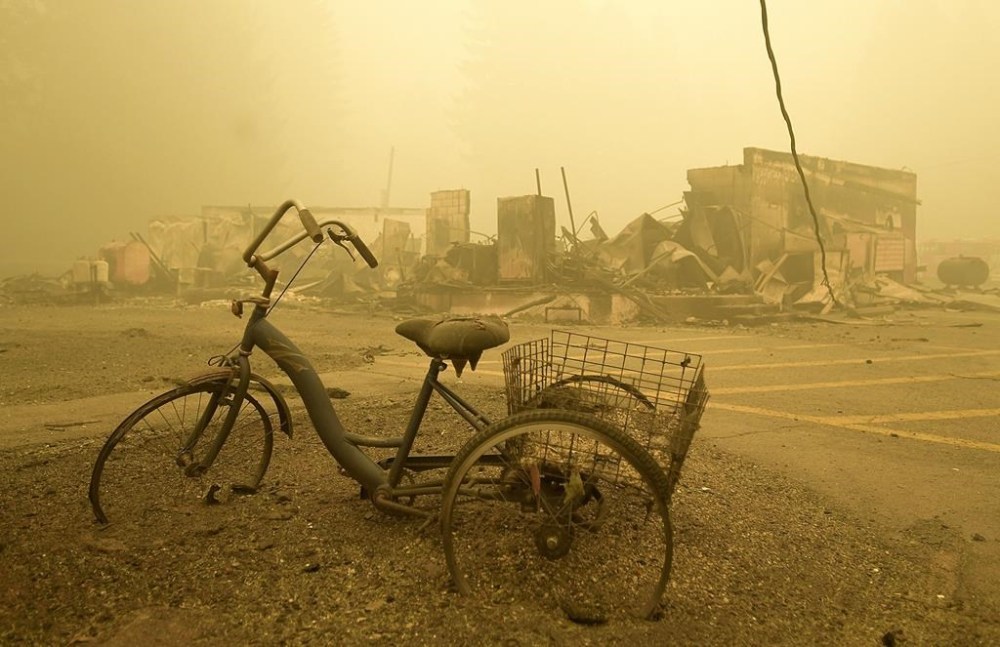
Last week, a jury in Oregon found PacifiCorp liable for damages for negligently failing to cut power to its 600,000 customers during a windstorm over Labor Day weekend, despite warnings from top fire officials, and for its power lines being responsible for multiple blazes.
PacifiCorp said it was disappointed with the jury’s decision and that it plans to appeal.
The fires were among the worst natural disasters in Oregon’s history. They killed nine people, burned more than 1,875 square miles (4,856 square kilometers) and destroyed upward of 5,000 homes and other structures. While total damages remain to be determined, they are expected to reach into the billions.
Because utilities make money from customers, they often raise revenue for infrastructure upgrades by hiking rates. In California, for example, Pacific Gas and Electric has requested to increase its rates for residential customers this year by roughly 18%, partly to bury more than 3,000 miles (4,828 kilometers) of overhead power lines underground, according to a fact sheet from the state’s public utilities commission. The commission, which regulates utility rates, said it expects to make a final decision on the request between July and September.
PG&E’s planned upgrades come amid heightened scrutiny of the utility, which serves more than 16 million people over 70,000 square miles (181,300 square kilometers) in central and northern California. Facing billions of dollars in damages stemming from multiple blazes, it filed for bankruptcy in 2019, shortly after its neglected equipment caused a fire that virtually razed the town of Paradise in the Sierra Nevada foothills in 2018. The Camp Fire was the deadliest and most destructive fire in California’s history.
PG&E’s bankruptcy settlement with wildfire victims was an eye-popping $13.5 billion. Only half of the money was paid to victims in cash, while the other half was paid out in PG&E stock, which has since declined in value.
PacifiCorp, meanwhile, says it has invested hundreds of millions of dollars since the Labor Day 2020 fires in Oregon in upgrading its equipment and expanding its weather stations and weather modeling. But customers are also helping fund those investments. Oregon’s public utility commission approved rate increases for PacifiCorp in 2023 in part so that the utility could cover “non-energy costs,” including wildfire mitigation and vegetation management.
After the verdicts were handed down, PacifiCorp filed a request with Oregon’s public utility commission asking to potentially defer the costs linked to the lawsuit. The jury awarded around $90 million to 17 homeowners named as plaintiffs in the case, with damages to be determined later for a broader class that could include the owners of about 2,500 properties, as estimated by plaintiffs’ attorneys.
In its filing, PacifiCorp said the application would enable it “to preserve its ability to seek recovery in the future” in case potential future class-action damages “impact the financial stability of the company.” Such a move “would result in higher costs to customers,” the filing said.
However, the company requested that the commission delay its consideration of the application until the costs of its wildfire-related claims are more fully known. Oregon’s public utility commission would have to approve the request.
“The PUC recognizes the controversy that surrounds this filing,” Kandi Young, the commission’s spokesperson, said in an email. “When the time comes to take action, the PUC will establish an open and transparent public process in which all interested persons have the opportunity to present information and argument to the Commission, including PUC Staff, ratepayer advocates, PacifiCorp, other participants, and members of the public.”
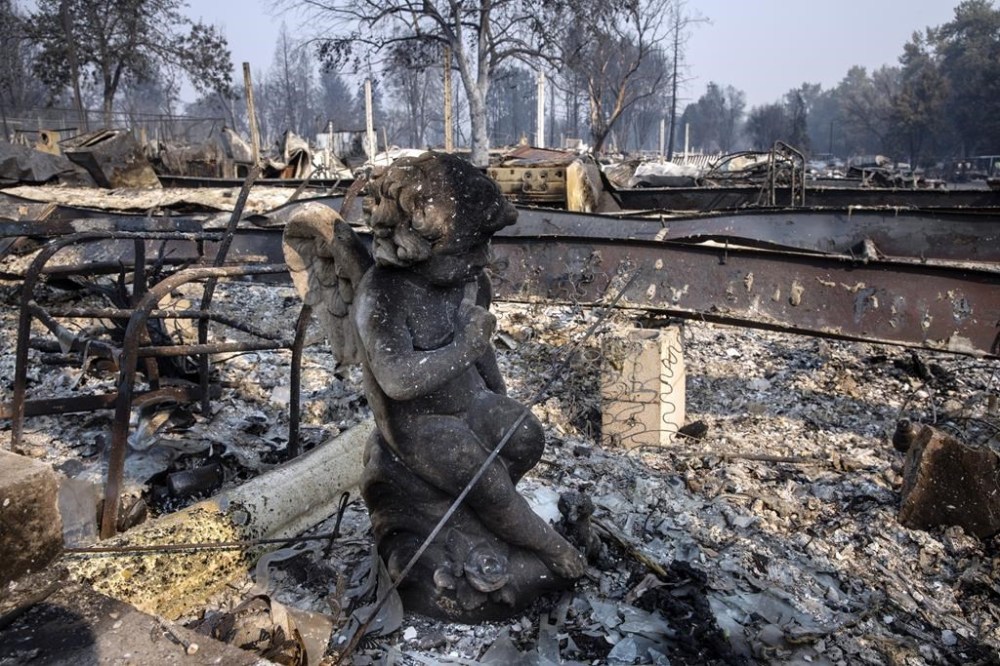
The revenue model of utilities — and the way some have settled previous wildfire claims — have raised questions about the extent to which such companies are truly being held accountable for their role in sparking wildfires.
“Where is public safety and the durability of the entire system in the priorities of what are basically profit-making enterprises? That is the big question that is being addressed here,” said Scott McNutt, a part-time lecturer in bankruptcy law at the University of California, Davis, who also worked as counsel to the fee examiner in the PG&E bankruptcy case.
Utilities, meanwhile, say the growing risk of wildfires to public safety is being driven by forces beyond their control, such as climate change and population growth in the wildland-urban interface — the boundary where development encroaches on natural areas.

“These systemic issues affect all Oregonians and are larger than any single utility,” PacifiCorp said in a statement earlier this week after the jury handed down one of its verdicts.
Some experts agree to a certain extent, saying that hardening the electrical grid is just one of many critical steps that must be taken to protect people and their homes from wildfires.
“Power companies … should always be working to reduce any potential ignition risk,” said Michael Gollner, associate professor of engineering at the University of California, Berkeley. “But you also want to make it so that if there are those fires, those fires aren’t going to cause death and destruction.”
Changing the materials that homes are built with, Gollner said, is one way communities can protect themselves from wildfires. Having fire-retardant roofs made of asphalt or tile instead of wood, covering vents with fine mesh to keep embers out, and having nonflammable siding can help prevent homes from burning down. Creating what’s known as a “defensible space” around one’s home — a buffer area where there is less vegetation, helping to slow down a fire’s progress — is also key. Prescribed burns and thinning out fuels in forests are important as well, he said.
“We haven’t taken a more holistic step to harden our communities so they don’t invite in fires,” he said. “We haven’t done the hard, other work.”