

BoC debated waiting until July to hike rates, but says data prompted it to act sooner
Advertisement
Read this article for free:
or
Already have an account? Log in here »
To continue reading, please subscribe:

Digital Subscription
One year of digital access for only $205*
- Enjoy unlimited reading on winnipegfreepress.com
- Read the E-Edition, our digital replica newspaper
- Access News Break, our award-winning app
- Play interactive puzzles
*First annual payment billed as $205.00 + GST for one year. This annual subscription will automatically renew at $233.00 + GST every 52 weeks (10% off the regular annual price of $259.35). Offer available to new and qualified returning subscribers only. Cancel any time.
To continue reading, please subscribe:
Add Free Press access to your Brandon Sun subscription for only an additional
$1 for the first 4 weeks*
- Enjoy unlimited reading on winnipegfreepress.com
- Read the E-Edition, our digital replica newspaper
- Access News Break, our award-winning app
- Play interactive puzzles
*Your next Brandon Sun subscription payment will increase by $1.00 and you will be charged $17.95 plus GST for four weeks. After four weeks, your payment will increase to $24.95 plus GST every four weeks.
Read unlimited articles for free today:
or
Already have an account? Log in here »
Hey there, time traveller!
This article was published 21/06/2023 (1194 days ago), so information in it may no longer be current.
OTTAWA – The Bank of Canada’s governing council considered waiting until July to raise interest rates, but ultimately decided to act sooner in the face of hot economic data.
The central bank released Wednesday its summary of deliberations for its June interest rate announcement, shedding light into the decision to raise its key interest rate by a quarter of a percentage point to 4.75 per cent.
That’s the highest it’s been since 2001.
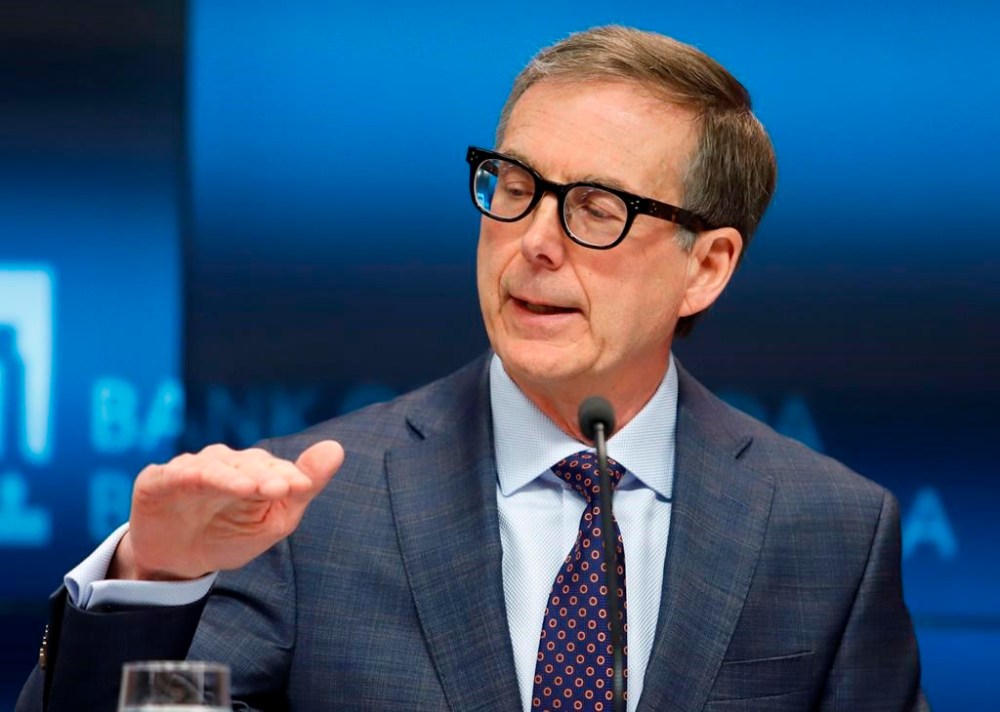
The rate hike came after the central bank declared a pause earlier in the year, appearing cautiously optimistic that interest rates were high enough to quash inflation.
But the Bank of Canada says the decision to raise rates was prompted by a recent string of economic data that showed the annual inflation rate ticked higher and consumer spending was more resilient than expected.
Those numbers reinforced concerns among members of the governing council that higher interest rates were needed to cool inflation.
Members of the governing council, which include the governor and the central bank’s deputy governors, considered whether they should raise interest rates immediately or signal that a rate hike was likely in July.
Waiting would give them more data to look at before raising rates again, the central bank said.
“On the other hand, members felt that enough data had accumulated to convince them that more restrictive policy was needed. Therefore, it was preferable to take the required action and continue to assess economic developments to guide future actions,” the summary says.
The rate hike came after data showed inflation rose slightly to 4.4 per cent in April, while the economy grew faster than expected in the first quarter.
Consumer spending was particularly strong, rising 5.8 per cent in the first three months of the year.

Retail numbers released by Statistics Canada on Wednesday also show consumer spending grew faster than expected in April, rising 1.1 per cent.
The labour market has also remained exceptionally tight, though data released after the rate hike showed the unemployment rate ticked higher to 5.2 per cent in May.
The Bank of Canada has not indicated whether it plans to raise interest rates again on July 12 and says its governing council will make the decision based on incoming data.
However, many forecasters are expecting another rate hike, noting the central bank will want to double down on its effort to take the steam out of the economy.
This report by The Canadian Press was first published June 21, 2023.