Coyote that bit boy in North Kildonan remains loose
Read this article for free:
or
Already have an account? Log in here »
To continue reading, please subscribe:

Digital Subscription
One year of digital access for only $205*
- Enjoy unlimited reading on winnipegfreepress.com
- Read the E-Edition, our digital replica newspaper
- Access News Break, our award-winning app
- Play interactive puzzles
*First annual payment billed as $205.00 + GST for one year. This annual subscription will automatically renew at $233.00 + GST every 52 weeks (10% off the regular annual price of $259.35). Offer available to new and qualified returning subscribers only. Cancel any time.
To continue reading, please subscribe:
Add Free Press access to your Brandon Sun subscription for only an additional
$1 for the first 4 weeks*
- Enjoy unlimited reading on winnipegfreepress.com
- Read the E-Edition, our digital replica newspaper
- Access News Break, our award-winning app
- Play interactive puzzles
*Your next Brandon Sun subscription payment will increase by $1.00 and you will be charged $17.95 plus GST for four weeks. After four weeks, your payment will increase to $24.95 plus GST every four weeks.
Read unlimited articles for free today:
or
Already have an account? Log in here »
Hey there, time traveller!
This article was published 26/06/2023 (1202 days ago), so information in it may no longer be current.
Conservation officers continued to scour a wooded area for a coyote Monday that had mauled a child two days earlier in the northeast corner of Winnipeg — the first attack of its kind reported in Manitoba.
“The animal has been tracked to an area of dense bush. Once it is located and destroyed, it will be tested for rabies,” a Manitoba government spokesperson said.
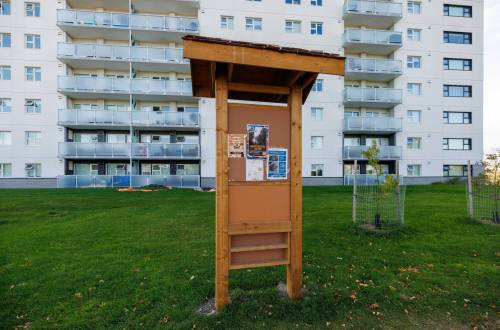
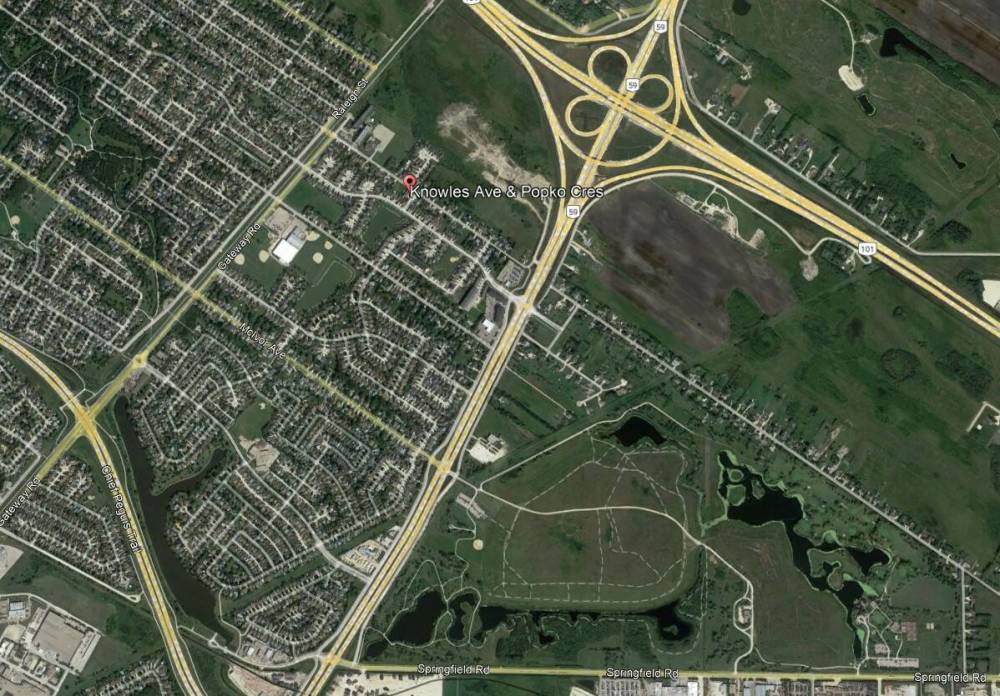
A nine-year-old boy and his 15-year-old sister were walking near Knowles Avenue and Popko Crescent, in North Kildonan, around 6:45 p.m. Saturday when they ran away from a coyote. It chased them and attacked the boy. He was taken to hospital where he received stitches and staples to the back of his head. He was able to return home Sunday.
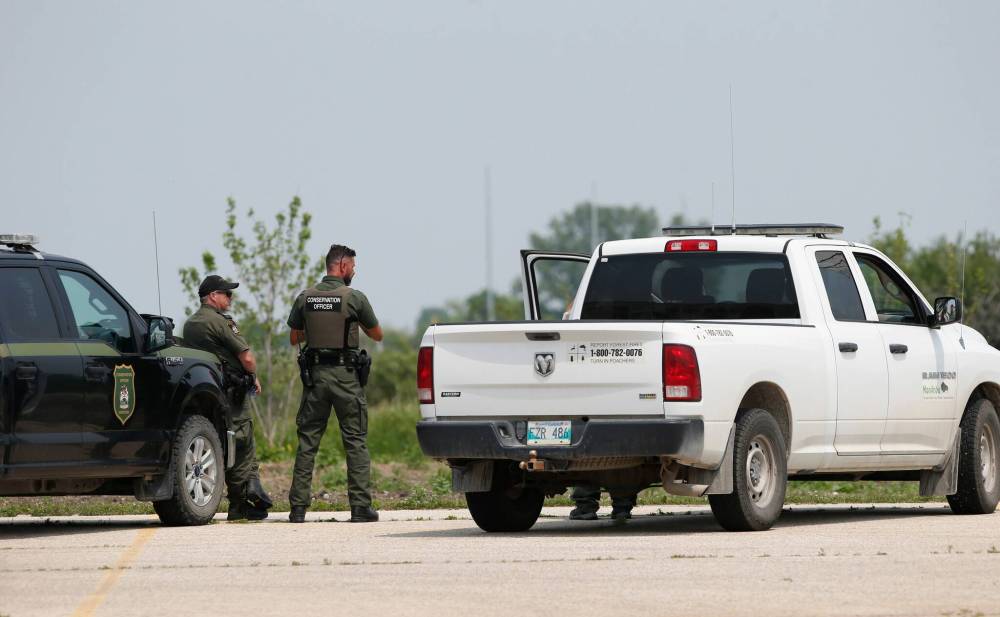
JOHN WOODS / WINNIPEG FREE PRESS
Conservation officers watch over a stand of trees for a coyote that attacked a small boy in the North Kildonan area of Winnipeg.
Families who live in the area say they are shocked even though coyote sightings are not rare.
Amandeep Deol’s three children will play it safe by staying indoors for the time being.
“It is very scary for the kids, especially for the community, for everybody. Usually our kids play in the bay very free … Now, I try to keep them inside. I feel scared because the (road) is open,” Deol said from her North Kildonan home Monday.
Deol, who has spotted them multiple times since moving to the neighbourhood in 2017, said she recently stopped going on walks out of fear of having to defend herself from a coyote.
Neighbour Chuck Van Nest said his dog Oliver has had run-ins with a coyote.
Deol said she worries about the seniors, and would like to see the provincial government invest in ways to keep coyotes from getting too close.
“They’re wild animals, they have a right to live, we cannot stop their living if they have their house behind us. We have forest behind our house,” she said. “If it is their house (too), no problem, but we just want more protection for us too. More fences, maybe security.”
Related Articles
Neighbourhood fears grow after boy mauled by coyote
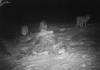


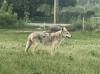
The mother of the victim, who asked that her name not be used, said she has seen officers searching for the coyote.
“We have seen (them) actively working with police in the back field. We have not spoken to them directly,” she said. “We were told when the coyote was found they would let us know.”
Attacks on the rise
Although rare, coyote attacks are increasing in frequency across North America. Last week, a woman in Prince George, B.C., was bit by a coyote while gardening.
It’s pup-rearing season and coyotes will be on high alert, said Colleen Cassady St. Clair, a University of Alberta biological sciences professor who focuses on human-wildlife conflict and co-existence.
The animals can be triggered to chase when they see an animal running, she said.
Injuries sustained by the nine-year-old in Saturday’s attack lead her to believe the coyote was not attacking the child with the purpose of hunting.
“It’s probably not a predatory attack, likely that coyote was triggered by the boy running,” she said.
Cassady is behind the Edmonton Urban Coyote Project, in which she and other researchers looked at nearly 10,000 city-based coyote reports made between 2012 and 2021. They showed there had been a yearly increase of about two per cent of reported “bold” or aggressive coyote behaviour.
Coyotes that have diseases such as mange statistically enter residential areas more often. Recent research finds urban coyotes that eat more processed and human-sourced food have changes to their digestion system and possibly, their behaviour. Feeding them is a surefire way to get them to return, but coyotes can inadvertently learn to return through eating trash or bird seed.
Attacks are still very rare, she said, but there is quantitative data to prove they’re happening more often.
“Coyotes are super clever, adaptable animals. They learn from their environments really, really quickly. I think coyotes have learned that cities are pretty safe places for them,” she said.
“Coyotes are persecuted pretty consistently in rural areas around cities everywhere in North America, and they are not persecuted in cities. Most cities have an approach to coyote management that kills coyotes only after there’s been very aggressive behaviour, and otherwise, they strive for co-existence.”
She said there needs to be proactive action from both wildlife specialists and urban residents.
In Edmonton last year, volunteer community members were given tennis balls filled with sand and instructed to yell at and throw a ball at a coyote that got too close to their neighbourhood.
“As citizens, I think we could make coyotes in urban areas more wary, and I think that would contribute to this peaceful co-existence,” she said.
“Coyotes typically just don’t start to bite people or jump on people. That’s an atypical response.”–Lesley Sampson, Coyote Watch Canada director
Coyote Watch Canada, a non-profit based in Ontario, provides educational programming and lectures on safe practices between humans and wildlife. Families should teach children how to avoid coyotes, director Lesley Sampson said.
“Let’s have those conversations. What is appropriate behaviour around wildlife? Because this could have been a bear, this could be a deer, it could be a raccoon,” she said. “I think, folks, educate yourself, and let’s not jump on one incident.”
Sampson said it’s uncommon for Coyote Watch to be notified about a sighting that ends with a person being injured.
“Coyotes are living in our communities right now, and we’re not having to question, is this a rarity? It absolutely is,” she said. “Coyotes typically just don’t start to bite people or jump on people. That’s an atypical response.”
malak.abas@freepress.mb.ca

Malak Abas is a city reporter at the Free Press. Born and raised in Winnipeg’s North End, she led the campus paper at the University of Manitoba before joining the Free Press in 2020. Read more about Malak.
Every piece of reporting Malak produces is reviewed by an editing team before it is posted online or published in print — part of the Free Press‘s tradition, since 1872, of producing reliable independent journalism. Read more about Free Press’s history and mandate, and learn how our newsroom operates.
Our newsroom depends on a growing audience of readers to power our journalism. If you are not a paid reader, please consider becoming a subscriber.
Our newsroom depends on its audience of readers to power our journalism. Thank you for your support.