

Colonial conundrum
Scottish settlers’ arrival, Battle of Seven Oaks explored in descendent’s detailed account
Advertisement
Read this article for free:
or
Already have an account? Log in here »
To continue reading, please subscribe:
Digital Subscription
One year of digital access for only $1.44 a week*
- Enjoy unlimited reading on winnipegfreepress.com
- Read the E-Edition, our digital replica newspaper
- Access News Break, our award-winning app
- Play interactive puzzles
*Billed as $5.77 plus GST every four weeks. After 52 weeks, price increases to the regular rate of $19.95 plus GST every four weeks. Offer available to new and qualified returning subscribers only. Cancel any time.
To continue reading, please subscribe:
Add Free Press access to your Brandon Sun subscription for only an additional
$1 for the first 4 weeks*
- Enjoy unlimited reading on winnipegfreepress.com
- Read the E-Edition, our digital replica newspaper
- Access News Break, our award-winning app
- Play interactive puzzles
*Your next Brandon Sun subscription payment will increase by $1.00 and you will be charged $17.95 plus GST for four weeks. After four weeks, your payment will increase to $24.95 plus GST every four weeks.
Read unlimited articles for free today:
or
Already have an account? Log in here »
Hey there, time traveller!
This article was published 08/07/2023 (1061 days ago), so information in it may no longer be current.
History is up for grabs. Historian Howard Zinn famously remarked, “It is not that the historian can avoid emphasis of some facts and not others.” That by our nature, we will make reasoned (hopefully) summations of the past human experience based on evidence.
But it’s the degree to which we place weight on certain pieces of evidence that is at the centre of public histories, undergraduate debates, scholarly barbs in academic journals and the occasional brouhaha in a pub.
Winnipeg seems to be at the centre of many of these interpretative conflicts, and the events of June 19, 1816, are a prime example. Red River at the time was at the crossroads of two multinational corporations vying for natural and human resources, racing to out-exploit each other in both.
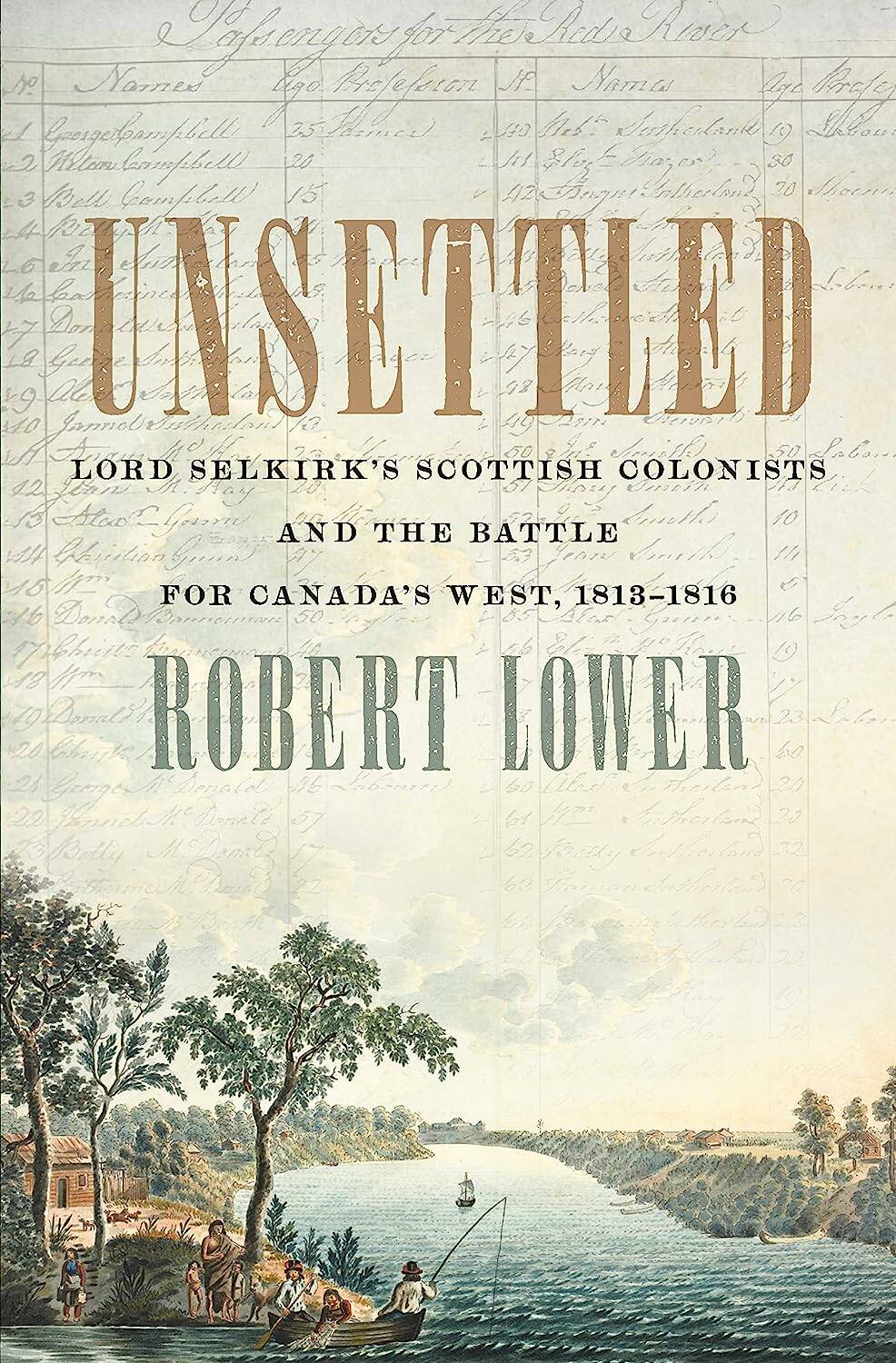
Unsettled
The North West Company and the Hudson’s Bay Company were at each other’s throats, and Indigenous peoples and a collection of European refugees were caught in the middle.
The “Battle of Seven Oaks,” or the “Massacre” of Seven Oaks, or even the “Skirmish” of Seven Oaks reveals a disputed history that is still hard fought in Winnipeg. Robert Lower, former filmmaker and Winnipegger, takes a stab at sense making, perspective taking and judgment making in his interpretation entitled Unsettled: Lord Selkirk’s Scottish Colonists and the Battle for Canada’s West.
While the title reveals a wider scope, Lower’s focus is partly to make sense of his colonist roots while at the same time casting light on the often-perplexing decisions made by the likes of Miles Macdonell, Colin Robertson and Robert Semple.
Accounting for the time period between the arrival of Scottish refugees in 1813 and the fateful, violent summer of 1816, Lower’s goal is to move deeper into the conflict, imagining what life was life for folks at the time, and to make “Seven Oaks a far more interesting and complex event than its reduction to a fight between good guys and bad guys….”
A descendant of millwright Samuel Lamont, who arrived in 1813, Lower makes attempts to recognize his family’s part in the dispossession of Indigenous peoples: “I am fully sensible of the social, cultural, economic and physical crimes that the descendant of these settlers, right up to my own generation, have perpetrated on the original inhabitants of the Canadian prairies and as one of those descendants I accept my share of responsibility for that.”
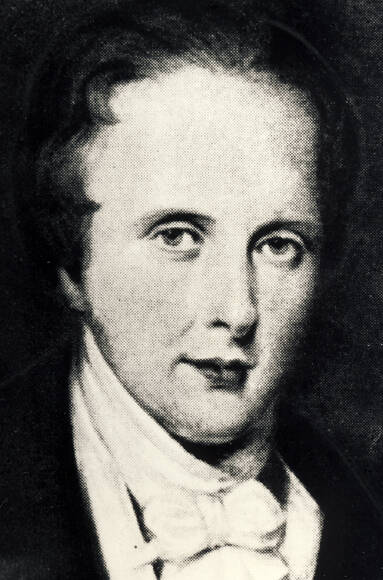
Ruth Bonneville / Winnipeg Free Press files
A drawing of Old Fort Douglas, by Ernest Hutchins in 1909, based on an 1815 sketch by Lord Selkirk. The settlement stood near the confluence of the Red and Assiniboine rivers near what is now Waterfront Drive.
There is indeed a sincere acknowledgment of the difficulties in writing an history about this territory with only trace comments of Peguis, or by portraying Indigenous peoples as mere bystanders. It’s a delicate and tricky precipice for Lower.
But his scope is landless refugees who were cleared off the Scottish landscape by those who controlled the means of production. Lower rakes the archives to tell the arduous journey of Selkirk’s experimental Scots who traveled across the Atlantic, battled typhus, walked from Churchill to York Factory (one, notably, while pregnant), suffered the journey from York Factory to Red River and dealt with authoritarian Selkirk appointees who were less concerned about the refugees than for their class ascension.
And it is the interplay between these leaders, their North West Company counterparts and the consequences for those in Red River that is the focus for Lower.
As he explains, “In many ways, this book is a tale of dubious leaders who make decisions that thwart success and court disaster.” While the evidence surfaces from the chronicles of those with power, the inferences suggest it is those who have been erased from history who suffer most. The subaltern.
Through somewhat clunky and at times colloquial prose, Lower brings forth the tension that those years witnessed, as winters, booze and greed added to the flames.
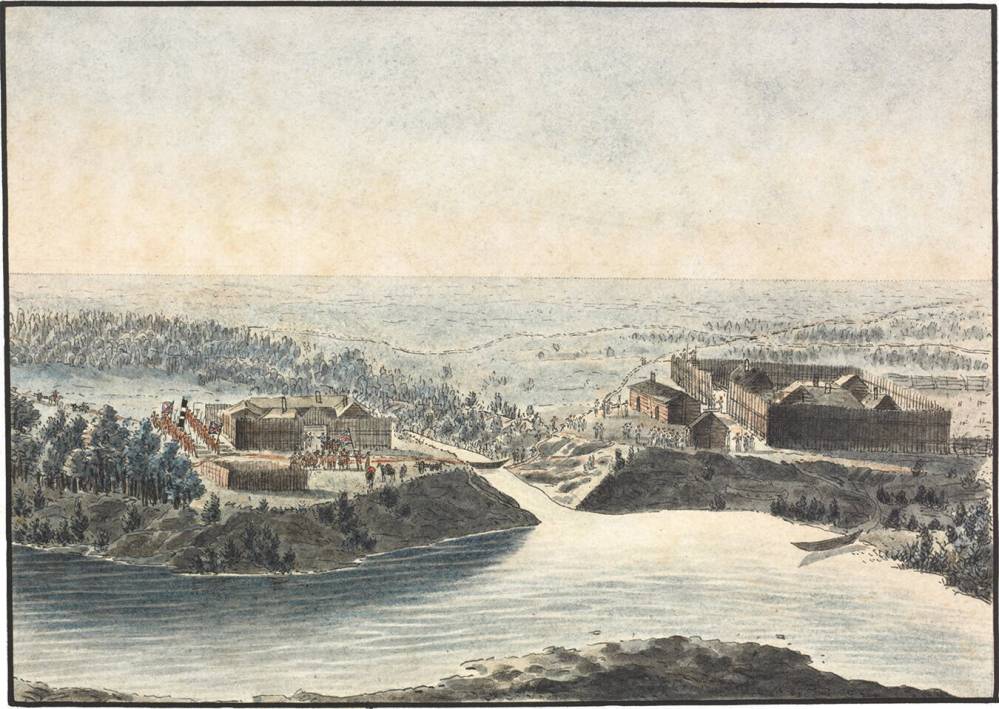
SUPPLIED
Fort Daer and other at Pembina
The final act, on June 19, is symbolic of these tensions, as Semple and his band of farmers are met on the plains by a better organized North West Company and Métis riders.
Shots are fired. Semple and 20 others are dead in an avoidable butting of the heads. For Lower, there is a tragedy that begins on this day and endures today: “Revulsion in the face of callous slaughter is inevitable, and the settler’s descendants will indulge in generations of self-righteous rage that continues today.”
Lower makes no attempt to say who was right or wrong as it relates to the events at Seven Oaks, but does offer ethical insight into the plight of his ancestors. They were mere refugees and yet pose as a symbol for white settler capitalism.
The author reflects with heavy heart, “They came more as economic refugees than adventurers, to a land they were told was available for farming. They had no reason to feel that their tiny plots on it could discommode anyone, nor did they then or for the next two generations. Nevertheless, they started it and set the pattern, and that must be acknowledged.”
And despite the debates that his book and this review might cause in living rooms across this city, the simple fact is that there will always be the elites who are happy to watch the rest of society eat itself from far off places. This is the story of Red River then, and perhaps Red River now.
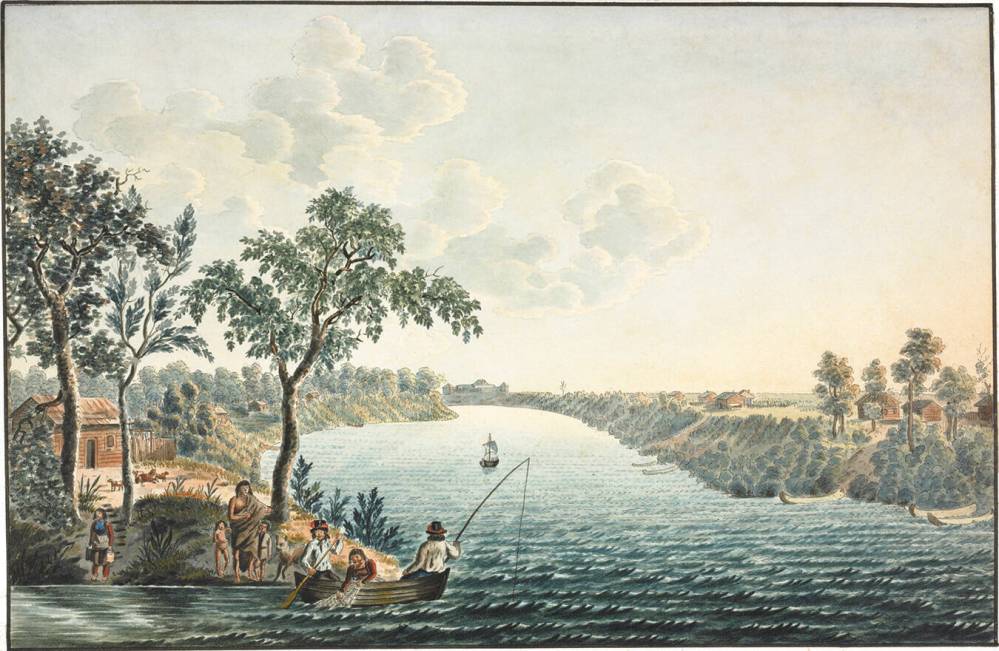
SUPPLIED
Seine River with Indigenous fishers
Matt Henderson is assistant superintendent of Seven Oaks School Division.