

Forward-looking food production more than bottom-line success
Advertisement
Read this article for free:
or
Already have an account? Log in here »
To continue reading, please subscribe:

Digital Subscription
One year of digital access for only $205*
- Enjoy unlimited reading on winnipegfreepress.com
- Read the E-Edition, our digital replica newspaper
- Access News Break, our award-winning app
- Play interactive puzzles
*First annual payment billed as $205.00 + GST for one year. This annual subscription will automatically renew at $233.00 + GST every 52 weeks (10% off the regular annual price of $259.35). Offer available to new and qualified returning subscribers only. Cancel any time.
To continue reading, please subscribe:
Add Free Press access to your Brandon Sun subscription for only an additional
$1 for the first 4 weeks*
- Enjoy unlimited reading on winnipegfreepress.com
- Read the E-Edition, our digital replica newspaper
- Access News Break, our award-winning app
- Play interactive puzzles
*Your next Brandon Sun subscription payment will increase by $1.00 and you will be charged $17.95 plus GST for four weeks. After four weeks, your payment will increase to $24.95 plus GST every four weeks.
Read unlimited articles for free today:
or
Already have an account? Log in here »
Hey there, time traveller!
This article was published 08/07/2023 (1177 days ago), so information in it may no longer be current.
Kendra Donnelly became increasingly animated while guiding a busload of farm writers through the cattle feedlot alleys she helps manage near Acme, Alta. — especially as talk turned to a proposed biodigester for capturing renewable fuel and recycling soil nutrients.
The managing partner and chief financial officer of Rimrock Cattle Co., a subsidiary of the Sunterra Group, was so busy describing how putting cattle manure through a biodigester can improve the sustainability and the profitability of feeding cattle that she forgot to tell the bus driver where to turn.
“Sorry, I got really passionate about my digestate,” she said as the bus erupted in laughter.
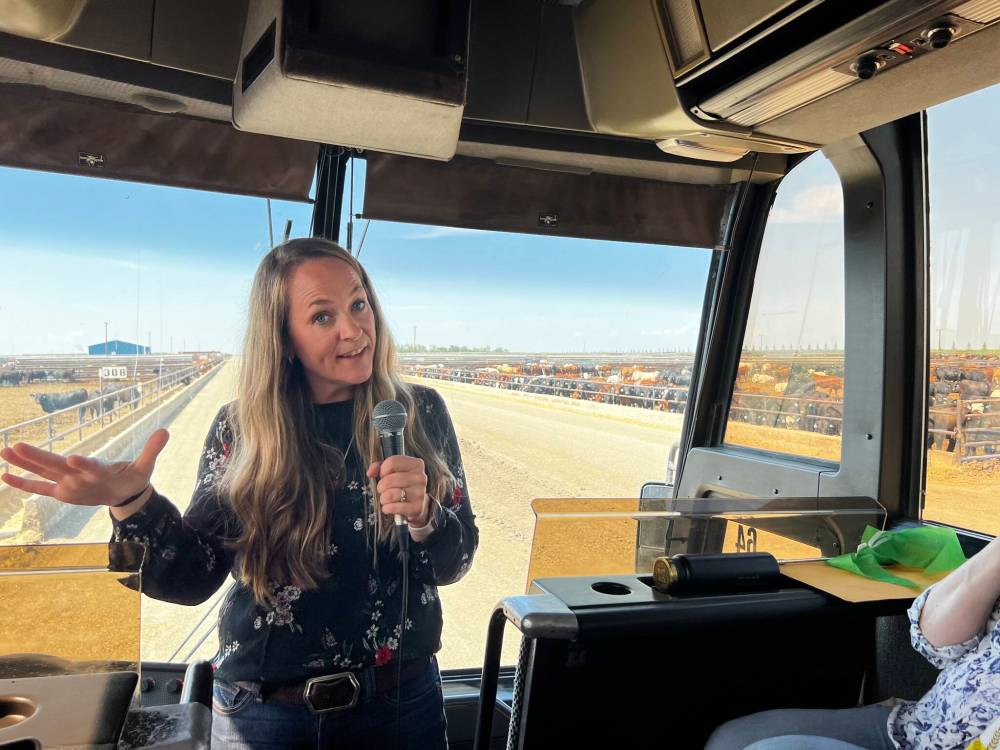
Kendra Donnelly, CFO of Rimrock Cattle Company. (Laura Rance photo)
“But our goal is to put the manure through the biodigester, and the end product is renewable natural gas because we upgrade the biogas for renewable natural gas. But the other end product that we’re really excited about is the digestate, because through that process you never lose the nutrients that are in the manure… it’s just in a different format and it’s significantly less odour,” she continued.
Donnelly, a certified management accountant and niece of Sunterra vice-president Glenn Price, is unabashedly excited about the potential for the livestock-feeding business to become more sustainable and acceptable to the general public.
“My big passion right now is on the sustainability side of beef production. I do love just the regular business too, but we need to respond to what the public is saying and communicating — and they want cattle to reduce emissions.”
A couple of kilometres away, Amanda Hehr exudes similar excitement about her role as president of a two-year-old Sunterra subsidiary that raises 20 acres of tomatoes and strawberries in a greenhouse through the long, cold Prairie winters.
When she set out to obtain her MBA, which led her to become a start-up entrepreneur, she never dreamed her career trajectory would one day lead her into agriculture.
“I consider myself a farmer, but a different kind of farmer. It’s more-modern farming,” she says as she guides visitors through the massive greenhouse. “I’m just a businessperson, I guess, but I don’t have a business background in agriculture or horticulture.”
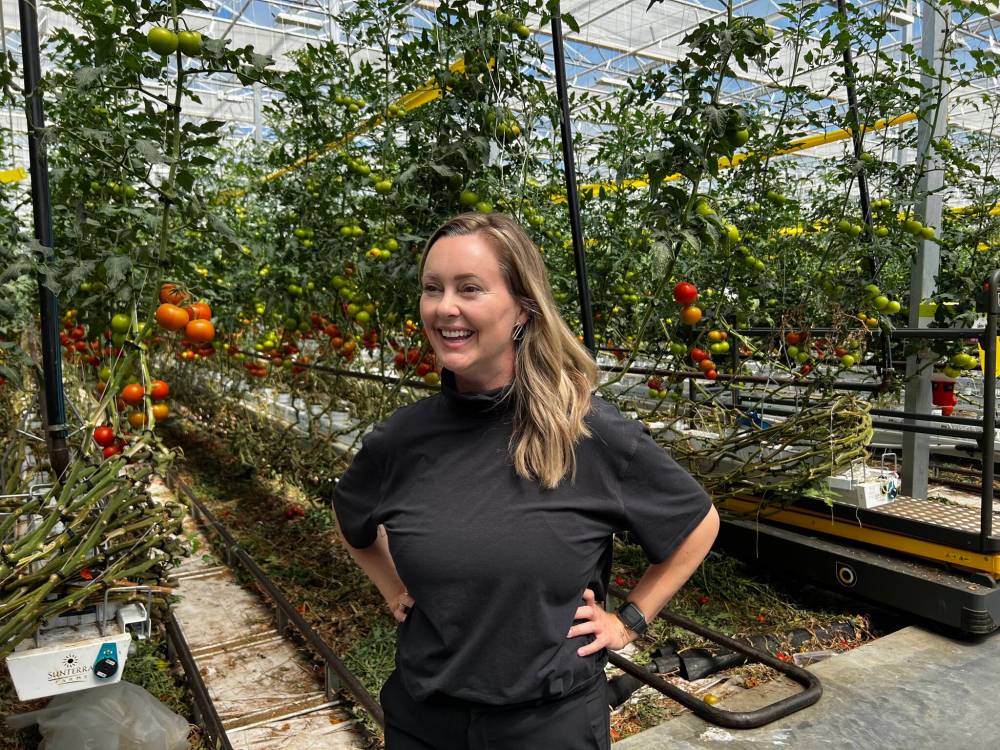
Amanda Hehr, president of Sunterra Greenhouses. (Laura Rance photo)
It’s hard not to get caught up in their enthusiasm, especially when labour shortages in food production and processing are reaching crisis proportions.
“I can tell you I’ve never worked harder than I’ve worked in the last two years, and I’ve never felt more proud of what I do,” says Hehr. This is so cool. This is magic. This is what we’re growing. Food people eat. We’re growing food. We’re addressing some macro- micro-economic stuff. We’re doing something good. We’re creating jobs in these rural communities, which is so important.”
It helps that the businesses in their care are successful, with both on a fast track to significant growth. It also helps that their management roles don’t confine them to “bottom-line” definitions of success. They get to live out their passion for creating a better world while making money for the owners. It’s exciting, dynamic and personally rewarding.
The Price family, which owns the Sunterra group, has embraced the fact that their diversification of what began decades ago as a pig farm into a multifaceted food production, processing and retail consortium required two things to succeed: an unwavering commitment to quality at every phase and skilled people who share that commitment.

Whether working in the Sunterra greenhouse, the feedlot, the hog barns, the sausage factory, the abattoir or one of the nine retail stores in Alberta, a high percentage of the Sunterra employees come from other countries. But they aren’t temporary.
“We call them transitional foreign workers,” says Sunterra president Ray Price. “Every one that lands here, we are going to convert them into Canadians or to landed immigrants or in our case, permanent residents.”
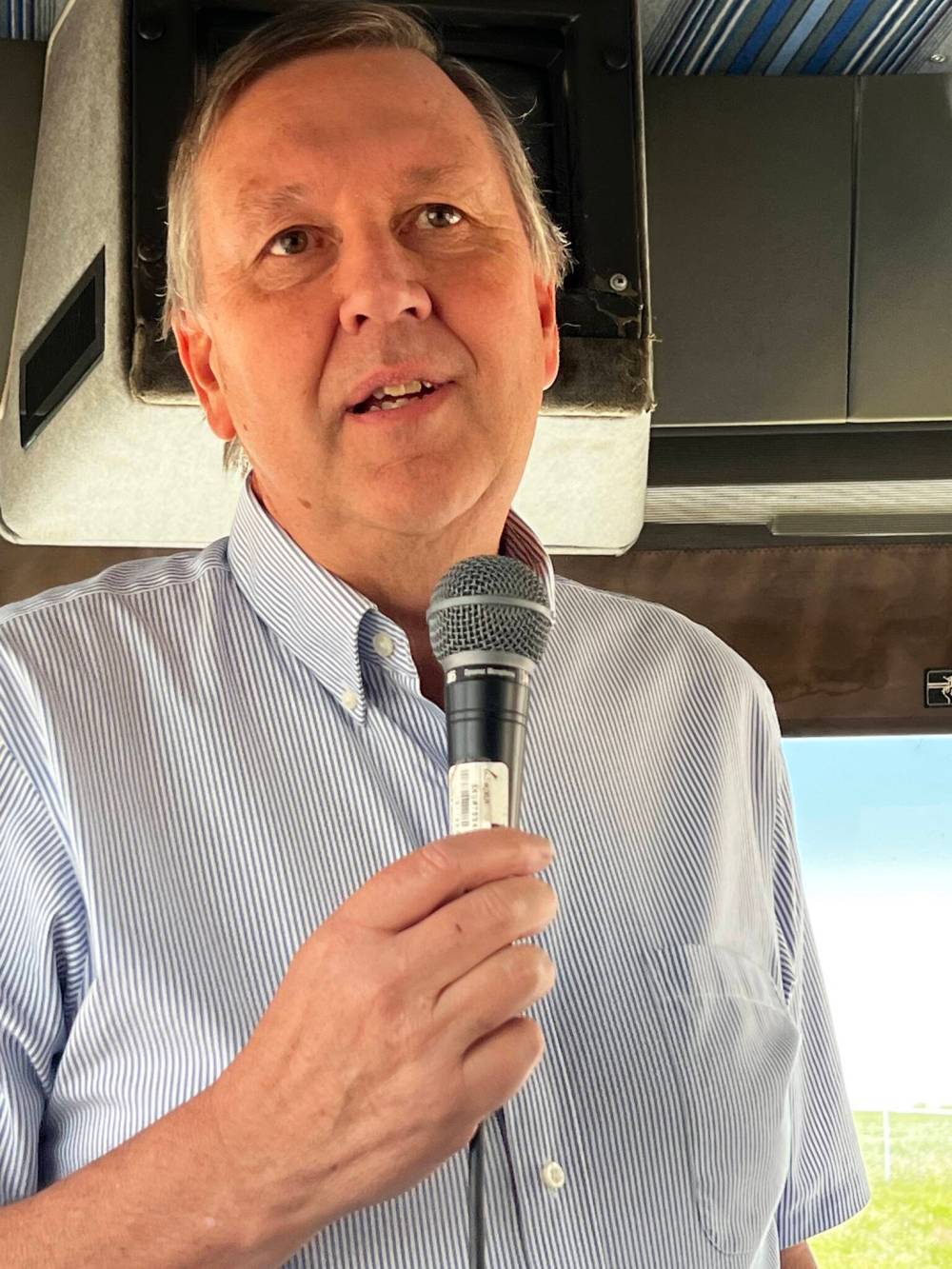
Ray Price, president of Sunterra Group. (Laura Rance photo)
How? They provide training and pay good wages in rural communities where employees can buy a house for about half of what they’d pay in Calgary. People come to work; they stay because they see a future with the company and in Canada.
It’s still complicated. But as a strategy for attracting new talent into agriculture and food, this one is working.
Laura Rance is vice-president of content for Glacier FarmMedia. She can be reached at lrance@farmmedia.com