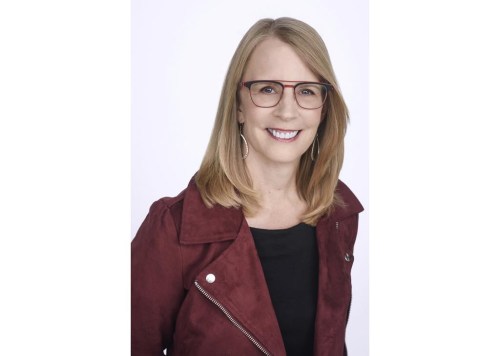
Liz Weston: Saving for retirement just got more complicated
Advertisement
Read this article for free:
or
Already have an account? Log in here »
To continue reading, please subscribe:

Digital Subscription
One year of digital access for only $205*
- Enjoy unlimited reading on winnipegfreepress.com
- Read the E-Edition, our digital replica newspaper
- Access News Break, our award-winning app
- Play interactive puzzles
*First annual payment billed as $205.00 + GST for one year. This annual subscription will automatically renew at $233.00 + GST every 52 weeks (10% off the regular annual price of $259.35). Offer available to new and qualified returning subscribers only. Cancel any time.
To continue reading, please subscribe:
Add Free Press access to your Brandon Sun subscription for only an additional
$1 for the first 4 weeks*
- Enjoy unlimited reading on winnipegfreepress.com
- Read the E-Edition, our digital replica newspaper
- Access News Break, our award-winning app
- Play interactive puzzles
*Your next Brandon Sun subscription payment will increase by $1.00 and you will be charged $17.95 plus GST for four weeks. After four weeks, your payment will increase to $24.95 plus GST every four weeks.
Read unlimited articles for free today:
or
Already have an account? Log in here »
Hey there, time traveller!
This article was published 10/07/2023 (1174 days ago), so information in it may no longer be current.
The Secure Act 2.0 legislation that passed late last year added new retirement savings options but also has a few potential catches for unsuspecting savers. Understanding these possible pitfalls may help you make better decisions, or at least be prepared for what’s to come.
In my last column, I covered one set of these changes: new exceptions to the 10% federal penalty for tapping retirement money early. For this column, I’ll cover what you need to know about Secure 2.0’s changes to catch-up contributions and company matches for workplace plans.
A POTENTIALLY PROBLEMATIC CATCH-UP PROVISION

Catch-up provisions have long allowed older workers to put more money into retirement plans. In 2023, for example, people 50 and older can contribute an additional $7,500 to 401(k)s and 403(b)s, on top of the standard $22,500 deferral limit for all employees in those plans.
Contributions that go into a plan’s pre-tax option are deductible. But starting next year, people who earn $145,000 or more will no longer get a tax deduction for their catch-up contributions to workplace retirement plans. They’ll be required instead to contribute the money to the plan’s Roth option. (People earning less than $145,000 may have the option, but not the requirement, to put catch-up contributions into the Roth.)
Withdrawals from Roths are tax-free in retirement, which can be a huge boon to many savers, says Colleen Carcone, director of wealth planning strategies at financial services firm TIAA. Contributing to a Roth is often recommended for younger workers who expect to be in the same or higher tax bracket in retirement.
But many people’s tax brackets drop once they retire. Roth contributions can make less sense for older workers who may be paying a higher tax rate on their contributions than they’d avoid on their withdrawals.
Many financial planners still recommend putting at least some money into a Roth so retirees can better control their tax bill in retirement, Carcone says.
However, losing the tax deduction could discourage people from making catch-up contributions, says economist Olivia S. Mitchell, executive director of the Pension Research Council, which researches retirement security issues.
And there’s another issue: Not all workplace plans have a Roth option. If an employer doesn’t add a Roth option, no one will be able to make catch-up contributions, Collado says.
ANOTHER PROBLEMATIC PROVISION: LAST-MINUTE CATCH-UPS
Beginning in 2025, workers ages 60 through 63 can make even larger catch-up contributions to workplace retirement plans. The maximum will be whichever is more: $10,000 or 150% of the standard catch-up contribution limit. The $10,000 will be adjusted annually for inflation. At age 64, the lower catch-up contribution limit again applies.
Higher earners who make these catch-up contributions must use the plan’s Roth option. Lower earners must be given the option to do so. (The $145,000 income limit will be adjusted annually for inflation, so we don’t know yet what the exact cut-off amount will be when this takes effect.)
The higher limits could be helpful for those who can take advantage of them. However, many people’s incomes are on the decline by the time they hit their 60s and they may not have the extra cash to contribute. A 2018 data analysis by ProPublica and the Urban Institute found that more than half of workers who enter their 50s with steady, full-time employment are pushed out of those jobs before they’re ready to retire — and the vast majority never recover financially.
And certainly no one should put off saving for retirement thinking they can catch up later, warns certified public accountant and financial planner Marianela Collado, who serves on the American Institute of CPAs’ personal financial planning executive committee.
“Nothing could make up for the power of starting to save early on in your career,” Collado says.
COMPANY MATCHES COULD COST YOU
Secure 2.0 continues the so-called “Rothification” of retirement plans by giving employers the option of putting matching funds in workers’ Roth accounts.
Currently, matching funds are contributed to pre-tax accounts, so they don’t add to a worker’s taxable income. Matching funds contributed to a Roth account, by contrast, would be considered taxable income for the employee.
This won’t be mandatory for anybody. Employers won’t be required to offer this option, and employees won’t be required to take it if it is offered, Collado says. If you do opt for Roth matching funds, though, you should be prepared to pay a higher tax bill.
Again, paying taxes now can make sense if you expect to be in a higher tax bracket in retirement — and you’re prepared to cough up the extra money.
THE TAKEAWAYS
Roths have a number of advantages, and many people will welcome the opportunity to save this way, but Roth contributions aren’t right for every saver. The Secure 2.0 changes have added enough complexity that people should consider getting expert advice about whether they’re saving enough and in the right ways, Carcone says.
“It’s just important for individuals to make sure that they’re meeting and speaking with their financial advisor,” Carcone says.
___________________________

This column was provided to The Associated Press by the personal finance website NerdWallet. The content is for educational and informational purposes and does not constitute investment advice. Liz Weston is a columnist at NerdWallet, a certified financial planner and author of “Your Credit Score.” Email: lweston@nerdwallet.com. Twitter: @lizweston.
RELATED LINK:
NerdWallet: How to save for retirement https://bit.ly/nerdwallet-saving-retirement
ProPublica and the Urban Institute used data from the University of Michigan’s the Health and Retirement Study survey, a nationally representative sample of U.S. adults age 51 and older. The ProPublica/Urban Institute followed a group of 2,086 respondents from their early 50s to age 65 and beyond. The respondents, who were tracked from 1992 to 2016, were full time workers at the start of the study, were employed year round and had been with their current employer or were self employed for at least five years.
Urban Institute. (December, 2018). “How Secure Is Employment at Older Ages?” https://www.urban.org/sites/default/files/publication/99570/how_secure_is_employment_at_older_ages_2.pdf