‘A life-saving tool’: More people carrying naloxone to help strangers on the street
Advertisement
Read this article for free:
or
Already have an account? Log in here »
To continue reading, please subscribe:
Digital Subscription
One year of digital access for only $1.44 a week*
- Enjoy unlimited reading on winnipegfreepress.com
- Read the E-Edition, our digital replica newspaper
- Access News Break, our award-winning app
- Play interactive puzzles
*Billed as $5.77 plus GST every four weeks. After 52 weeks, price increases to the regular rate of $19.95 plus GST every four weeks. Offer available to new and qualified returning subscribers only. Cancel any time.
To continue reading, please subscribe:
Add Free Press access to your Brandon Sun subscription for only an additional
$1 for the first 4 weeks*
- Enjoy unlimited reading on winnipegfreepress.com
- Read the E-Edition, our digital replica newspaper
- Access News Break, our award-winning app
- Play interactive puzzles
*Your next Brandon Sun subscription payment will increase by $1.00 and you will be charged $17.95 plus GST for four weeks. After four weeks, your payment will increase to $24.95 plus GST every four weeks.
Read unlimited articles for free today:
or
Already have an account? Log in here »
Hey there, time traveller!
This article was published 11/07/2023 (1193 days ago), so information in it may no longer be current.
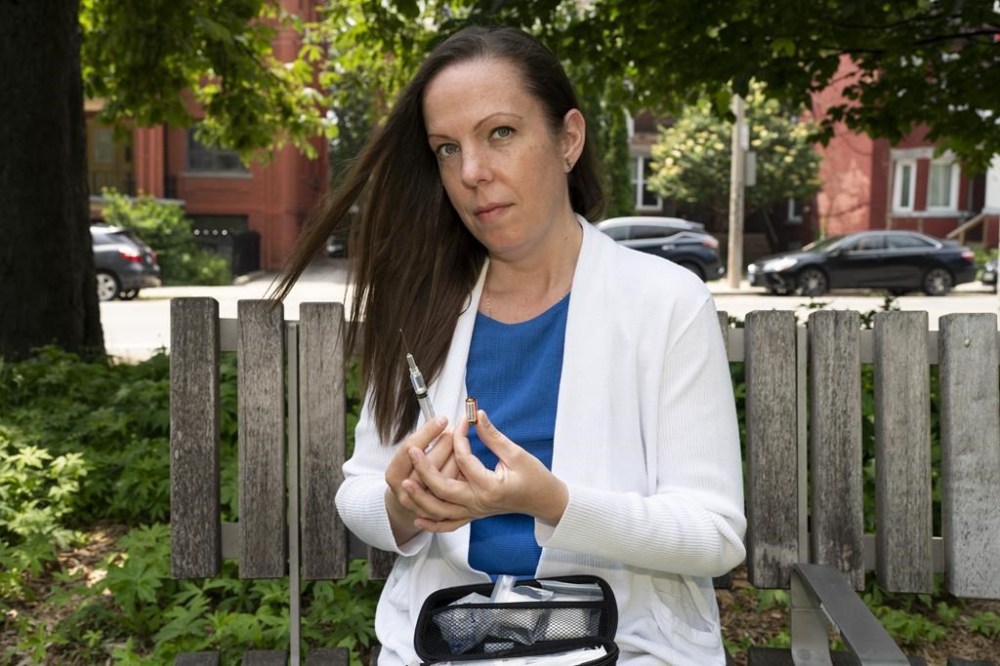
Kym Porter has been carrying a naloxone kit in her purse since her son died of an overdose more than six years ago.
Porter, a retired school teacher in Medicine Hat, Alta., was trained to use both the syringe and nasal versions of the overdose reversal drug, but never ran into an emergency situation until May.
“I saw this fellow lying under a tree and he wasn’t moving,” Porter said.
She approached the man, looked for any drug paraphernalia, called out to him and shook his shoulders. No response.
Porter dialed first responders and reached for her naloxone kit.
“But for some reason, I don’t know why, I hesitated,” she said. “I didn’t administer it.”
Emergency crews arrived and brought back the manwho confirmed to her that he had overdosed.
Naloxone kits are easily available, over-the-counter antidotes that block the effects of opioids such as fentanyl, heroin, morphine or codeine.
More people are carrying naloxone kits with them on the streets as drug poisoning-related fatalities break records every passing year in Canada.
In Alberta, the latest numbers show April was the deadliest month, with 179 deaths from opioid overdoses.
Caitlin Shane, a drugs policy lawyer with Pivot Legal Society in Vancouver, said she sees people in the community, as well as health professionals on and off the job helping others who may have overdosed on opioids.
“Oftentimes, it’s people who just happen to be walking by (and) have naloxone attached to their bag or backpack,” she said.
Shane said it is crucial to know the signs of an overdose to ascertain when to administer naloxone.
“That way, you can feel more comfortable doing it.”
The signs could be shallow breathing, blue or grey lips or nails, small pupils, the inability to wake up despite calling out or shaking the person, and choking or snoring sounds.
“If you believe someone is overdosing and you’re not sure if it’s an opioid or stimulant overdose, Health Canada recommends administration (of naloxone),” she said.
“The outcome will most likely be better than not administering it.”
The U.S. Food and Drug Administration says injecting naloxone into a person who may be unconscious for other reasons such as diabetic coma or cardiac arrest would not cause them additional harm.
Shane said the Emergency Medical Aid Act protects people who administer naloxone outside of a health or medical setting in Alberta, or when the person is not being compensated for their help.
“If you’re walking down the sidewalk and you see someone has overdosed and you administer naloxone, and in doing that, you injure the person or cause their death, you will not be legally liable,” she explained.
The only exception is if the injury or death is caused by “gross negligence,” Shane added.
Candice Chaffey, a nurse at a Toronto-area hospital, was on her way to pick up a takeout pizza when her eyes caught a man lying unconscious on the pavement.
The man was surrounded by bystanders in Brampton, Ont., as they waited for paramedics to arrive.
Chaffey approached the man and began with sternal rubs on the chest to wake him up. She knew it was an overdose.
“I ran home and got back with my naloxone kit within 30 seconds,” Chaffey recalled of the evening last summer.
She opened the kit, pulled out the ampoule, pulled it through the syringe and injected naloxone into the man.
“He immediately started to get up and said, ‘Why did you poke me?'” she recalled.
The man passed out again so Chaffey repeated the steps with a second dose and helped him get up. But the man wasn’t happy with the intrusion.
Chaffey said things could get violent. It didn’t in this case.
“That is a risk you take,” she said.
She warned that people shouldn’t put themselves at risk if they are not comfortable approaching a person who is potentially overdosing.
“The best thing to do is just wait for a paramedic to arrive,” Chaffey said.
For Porter, the hesitation wasn’t coming from safety or legal concerns. Instead, she felt she was “overdramatizing” the situation when she came across an unconscious man.
“I questioned myself,” Porter said. “Am I just wanting to do this because I know how to do this? Am I making too big of a deal about this?”
Looking back at the day, Porter said she wouldn’t hesitate to administer naloxone if it happens again.
She recalled her 31-year-old son’s last interaction with a neighbour before he died of drug poisoning.
“The woman upstairs came down. (My son’s) door was open. She saw him lying on the floor, snoring and didn’t realize he was dying,” she said.
“She kindly covered him with a blanket, thinking he was asleep.”
Porter said if the neighbour knew the signs, her son could have lived.
“I’m not an expert, I’m not a nurse, I’m not wise enough to know how sick a person is,” she said.

“But naloxone is a life-saving tool.”
This report by The Canadian Press was first published July 3, 2023.
—
This story was produced with the financial assistance of the Meta and Canadian Press News Fellowship.
Note to readers: This story has been updated to clarify the Emergency Medical Aid Act applies in Alberta.
Related Articles
Naloxone deliveries still short: community groups


Advertisement Advertise With Us
Advertisement Advertise With Us