Indigenous women in Canada forcibly sterilized decades after other rich countries stopped
Advertisement
Read this article for free:
or
Already have an account? Log in here »
To continue reading, please subscribe:

Digital Subscription
One year of digital access for only $205*
- Enjoy unlimited reading on winnipegfreepress.com
- Read the E-Edition, our digital replica newspaper
- Access News Break, our award-winning app
- Play interactive puzzles
*First annual payment billed as $205.00 + GST for one year. This annual subscription will automatically renew at $233.00 + GST every 52 weeks (10% off the regular annual price of $259.35). Offer available to new and qualified returning subscribers only. Cancel any time.
To continue reading, please subscribe:
Add Free Press access to your Brandon Sun subscription for only an additional
$1 for the first 4 weeks*
- Enjoy unlimited reading on winnipegfreepress.com
- Read the E-Edition, our digital replica newspaper
- Access News Break, our award-winning app
- Play interactive puzzles
*Your next Brandon Sun subscription payment will increase by $1.00 and you will be charged $17.95 plus GST for four weeks. After four weeks, your payment will increase to $24.95 plus GST every four weeks.
Read unlimited articles for free today:
or
Already have an account? Log in here »
Hey there, time traveller!
This article was published 12/07/2023 (1163 days ago), so information in it may no longer be current.
TORONTO (AP) — Decades after many other rich countries stopped forcibly sterilizing Indigenous women, numerous activists, doctors, politicians and at least five class-action lawsuits allege the practice has not ended in Canada.
A Senate report last year concluded “this horrific practice is not confined to the past, but clearly is continuing today.” In May, a doctor was penalized for forcibly sterilizing an Indigenous woman in 2019.
Indigenous leaders say the country has yet to fully reckon with its troubled colonial past — or put a stop to a decades-long practice that is considered genocide.
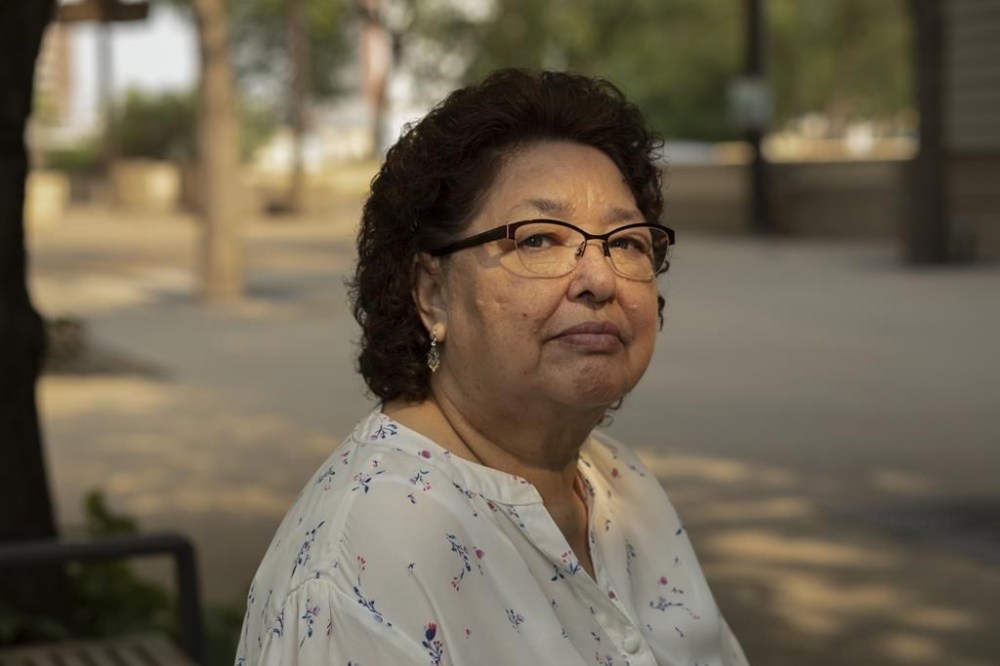
There are no solid estimates on how many women are being sterilized against their will, but Indigenous experts say they regularly hear complaints about it. Sen. Yvonne Boyer, whose office is collecting the limited data available, says at least 12,000 women have been affected since the 1970s.
“Whenever I speak to an Indigenous community, I am swamped with women telling me that forced sterilization happened to them,” Boyer, who has Indigenous Metis heritage, told The Associated Press.
Medical authorities in Canada’s Northwest Territories sanctioned a doctor in May for forcibly sterilizing an Indigenous woman, according to documents obtained by the AP.
Dr. Andrew Kotaska performed the 2019 operation to relieve an Indigenous woman’s abdominal pain. He had her written consent to remove her right fallopian tube but not her left one, which would leave her sterile.
Despite objections from other medical staff during the surgery, Kotaska took out both fallopian tubes.
The investigation concluded there was no medical justification for the sterilization, and Kotaska was found to have engaged in unprofessional conduct. Kotaska’s “severe error in surgical judgment” was unethical, cost the patient the chance to have more children and could undermine trust in the medical system, investigators said.
The case was likely not exceptional.
Thousands of Indigenous Canadian women over the past seven decades were coercively sterilized, in line with eugenics legislation that deemed them inferior.
The Geneva Conventions describe forced sterilization as a type of genocide and crime against humanity and the Canadian government has condemned forced sterilization elsewhere, including of Uyghur women in China.
In 2018, the U.N. Committee Against Torture told Canada it was concerned about persistent reports of forced sterilization, saying all allegations should be investigated.
In 2019, Prime Minister Justin Trudeau acknowledged that the murders and disappearances of Indigenous women across Canada amounted to “genocide,” but activists say little has been done to address ingrained prejudices against the Indigenous, allowing forced sterilizations to continue.
In a statement, the Canadian government told the AP it was aware of allegations that Indigenous women were forcibly sterilized and the matter is before the courts.
“Sterilization of women without their informed consent constitutes an assault and is a criminal offense,” the government said. It acknowledged that bias in the health system “continues to have catastrophic effects” on Indigenous people.
—-
Indigenous people comprise about 5% of Canada’s nearly 40 million people. The more than 600 Indigenous communities across Canada, known as First Nations, face significant health challenges compared to other Canadians.
Until the 1990s, Indigenous people were mostly treated in segregated hospitals, where there were reports of rampant abuse.
It’s difficult to say how common sterilization — with or without consent — happens. Canada’s national health agency doesn’t routinely collect sterilization data, including the ethnicity of patients.
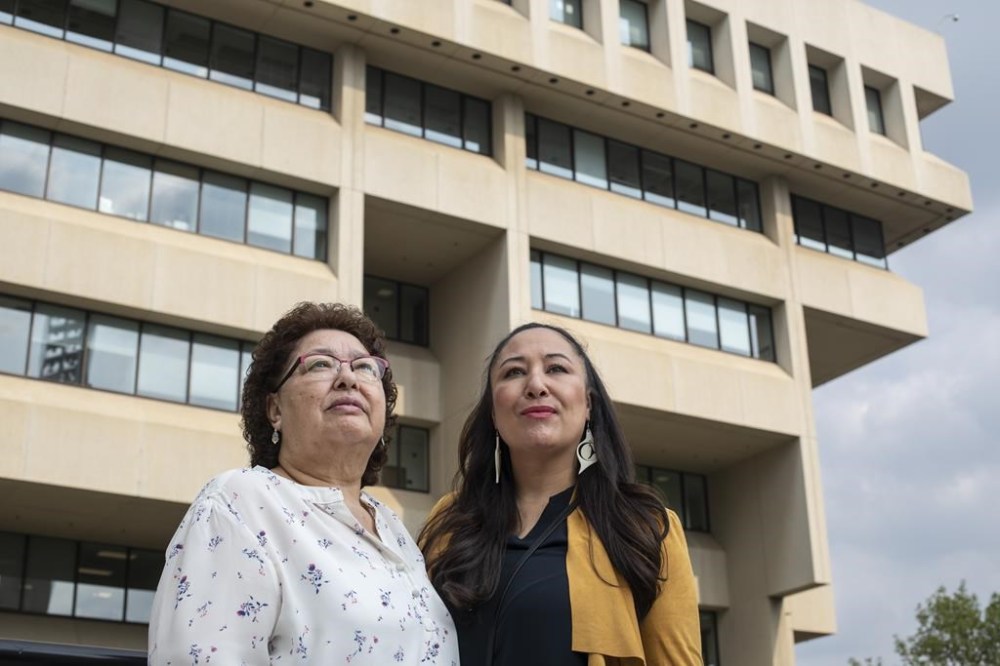
In 2019, Sylvia Tuckanow told the Senate committee investigating forced sterilizations about how she gave birth in a Saskatoon hospital in July 2001. She described being disoriented from medication and being tied to a bed as she cried.
“I could smell something burning,” she said. “When the (doctor) was finished, he said, ‘There: tied, cut and burnt. Nothing will get through that,’” Tuckanow said, referring to her fallopian tubes. She said she hadn’t consented.
In November, a report documented nearly two dozen forced sterilizations in Quebec from 1980 to 2019, including one woman who said her doctor told her after bladder surgery that he had removed her uterus at the same time — without her consent.
The report concluded that doctors and nurses “insistently questioning whether a First Nations or Inuit mother wants to (be sterilized) after the birth of her first child seems to be an existing practice in Quebec.”
Some women were not even aware they were sterilized.
Morningstar Mercredi, an Alberta-based Indigenous author, was sterilized as a 14-year-old, but didn’t find out until decades later when she sought help after being unable to conceive.
“I went into a catatonic stage and had a nervous breakdown,” Mercredi wrote in her 2021 book, “Sacred Bundles Unborn.”
She said the impact of forced sterilizations on First Nations people was “staggering,” describing the generations of lost Indigenous lives as a “genocide.”
The Senate report on forced sterilization made 13 recommendations, including compensating victims, measures to address systemic racism in health care and a formal apology.
In response to questions from the AP, the Canadian government said it recognized “the pressing need” to end forced sterilization. The government said it had invested more than 87 million Canadian dollars ($65 million) to improve access to “culturally safe” health services, one-third of which supports Indigenous midwifery initiatives.
Last year, the government allocated 6.2 million Canadian dollars ($4.7 million) to help survivors of forced sterilization.
____
Dr. Alika Lafontaine, the first Indigenous president of the Canadian Medical Association, recalls times when it was unclear whether Indigenous women had agreed to sterilization.
“In my residency, there were situations where we would do C-sections on patients and someone would lean over and say, ‘So we’ll also clip her (fallopian) tubes,’” he said. “It never crossed my mind whether these patients had an informed conversation” about sterilization, he said, adding he assumed that had happened before patients were on the operating table.
Dr. Ewan Affleck, who made a 2021 film, “ The Unforgotten,” about the pervasive racism against Canada’s Indigenous people, noted an ongoing “power imbalance” in health care. “If you have a white doctor saying to an Indigenous woman, ‘You should be sterilized,’ it may very likely happen,” Affleck said.
___
There are at least five class-action lawsuits against health, provincial and federal authorities involving forced sterilizations in Alberta, Saskatchewan, Quebec, British Columbia, Manitoba, Ontario and elsewhere.
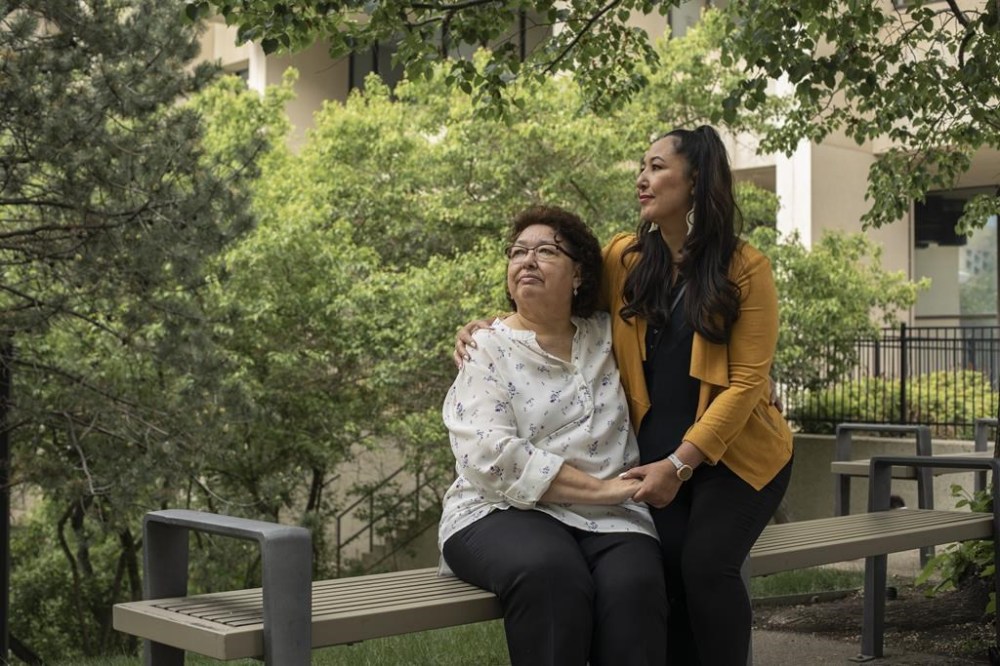
May Sarah Cardinal, the representative plaintiff in the Alberta case, said she was pressured into having her tubes tied after having her second child in 1977, but the doctor never explained the procedure was irreversible.
“The doctor told me: ‘There are hard times ahead and how are you going to look after a bunch of kids? What if your husband leaves?’” Cardinal told the AP. “I didn’t feel like I had a say.”
In the case against Kotaska, documents show an anesthetist and surgical nurse became alarmed when he said during the surgery to remove the woman’s right fallopian tube: “Let’s see if I can find a reason to take the left tube as well.”
Kotaska said he was “voicing his thought process out loud” that removing both tubes would lessen the woman’s pelvic pain.
Describing Kotaska’s actions as “a violation of his ethical obligations,” investigators suspended Kotaska’s medical license for five months and ordered him to take an ethics course. The woman is suing Kotaska and hospital authorities for 6 million Canadian dollars ($4.38 million).
There was no suggestion in the documents that Kotaska was motivated by racism. He declined to comment to the AP.
“People don’t want to believe things like this are happening in Canada, but cases like this explain why entire First Nations populations still feel unsafe,” said Dr. Unjali Malhotra, medical officer of the First Nations Health Authority in British Columbia.
Mercredi said she continues to suffer from being sterilized without her knowledge.
“No amount of therapy or healing can reconcile the fact that my human right to have children was taken from me,” she said.
___
The Associated Press Health and Science Department receives support from the Howard Hughes Medical Institute’s Science and Educational Media Group. The AP is solely responsible for all content.
___
This story has been corrected to show Dr. Unjali Malhotra’s title is medical officer, not chief medical officer.