Sarah Silverman and novelists sue ChatGPT-maker OpenAI for ingesting their books
Advertisement
Read this article for free:
or
Already have an account? Log in here »
To continue reading, please subscribe:

Digital Subscription
One year of digital access for only $205*
- Enjoy unlimited reading on winnipegfreepress.com
- Read the E-Edition, our digital replica newspaper
- Access News Break, our award-winning app
- Play interactive puzzles
*First annual payment billed as $205.00 + GST for one year. This annual subscription will automatically renew at $233.00 + GST every 52 weeks (10% off the regular annual price of $259.35). Offer available to new and qualified returning subscribers only. Cancel any time.
To continue reading, please subscribe:
Add Free Press access to your Brandon Sun subscription for only an additional
$1 for the first 4 weeks*
- Enjoy unlimited reading on winnipegfreepress.com
- Read the E-Edition, our digital replica newspaper
- Access News Break, our award-winning app
- Play interactive puzzles
*Your next Brandon Sun subscription payment will increase by $1.00 and you will be charged $17.95 plus GST for four weeks. After four weeks, your payment will increase to $24.95 plus GST every four weeks.
Read unlimited articles for free today:
or
Already have an account? Log in here »
Hey there, time traveller!
This article was published 12/07/2023 (1166 days ago), so information in it may no longer be current.
Ask ChatGPT about comedian Sarah Silverman’s memoir “The Bedwetter” and the artificial intelligence chatbot can come up with a detailed synopsis of every part of the book.
Does that mean it effectively “read” and memorized a pirated copy? Or it scraped so many customer reviews and online chatter about the bestseller or the musical it inspired that it passes for an expert?
The U.S. courts may now help sort that out after Silverman sued ChatGPT-maker OpenAI for copyright infringement this week, joining a growing number of writers who say they unwittingly built the foundation for Silicon Valley’s red-hot AI boom.
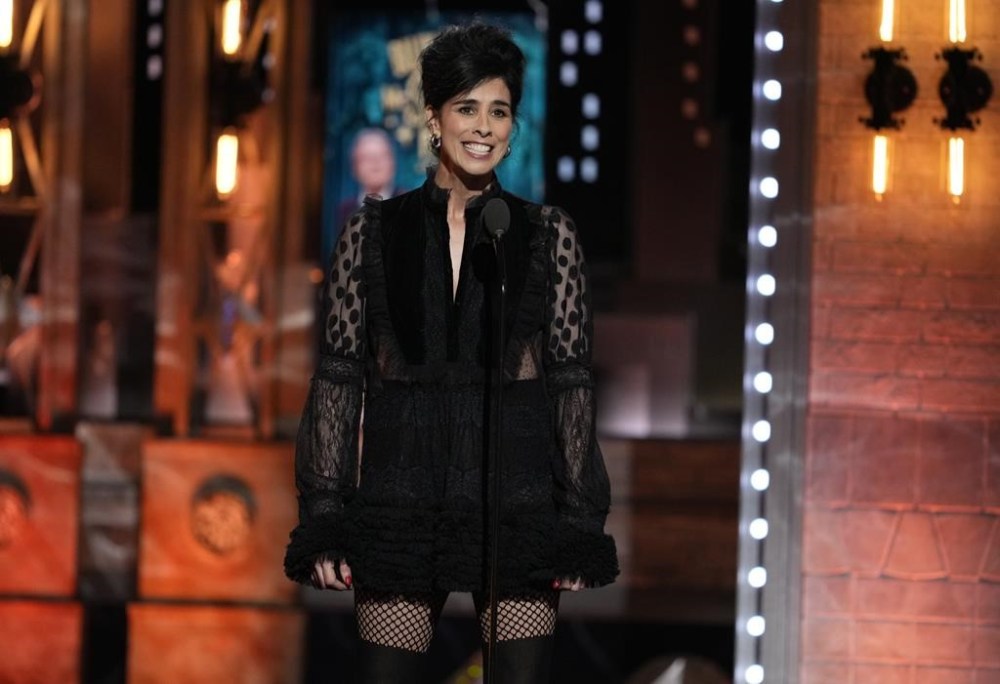
Silverman’s lawsuit says she never gave permission for OpenAI to ingest the digital version of her 2010 book to train its AI models, and it was likely stolen from a “shadow library” of pirated works. It says the memoir was copied “without consent, without credit, and without compensation.”
It’s one of a mounting number of cases that could crack open the secrecy of OpenAI and its rivals about the valuable data used to train increasingly widely used “generative AI” products that create new text, images and music. And it raises questions about the ethical and legal bedrock of tools that the McKinsey Global Institute projects will add the equivalent of $2.6 trillion to $4.4 trillion to the global economy.
“This is an open, dirty secret of the whole machine learning industry,” said Matthew Butterick, one of the lawyers representing Silverman and other authors in seeking a class-action case. “They love book data and they get it from these illicit sites. We’re kind of blowing the whistle on that whole practice.”
OpenAI declined to comment on the allegations. Another lawsuit from Silverman makes similar claims about an AI model built by Facebook and Instagram parent company Meta, which also declined comment.
It may be a tough case for writers to win, especially after Google’s success in beating back legal challenges to its online book library. The U.S. Supreme Court in 2016 let stand lower court rulings that rejected authors’ claim that Google’s digitizing of millions of books and showing small portions of them to the public amount to “copyright infringement on an epic scale.”
“I think what OpenAI has done with books is awfully close to what Google was allowed to do with its Google Books project and so will be legal,” said Deven Desai, associate professor of law and ethics at the Georgia Institute of Technology.
While only a handful have sued, including Silverman and bestselling novelists Mona Awad and Paul Tremblay, concerns about the tech industry’s AI-building practices have gained traction in literary and artist communities.
Other prominent authors — among them Nora Roberts, Margaret Atwood, Louise Erdrich and Jodi Picoult — signed a letter late last month to the CEOs of OpenAI, Google, Microsoft, Meta and other AI developers accusing them of exploitative practices in building chatbots that “mimic and regurgitate” their language, style and ideas.
“Millions of copyrighted books, articles, essays, and poetry provide the ‘food’ for AI systems, endless meals for which there has been no bill,” said the open letter organized by the Authors Guild and signed by more than 4,000 writers. “You’re spending billions of dollars to develop AI technology. It is only fair that you compensate us for using our writings, without which AI would be banal and extremely limited.”
The AI systems behind popular products such as ChatGPT, Google’s Bard and Microsoft’s Bing chatbot are known as large language models that have “learned” by analyzing and picking up patterns from a wide body of ingested text. They’ve awed the public with their strong command of the human language, though they’re also known for a tendency to spout falsehoods.
While the models have also been trained on news articles and social media feeds, books are particularly valuable, as OpenAI acknowledged in a 2018 paper cited in Silverman’s lawsuit.
“You’re spending billions of dollars to develop AI technology. It is only fair that you compensate us for using our writings, without which AI would be banal and extremely limited.”–Authors Guild letter
The earliest version of OpenAI’s large language model, known as GPT-1, relied on a dataset compiled by university researchers called the Toronto Book Corpus that included thousands of unpublished books, some in the adventure, fantasy and romance genres.
“Crucially, it contains long stretches of contiguous text, which allows the generative model to learn to condition on long-range information,” OpenAI researchers said at the time. Other tech companies such as Google and Amazon also relied on the same data, which is no longer available in its original form.
But since then, OpenAI and other top AI developers have grown more secretive about their sources of data, even as they have ingested even larger troves of written works. Butterick said circumstantial evidence points to the use of so-called shadow libraries of pirated content that held the works of Silverman and other plaintiffs.
“It’s important for their models because books are the best source of long-form, well-edited, coherent writing,” he said. “You basically can’t have a high-quality language model unless you have books in your training data.”
It could be weeks or months before a formal response is due from OpenAI. But once the case proceeds, tech executives could have to testify, under oath, about what sources of books they downloaded.
“As far as we know, the other side hasn’t denied it,” said Joseph Saveri, another of Silverman’s lawyers. “They don’t have an alternative explanation for this.”
Saveri said authors aren’t necessarily asking tech companies to throw away their algorithms and training data and start over — though the U.S. Federal Trade Commission has set a precedent for forcing companies to destroy ill-gotten AI data. But some way of compensating writers is needed, he said.
Related Articles
ChatGPT-maker OpenAI signs deal with AP to license news stories
Advertisement Advertise With Us
Advertisement Advertise With Us