Did past health accords work? Ottawa is trying to make that question easier to answer
Advertisement
Read this article for free:
or
Already have an account? Log in here »
To continue reading, please subscribe:

Digital Subscription
One year of digital access for only $205*
- Enjoy unlimited reading on winnipegfreepress.com
- Read the E-Edition, our digital replica newspaper
- Access News Break, our award-winning app
- Play interactive puzzles
*First annual payment billed as $205.00 + GST for one year. This annual subscription will automatically renew at $233.00 + GST every 52 weeks (10% off the regular annual price of $259.35). Offer available to new and qualified returning subscribers only. Cancel any time.
To continue reading, please subscribe:
Add Free Press access to your Brandon Sun subscription for only an additional
$1 for the first 4 weeks*
- Enjoy unlimited reading on winnipegfreepress.com
- Read the E-Edition, our digital replica newspaper
- Access News Break, our award-winning app
- Play interactive puzzles
*Your next Brandon Sun subscription payment will increase by $1.00 and you will be charged $17.95 plus GST for four weeks. After four weeks, your payment will increase to $24.95 plus GST every four weeks.
Read unlimited articles for free today:
or
Already have an account? Log in here »
Hey there, time traveller!
This article was published 13/07/2023 (1186 days ago), so information in it may no longer be current.
OTTAWA – In medicine, before a doctor treats a patient’s illness, they first try to get a sense of the person’s health.
They collect information on the symptoms, run tests and blood work and gather whatever details they can.
That way, they’ll know whether or not the medicine has worked.
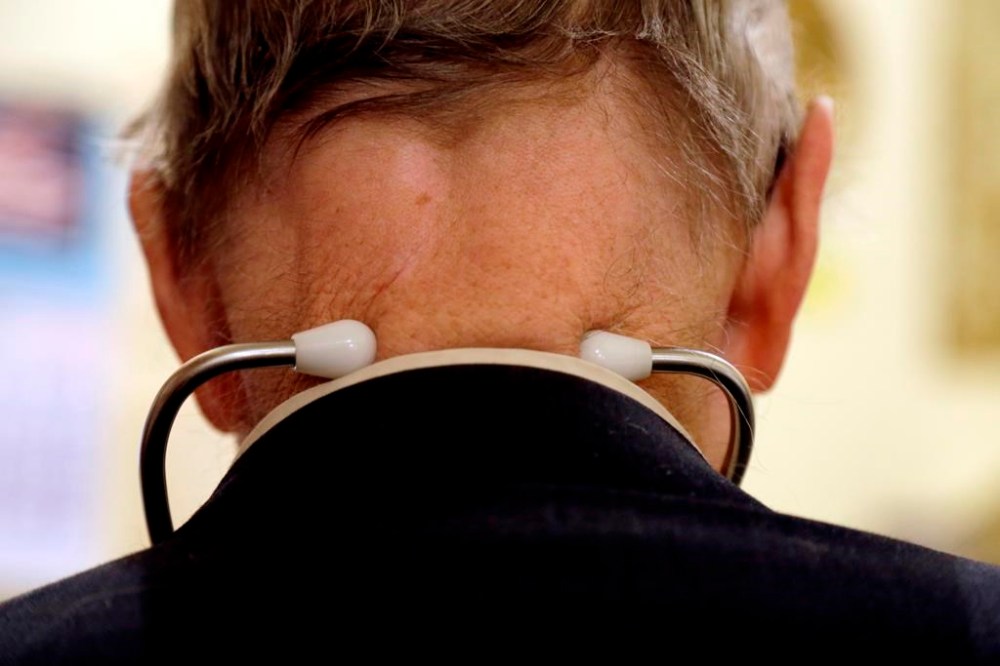
It’s called establishing a baseline, and policy experts do the same thing to figure out if their latest strategy has actually fixed the problem.
When it comes to fixing Canada’s ailing health-care systems, governments have often failed to set that baseline — so it’s difficult to know how well the treatment has worked, said Haizhen Mou, a professor with University of Saskatchewan Johnson-Shoyama Graduate School of Public Policy.
She launched a research project to study whether past health accords between federal and provincial governments have made meaningful differences in the quality and availability of health care in Canada, but ran into trouble almost immediately.
“What I’m trying to figure out is whether we can find comparable data to conduct a meaningful evaluation of the impact of those health accords,” Mou said.
“So far, the answer is no.”
Successive federal governments have attempted to measure the impact of the cash they inject into provincial and territorial health systems over the years by demanding reports on specific indicators. Every new deal has led to incremental improvements in health-data collection over the years, said Mou.
This time, the government is looking to create a complete picture of the system by overhauling the way Canada collects and shares health data.
Prime Minister Justin Trudeau offered provinces and territories $46 billion in new spending over the next 10 years to address the health crisis that unfolded in the aftermath of the COVID-19 pandemic.
In exchange, provinces must create measurable goals they hope to accomplish with the funds, and agree to a pact that would harmonize health data across the country and make it more accessible.
All but Quebec have formally accepted the deal in principle, and in March, all provincial and territorial deputy ministers of health — with the exception of Quebec’s — endorsed a new plan to make it happen.
The effort began under former prime minister Paul Martin, Mou said.
“I think the 2004 health accords were, from a historical perspective, quite a success,” Mou said of the $41 billion deal struck between Martin and provinces.
At the time, the accord was billed as a “fix for a generation” that would dramatically transform the health-care system.
That transformation was not accomplished, but Mou said there was particular attention paid to measuring success, and that is starting to pay off.
“It was the beginning of a change.”
The 2004 accords included the establishment of the now-defunct Health Council of Canada, with a mandate to monitor and report on the progress provinces made on the commitments laid out in the deal.
Stephen Harper was able to measure some improvements in wait times for certain procedures after he created the $612 million wait-time guarantee in 2007, at least in the short term.
Trudeau’s government also tried to measure the impact of the 2017 one-on-one funding deals signed with provinces to improve home care and mental-health services. Provinces again agreed to provide information about how there were progressing in certain areas, such as wait times for community mental-health counselling.
But Mou found that no one took a snapshot of where they started to measure how far they’d come.
And the resulting data were incomplete and sometimes non-existent.
It’s not that there’s a total dearth of information.
Statistics Canada, Health Canada and the Canadian Institute for Health Information all collect and report on how Canada’s health systems are doing on a regular basis.
But with 13 health systems operating independently, the information can be hard to compare.
Now, rather than try to pull information on certain indicators, the federal government wants provinces to make all of their data more accessible.
“We’ve been trying to do it for years now,” said Abhi Kalra, executive vice-president of Canada Health Infoway, an arm’s-length organization funded by the federal government to push health systems into the digital age.
Canada Health Infoway developed the federal and provincial plan to make individual health records and information more accessible to patients and clinicians, which can then be used to measure the health of the population and the system overall.
“We have started to now not differentiate between the data for the clinical use versus the secondary use,” he said.
“I think data is data.”
The group expects health systems will save hundreds of millions of dollars and doctors could save millions of hours by making patient info and health data easier to access.
The plan has a 10-year horizon but is still in its early stages, and some provinces are farther along than others when it comes to upgrading their technology.
The cost of the project has yet to be determined.
It’s good to see a plan that looks beyond the next election cycle, said Kim McGrail, professor at the UBC School of Population and Public Health.

She served as an expert adviser to the government on health-data strategy throughout the COVID-19 pandemic.
“It is long term investment and change,” McGrail said. “It will take quite a long time for adoption of those standards and then actual implementation.”
Similar efforts in the United States took more than a decade, she said, and as technology changes health systems will need to continuously adapt.
If it works, politicians should have a better sense of whether the deals they strike have actually worked. And, perhaps more importantly, patients will have a better sense of their own health baseline as well.
This report by The Canadian Press was first published July 13, 2023.