Fleeing a faith
What’s behind people’s decisions to leave a place of worship?

Advertisement
Read this article for free:
or
Already have an account? Log in here »
To continue reading, please subscribe:
Digital Subscription
One year of digital access for only $1.44 a week*
- Enjoy unlimited reading on winnipegfreepress.com
- Read the E-Edition, our digital replica newspaper
- Access News Break, our award-winning app
- Play interactive puzzles
*Billed as $5.77 plus GST every four weeks. After 52 weeks, price increases to the regular rate of $19.95 plus GST every four weeks. Offer available to new and qualified returning subscribers only. Cancel any time.
To continue reading, please subscribe:
Add Free Press access to your Brandon Sun subscription for only an additional
$1 for the first 4 weeks*
- Enjoy unlimited reading on winnipegfreepress.com
- Read the E-Edition, our digital replica newspaper
- Access News Break, our award-winning app
- Play interactive puzzles
*Your next Brandon Sun subscription payment will increase by $1.00 and you will be charged $17.95 plus GST for four weeks. After four weeks, your payment will increase to $24.95 plus GST every four weeks.
Read unlimited articles for free today:
or
Already have an account? Log in here »
Hey there, time traveller!
This article was published 04/08/2023 (1177 days ago), so information in it may no longer be current.
Why do people leave their church, mosque, synagogue or other place of worship? A new survey from the United States provides some answers.
The survey was conducted by the Public Religion Research Institute, a non-profit, nonpartisan organization dedicated to conducting independent research at the intersection of religion, culture and public policy.
Overall, the number 1 reason people left their religion was they stopped believing in what it taught. The second reason why they left was because they were turned off by the religion’s negative teachings about or treatment of LGBTTQ+ people.
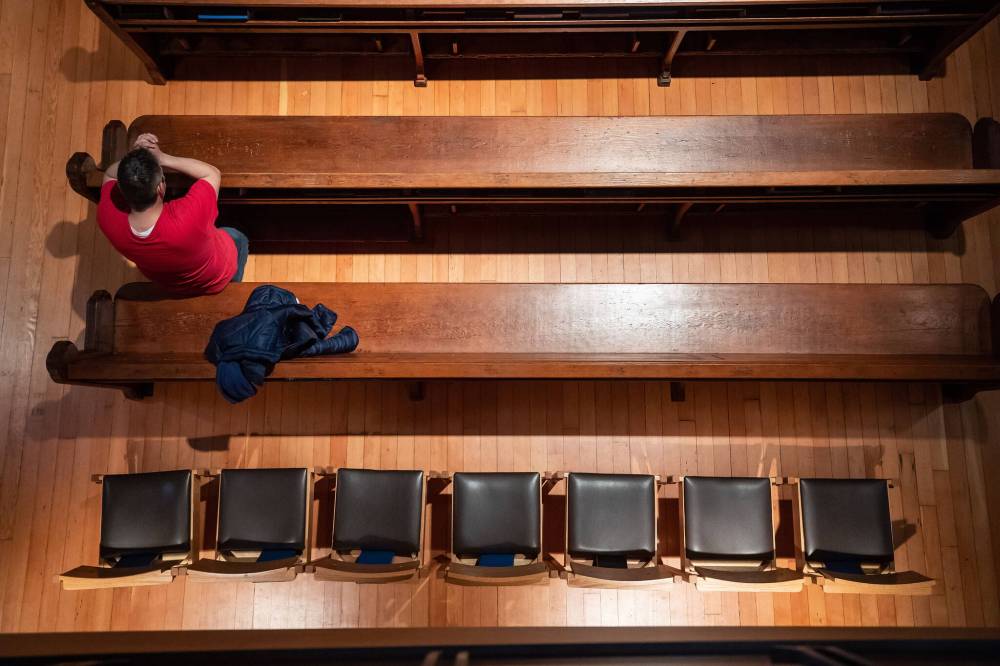
DARRYL DYCK / THE CANADIAN PRESS FILES
According to Statistics Canada, 32 per cent of Canadians say they are religiously unaffiliated, to 27 per cent in the U.S. That’s the highest number in Canada since such data started to be tracked in 1985.
Darryl Dyck / THE CANADIAN PRESS FILES According to Statistics Canada, 32 per cent of Canadians say they are religiously unaffiliated, to 27 per cent in the U.S. That’s the highest number in Canada since such data started to be tracked in 1985.
The third reason they left was because they were disillusioned by scandals involving religious leaders. Finally, people left because their congregation had became too focused on politics.
The survey covered Roman Catholics, mainline Protestants, evangelicals, Jews, Muslims, Hindus and Buddhists.
And where did these people go? Of those Roman Catholics who left, half are religiously unaffiliated — the so-called “nones” — and 25 per cent joined evangelical or Protestant churches. The same number of disillusioned evangelicals are now religiously unaffiliated, while a quarter have switched to a mainline/non-evangelical Protestant tradition and nine per cent identify as Catholic.
For former mainline Protestant members, 61 per cent are now unaffiliated, while 20 per cent are attending evangelical churches and 10 per cent now Roman Catholic.
For those who left non-Christian religions, 42 per cent of people from those groups identify as unaffiliated. Twenty-two per cent are going to evangelical or Protestant churches, and 16 per cent said they are now Roman Catholic.
While the survey is from the U.S., findings in this country point to similar results.
According to Statistics Canada, 32 per cent of Canadians say they are religiously unaffiliated, or “nones,” compared to 27 per cent in the U.S. That’s the highest number in Canada since the data started to be tracked in 1985.
Many of those newly religiously unaffiliated people are coming from Christianity. In 2011, 67 per cent of Canadians said they were Christians. By 2019 that number had dropped to 63 per cent.
The biggest loss is for Catholicism, with 32 per cent of Canadians identifying with that group — down from almost 47 per cent in 1996. Meantime, the United Church of Canada is closing a church a week, on average, and there is speculation there may not be any Anglicans left in Canada by 2040.
There is one Christian group defying the trends: non-denominational evangelical congregations.
That’s the finding of Ryan Burge, a political scientist at Eastern Illinois University who studies religious trends in that country.
Americans who attended non-denominational churches made up four per cent of the population in 1996, he said; today they account for 13 per cent of the population — more than the total number of mainline Protestants.
Finding out just how many people attend non-denominational churches is hard since they don’t emphasize formal membership. In the U.S. it is estimated just over 21 million people attend them. That would make them the second largest religious tradition in the U.S., trailing the Catholic Church at nearly 62 million and ahead of the Southern Baptists at 17.6 million.
In other words, while denominations are decreasing, churches with names like “Elevation,” “Journey,” “Lift” and “Resolution” are attracting thousands of people — most of them from other Christian churches.
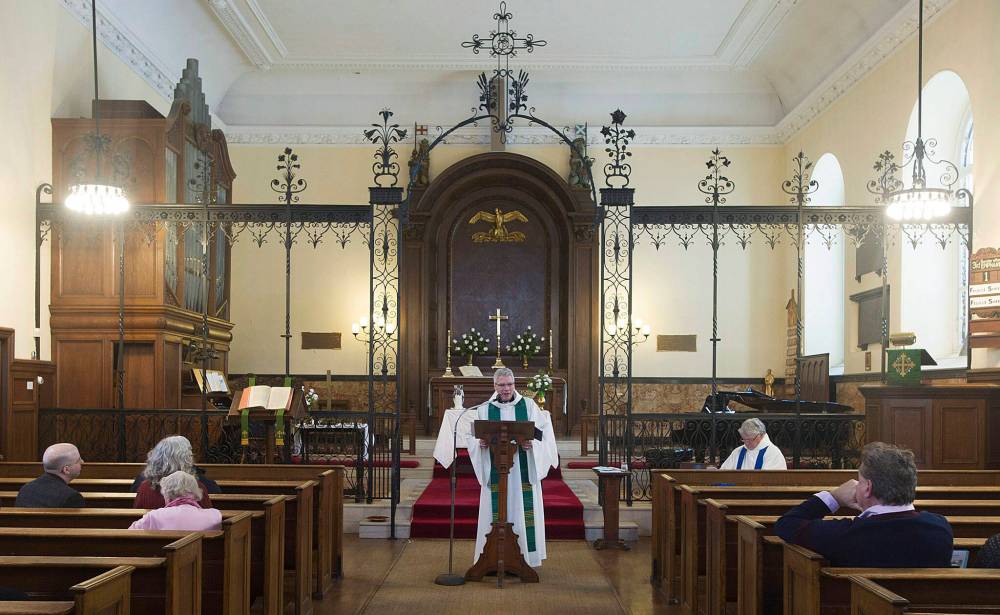
GRAHAM HUGHES/ THE CANADIAN PRESS FILES
People attend mass at St. James Anglican Church in Trois-Rivières, Que. There is speculation among those studying religious practices that there may not be any Anglicans left in Canada by 2040.
“Denominations used to absolutely dominate American religion,” Burge said. But “non-denominational churches are only going to increase in the years to come.”
To see if the same trend is happening in Canada, I reached out to Joel Thiessen of Ambrose University in Calgary.
“In short, yes,” said Thiessen, who studies religious trends in this country. “It appears non-denominational churches are experiencing similar kinds of realities in Canada, though it is harder to get more accurate data in Canada.”
That is probably what was happening when the latest Statistics Canada data on religious affiliation showed an increase in the number of people who identified as “Christian, not otherwise specified” in the last census, he said.
These are people who, presumably, used to identify with denominations, he said, but maybe now attend non-denominational churches like Springs Church or Church of the Rock here in Winnipeg.

“I suspect the growth in non-denominational churches is largely from evangelical denominations,” he added.
Anecdotally, I know there is merit to that idea; I can think of two families who used to attend my church who now attend Springs Church.
Like Burge, Thiessen expects this trend to only grow as people flock to these large mega-churches and new churches are planted independent of denominations. There could also be some large evangelical congregations that break away from their denominations to become independent.
Altogether, what this means for denominations in Canada is that they face challenges from two sides — either as growing numbers of people opt out of religion, or as some seek less-structured non-denominational church experiences.
faith@freepress.mb.ca
The Free Press is committed to covering faith in Manitoba through our Religion in the News project. This reporting continues because readers like you step forward to fund it.
Donate now to support our reporting on religion.
Your donation is eligible for a charitable tax receipt.
BECOME A FAITH JOURNALISM SUPPORTER
Our newsroom depends on a growing audience of readers to power our journalism. If you are not a paid reader, please consider becoming a subscriber.
Our newsroom depends on its audience of readers to power our journalism. Thank you for your support.
The Free Press is committed to covering faith in Manitoba through our Religion in the News project. This reporting continues because readers like you step forward to fund it.
Donate now to support our reporting on religion.
Your donation is eligible for a charitable tax receipt.
BECOME A FAITH JOURNALISM SUPPORTER
Our newsroom depends on a growing audience of readers to power our journalism. If you are not a paid reader, please consider becoming a subscriber.
Our newsroom depends on its audience of readers to power our journalism. Thank you for your support.
Advertisement Advertise With Us
Advertisement Advertise With Us
The Free Press acknowledges the financial support it receives from members of the city’s faith community, which makes our coverage of religion possible.