Firefighter training under scrutiny as ‘marathon’ wildfire season gives hard lessons
Advertisement
Read this article for free:
or
Already have an account? Log in here »
To continue reading, please subscribe:

Digital Subscription
One year of digital access for only $205*
- Enjoy unlimited reading on winnipegfreepress.com
- Read the E-Edition, our digital replica newspaper
- Access News Break, our award-winning app
- Play interactive puzzles
*First annual payment billed as $205.00 + GST for one year. This annual subscription will automatically renew at $233.00 + GST every 52 weeks (10% off the regular annual price of $259.35). Offer available to new and qualified returning subscribers only. Cancel any time.
To continue reading, please subscribe:
Add Free Press access to your Brandon Sun subscription for only an additional
$1 for the first 4 weeks*
- Enjoy unlimited reading on winnipegfreepress.com
- Read the E-Edition, our digital replica newspaper
- Access News Break, our award-winning app
- Play interactive puzzles
*Your next Brandon Sun subscription payment will increase by $1.00 and you will be charged $17.95 plus GST for four weeks. After four weeks, your payment will increase to $24.95 plus GST every four weeks.
Read unlimited articles for free today:
or
Already have an account? Log in here »
Hey there, time traveller!
This article was published 11/08/2023 (1144 days ago), so information in it may no longer be current.
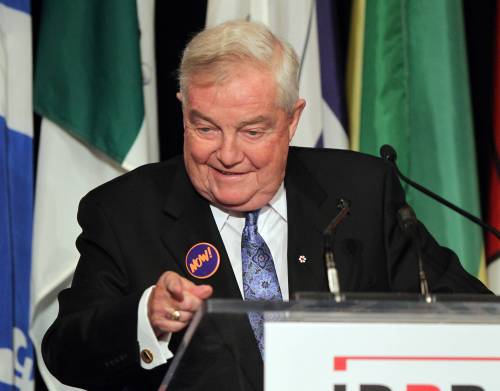
Canada’s minister responsible for forests said he is reflecting on hard lessons from this year’s record wildfire season, including the possible need for standardizing firefighter training across provincial borders and beyond.
Energy and Natural Resources Minister Jonathan Wilkinson said while the curriculum for firefighter training remains primarily a provincial responsibility, all levels of government and firefighting jurisdictions need to look deeper into “greater interoperability” of crews regardless of where they are based.
“That is true with respect to curriculum,” Wilkinson said in North Vancouver, B.C., on Friday. “It’s probably true with a whole bunch of other things. It’s actually not just a Canadian conversation; that’s a conversation we’ve been having to a certain extent with our friends in the United States.”

“I think those are things on which we are all reflecting right now.”
Canada is experiencing what federal officials call an unprecedented fire season, charring 134,000 square kilometres to date, more than six times the 10-year average.
A national wildfire briefing heard Friday that the government expects the fire season to continue across much of Canada this month, with the potential for it to extend into September in southern British Columbia, the Prairies, Northwest Territories and Western Ontario.
“This summer has turned into a challenging marathon,” Michael Norton, a director general of Natural Resources Canada, told the briefing. “Unfortunately, bottom line: fire season is not over.”
The season has seen firefighters from across Canada and overseas converge on hot spots, particularly in British Columbia, where most of the nation’s fires are currently burning.
Wilkinson announced $400,000 in funding for a pilot project with the International Association of Firefighters. The organization will train 25 instructors in Kamloops, B.C., on teaching urban firefighters how to deal with wildfires that encroach on communities.
The program will also see the association deliver 15 courses at five locations across Western Canada to train up to 325 structural firefighters on similar “urban interface wildfire training.”
Wilkinson said the training program was an example of the federal government learning from the wildfire season, which saw major blazes this year force evacuations in the suburbs of Halifax, as well as in towns such as Lebel-sur-Quevillon in Quebec and Fort St. John and Osoyoos in British Columbia.
“The intent of the training is to enable firefighters within communities to be more effective,” Wilkinson said. “But it’s also to make it safe, to ensure that they understand very clearly the risks associated with the wildland fires coming into that interface zone.”
A private wildland firefighting firm had said before Wilkinson’s remarks that Canada needed to create a national training standard for firefighters, rather than each province and territory having its own curriculum.
Arctic Fire Safety Services president Kris Liivam said in an interview that the U.S. had already implemented a countrywide training standard, and a similar system should be introduced for public and private firefighters in Canada.
“We recognize it’s a dangerous job … that’s why we need to make sure we have training and the equipment to make sure we do the job safely,” Liivam said.
“I think we should have one standard across Canada and we should train all the contractors to it.”
Canada has already deployed 5,821 domestic firefighters and 4,990 international firefighters from 12 countries to battle wildfires across the country, said Norton.
It has been a deadly battle. Four firefighters having died this summer battling blazes in B.C., Alberta, and the Northwest Territories.
BC Wildfire Service said they have around 4,000 personnel battling blazes across the province, including contract crews, out-of-province staff and the Canadian Armed Forces. The Canadian Interagency Forest Fire Centre said they have mobilized 703 overseas personnel in B.C. while also sending 740 Canadian firefighters to the province from other parts of the country.
About 400 of the 700 or so fires currently burning in Canada are in B.C., where 185 fires are out of control. Eleven are described as wildfires of note, burning close to populated areas or highly visible.
Recent rainfall means the Donnie Creek wildfire in northeastern B.C. — the biggest wildfire in the province’s history — is no longer a wildfire of note, but it remains out of control, according to the BC Wildfire Service.
An evacuation order related to the Horsethief Creek fire in the East Kootenays, southeast B.C., was downgraded to an alert on Friday, while a total campfire ban was rescinded in the Prince George and Northwest fire centres in response to recent rain. However, fires larger than 50 centimetres across remain prohibited.

Provincial emergency officials are the return of increased fire risks from Sunday, with the arrival of a protracted heat wave that is expected to last most of next week.
Data released at the national wildfire briefing shows that as of Aug. 10 there have been 5,595 wildfires across Canada, releasing the equivalent of more than one billion tonnes of carbon dioxide emissions.
Officials can’t predict how next year’s fire season will evolve, but the trend has been towards longer seasons and larger more aggressive fires, Norton said.
“The science is clear that longer, tougher fire seasons are going to be part of our future,” he said. “For sure all fire agencies recognize that there is an important message here about needing to adapt.”
This report by The Canadian Press was first published Aug. 11, 2023.
Related Articles
B.C. warns of incoming heat, but no heat dome


Advertisement Advertise With Us
Advertisement Advertise With Us