2035 or 2050? A realistic clean electricity goal for Alta. could fall between the two
Advertisement
Read this article for free:
or
Already have an account? Log in here »
To continue reading, please subscribe:

Digital Subscription
One year of digital access for only $205*
- Enjoy unlimited reading on winnipegfreepress.com
- Read the E-Edition, our digital replica newspaper
- Access News Break, our award-winning app
- Play interactive puzzles
*First annual payment billed as $205.00 + GST for one year. This annual subscription will automatically renew at $233.00 + GST every 52 weeks (10% off the regular annual price of $259.35). Offer available to new and qualified returning subscribers only. Cancel any time.
To continue reading, please subscribe:
Add Free Press access to your Brandon Sun subscription for only an additional
$1 for the first 4 weeks*
- Enjoy unlimited reading on winnipegfreepress.com
- Read the E-Edition, our digital replica newspaper
- Access News Break, our award-winning app
- Play interactive puzzles
*Your next Brandon Sun subscription payment will increase by $1.00 and you will be charged $17.95 plus GST for four weeks. After four weeks, your payment will increase to $24.95 plus GST every four weeks.
Read unlimited articles for free today:
or
Already have an account? Log in here »
Hey there, time traveller!
This article was published 23/08/2023 (1124 days ago), so information in it may no longer be current.
CALGARY – As politicians spar over whether 2035 or 2050 should be the deadline to attain a net-zero electricity grid in Alberta, the correct answer may lie somewhere in the middle.
The pace of the energy transition is the crux of the latest political spat between Alberta and the federal government, with Premier Danielle Smith vowing last week that her province will not comply with Ottawa’s draft clean electricity regulations aimed at getting Canada’s electricity grid to net-zero greenhouse gas emissions by 2035.
Alberta has instead stated it will aim to meet a 2050 time frame, which it says is realistic given the province has limited access to hydroelectric power and currently depends heavily on natural gas for electricity generation.
But some of the province’s largest power generators have set their own internal targets for clean electricity production that — while less aggressive than Ottawa’s 2035 target — are more optimistic than what the provincial government has said is achievable.
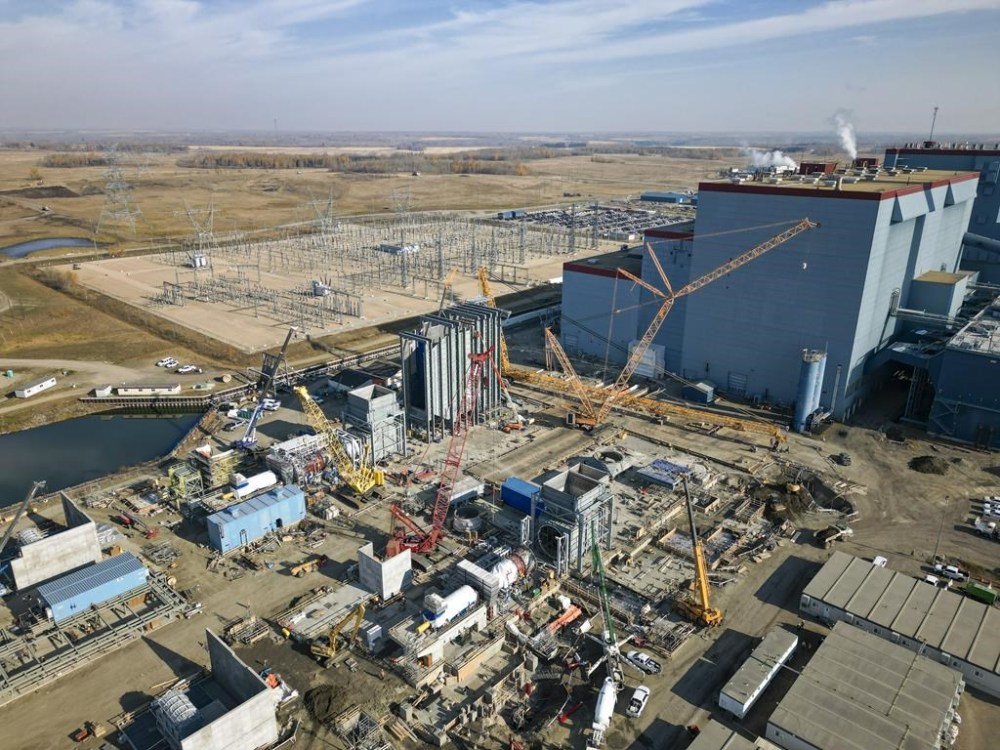
For example, Edmonton-based Capital Power Corp. believes it is on track to hit net-zero electricity generation by 2045, five years earlier than the province’s stated goal.
“We do not believe 2035 is possible. From an Alberta perspective, it is not doable,” said Capital Power CEO Avik Dey in an interview. “However, we do believe 2045 is achievable.”
Calgary-based TransAlta Corp. — which in 2021 completed converting its Canadian coal-fired generating facilities to cleaner-burning natural gas, nine years ahead of Alberta’s coal phaseout plan — also recently accelerated its own net-zero plan, indicating this year that it is now on track to meet its goals by 2045, five years earlier than its previously announced target.
That doesn’t mean the challenges facing the province aren’t immense. Smith has stated transitioning Alberta’s electricity grid to clean power could cost upwards of $400 billion, and many experts say that’s a fair estimate given the work that will be required.
“We’re being asked to rebuild our complete electric system that took 130 years to build, in 10 to 15 years,” said Duane Reid-Carlson, president of Calgary-based energy consulting company EDC Associates Ltd.
“Theoretically, it’s possible — we can take a stab at all of this. But jamming it into a short period of time is really going to cause the bubble to burst in some places. It’s going to be painful for the economy and for the consumer at large.”
Most analysts believe getting Alberta’s electricity grid to net-zero will require a mix of sources: wind and solar with battery storage, hydrogen, nuclear power in the form of small modular reactors, and carbon capture and storage to offset the emissions from the natural gas-fired generation that will still be required in periods of peak demand and as a backup.
“All of these things are technically available, but many of them are unproven technologies at the scale and size and application that we’re talking about,” Reid-Carlson said, adding he believes moving too fast could put pressure on grid reliability and cause electricity prices to spike for consumers.
“A 2050 timeline would be more palatable, because we’d have a little more runway to make sure all these technologies work.”
Blake Shaffer, an associate professor of economics and co-director of the Net Zero Electricity Research Initiative at the University of Calgary, said it’s not a foregone conclusion that electricity costs for consumers will rise due to the energy transition. Some economic models show consumer prices actually falling as cheaper resources — especially renewables, which have tumbled in cost over the last decade — come onto the grid, he said.
While Shaffer agrees that hitting a 2035 target is a stretch, he said a few adjustments to the federal clean electricity regulations would make it easier for Alberta to come into compliance sooner rather than later.
For example, the government could extend the end-of-life provisions in the draft rules to give newly commissioned natural gas-fired plants a bit of extra time to install carbon capture or other abatement technologies, Shaffer said.
The feds could also expand the number of hours per year that the draft rules will allow gas plants to run unabated as “peakers” — a term that refers to a plant’s ability to be switched on during times of peak demand or when wind and solar production is low.
Shaffer said this kind of flexibility wouldn’t actually lead to a dramatic increase in greenhouse gas emissions because carbon pricing will discourage generators from using fossil fuels unless absolutely necessary.
It would, however, help ensure grid reliability and make it far easier for companies to accomplish the transition, he said.
“They’re actually not huge asks,” Shaffer said. “Tweaking these parameters would make it all more feasible.”
In addition to tweaking the regulations, Capital Power’s Dey said the federal government also needs to come through with its promised carbon contracts for difference mechanism.
The framework, which Ottawa is currently working to develop, is intended to reduce the private sector’s risk of investing in pricey emissions-reduction projects by essentially guaranteeing the future price of carbon.
Capital Power itself is waiting for such a framework to be finalized before making a final investment decision on its proposed installation of carbon capture and storage technology at its Genesee power plant near Edmonton.

While the industry definitely needs federal support to get over the net-zero finish line, Dey said, he added he’s been pleased so far with the number of government commitments that have already been made.
“The energy transition isn’t a destination, it’s a journey. You can’t just flip the switch and say we’re going to get there,” he said.
“That being said, I do think there’s a path — if you accommodate it and you extend to 2045 — where industry gets there and it doesn’t unnecessarily burden the consumer.”
This report by The Canadian Press was first published Aug. 23, 2023.
Companies in this story: (TSX:CPX; TSX:TA)