Daring to dream
Expansive bio highlights King’s virtues and flaws — and how his vision has been replaced by a nightmare
Advertisement
Read this article for free:
or
Already have an account? Log in here »
To continue reading, please subscribe:

Digital Subscription
One year of digital access for only $205*
- Enjoy unlimited reading on winnipegfreepress.com
- Read the E-Edition, our digital replica newspaper
- Access News Break, our award-winning app
- Play interactive puzzles
*First annual payment billed as $205.00 + GST for one year. This annual subscription will automatically renew at $233.00 + GST every 52 weeks (10% off the regular annual price of $259.35). Offer available to new and qualified returning subscribers only. Cancel any time.
To continue reading, please subscribe:
Add Free Press access to your Brandon Sun subscription for only an additional
$1 for the first 4 weeks*
- Enjoy unlimited reading on winnipegfreepress.com
- Read the E-Edition, our digital replica newspaper
- Access News Break, our award-winning app
- Play interactive puzzles
*Your next Brandon Sun subscription payment will increase by $1.00 and you will be charged $17.95 plus GST for four weeks. After four weeks, your payment will increase to $24.95 plus GST every four weeks.
Read unlimited articles for free today:
or
Already have an account? Log in here »
Hey there, time traveller!
This article was published 26/08/2023 (1140 days ago), so information in it may no longer be current.
Monday, Aug. 28 marks the 60th anniversary of the March on Washington for Jobs and Freedom. An estimated 200,000-250,000 people from across the U.S. heard Martin Luther King Jr. deliver his famous “I Have a Dream” speech from the steps of the Lincoln Memorial in Washington, D.C. At the peak of his formidable oratorical powers, King called for the day when Black children would be judged by the content of their character, not the colour of their skin. Real change was coming, or so it seemed.
Nineteen days later, on Sept. 15, 1963, a bomb planted by the Ku Klux Klan exploded at the 16th Street Baptist Church in Birmingham, Ala., killing four Black girls — three 14 years old and the other 11. Earlier that year, on June 12, a Klan member had assassinated Medgar Evers, a leader with the National Association for the Advancement of Colored People (NAACP). Evers was shot hours after a speech in which President John F. Kennedy publicly and passionately supported the civil rights movement. Kennedy was subsequently assassinated later that year, on Nov. 22, 68 days after the Klan murdered the four girls in Birmingham.
King’s dream was soon to be a nightmare.
The Associated Press files
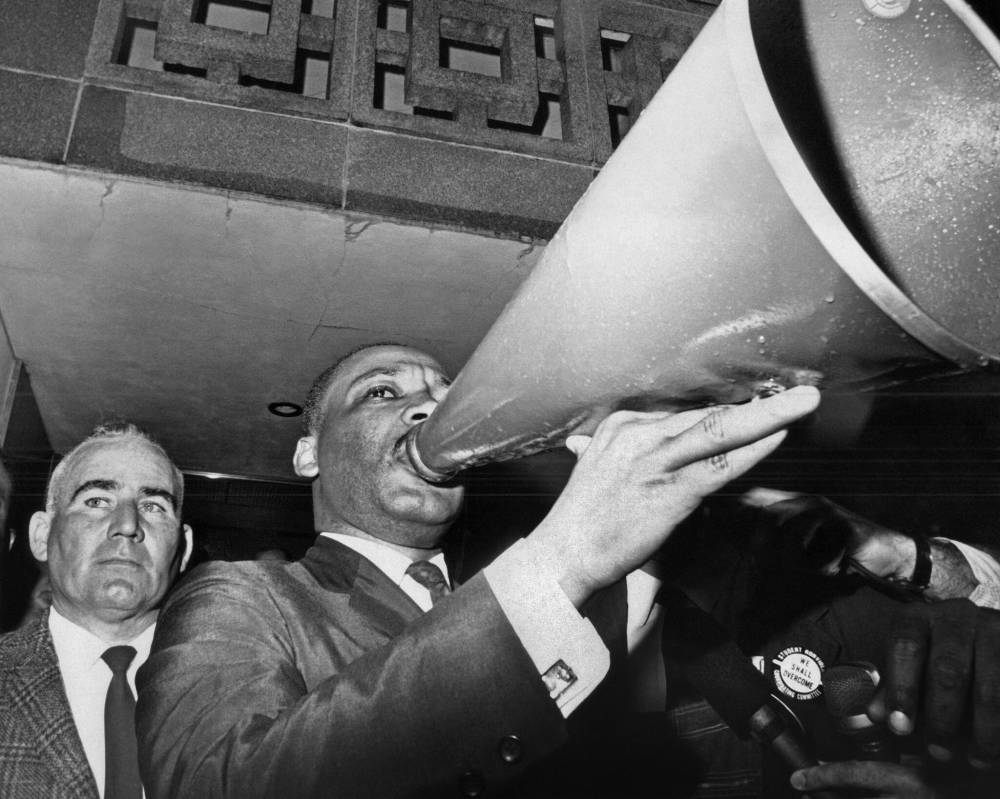
In this March 1965 photo, Dr. Martin Luther King Jr. uses a megaphone to address demonstrators assembled at the courthouse in Montgomery, Ala. after a meeting with Sheriff Mac Butler (left) and other public officials.
King came to prominence in 1955 when, as a newly minted 26-year-old Baptist preacher in Montgomery, Ala., he was called upon to lead what would become the 382-day Montgomery Bus Boycott, sparked when Rosa Parks refused to move to the back of the bus. Parks was charged and Negroes, as they were then called, collectively refused to ride the buses for over a year. The mass boycott was successful; gains were made, and King was on the way to becoming the most well-known and, before long, most hated African-American in the U.S.
In April, 1963 King led massive demonstrations in Birmingham, which was a city known to many as “Bombingham” for the constant, Klan-led bombings there of Black churches and civil rights leaders’ homes. African-Americans, including hundreds of children, confronted the racist ferocity of police chief Bull Connor and then-governor George Wallace.
The police dogs snarling and biting at protestors’ legs, and the fire hoses slamming people against walls and across the pavement, were captured by television cameras and broadcast across the nation. More than 1,000 protestors, many of them teenagers, were jailed. King was briefly imprisoned, from where he wrote his powerful “Letter from Birmingham Jail,” calling out those who stood idly by in the face of white supremacist violence. Few in America were left unaware of the colossal struggle for freedom and basic human rights being fought in the deep South by African-Americans, led in many important ways (but certainly not only) by Martin Luther King Jr.
Out of these struggles arose the 1964 Civil Rights Act and the 1965 Voting Rights Act, enormous achievements — finally bringing electoral democracy to the U.S. — arising from what was “the only nonviolent social revolution in western history.” King himself later said, “Well, I think Birmingham did it…. Birmingham created such a crisis in race relations that it… could no longer be ignored.”
King’s life, and his central role in what was the greatest mass movement in 20th-century America, is set out in compelling detail in Jonathan Eig’s masterful King: A Life. Eig interviewed more than 200 people who had been active in the movement, and had access to newly released FBI files that show the remarkable extent to which the FBI surveilled King. The files show the FBI planted listening devices in the many hotel rooms where King stayed in his endless treks across the country to promote the movement, and the remarkable extent to which FBI director J. Edgar Hoover hated King and even lied about his activities to President Lyndon Johnson — in what Eig describes as Hoover’s “relentless flood of King-related memos to the White House.”
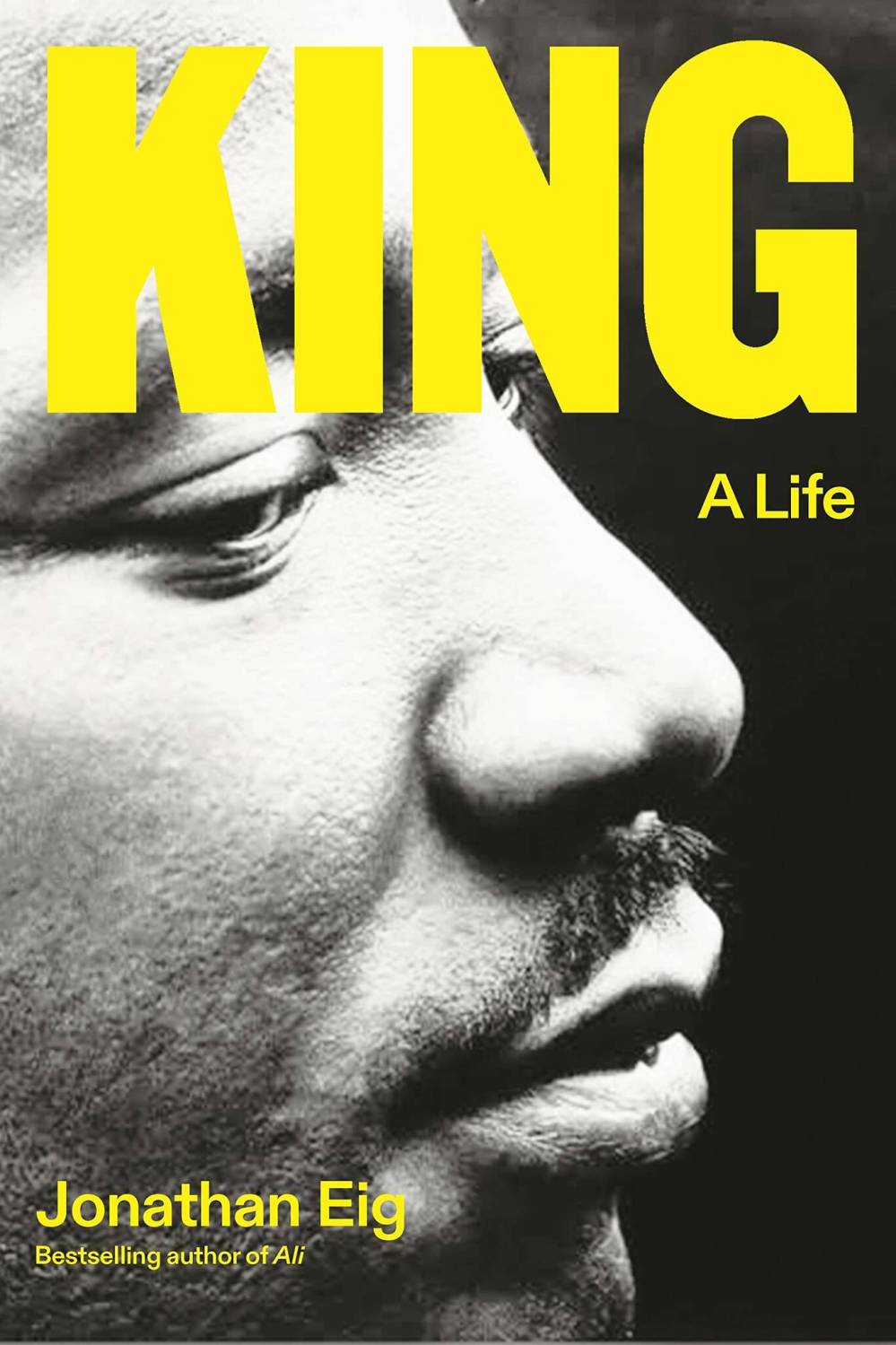
King: A Life
Eig describes the immense challenges faced by King and the movement, and the enormous courage of the many who confronted the vitriolic and violent racial hatred directed at the civil rights movement. King was driven by his Christian and Gandhi-inspired belief in non-violence, and by his determined commitment to cross-racial solidarity. Relentlessly attacked by white racists, he endured the bombing of his home, repeated arrests, confinement in jail — he was jailed 29 times — and constant threats of violence, leading to numerous hospitalizations for exhaustion and depression.
King was no saint — he was flawed, perhaps deeply so. Eig pulls no punches in describing King the man, aided by hundreds of interviews with King’s colleagues in the civil rights movement. He was a womanizer, engaged in constant sexual encounters in every city across the country, as made painfully clear by the FBI tapes, while his wife Coretta Scott King, to whom Eig devotes more space than previous works on the movement, was at home looking after their four kids and supporting his work. He was inclined to keep strong women out of leadership positions in the movement — Ella Baker, who went on to play a central role in the creation of the Student Nonviolent Coordinating Committee (SNCC), was perhaps the dominant example. His organization, the Southern Christian Leadership Conference, was constantly in a state of organizational chaos and financial distress.
King was nevertheless the single most inspirational force in the movement. He was deeply committed to the freedom and civil rights of African-Americans, the nonviolent methods of advancing the movement and to working with those white people who supported the great freedom struggle. He was modest — those who met King were “struck by his modesty.” He was genuine, and was loved by tens of millions across the country. Stokely Carmichael, SNCC leader and Black Power advocate, with whom King had serious tactical and strategic differences, said the way King interacted with people was “amazing, incredible, inspiring.”
But his dream became a nightmare in the face of unrelenting racial hatred. In August 1965, the Watts neighbourhood in Los Angeles exploded in racially based rioting. Hardened though he was by the racist violence and deep poverty of the South, King was shocked by what he saw in Watts. He was, Bayard Rustin said, “absolutely undone by the devastating poverty and the sense of hopelessness he observed in Los Angeles.”
King tried to launch his Southern-based civil rights movement into northern cities, starting with Chicago. He was stymied. Racism in Chicago was worse than anything he had faced in the South. “I’ve never seen anything like it in my life,” King said. “I think the people of Mississippi ought to come to Chicago to learn how to hate.”
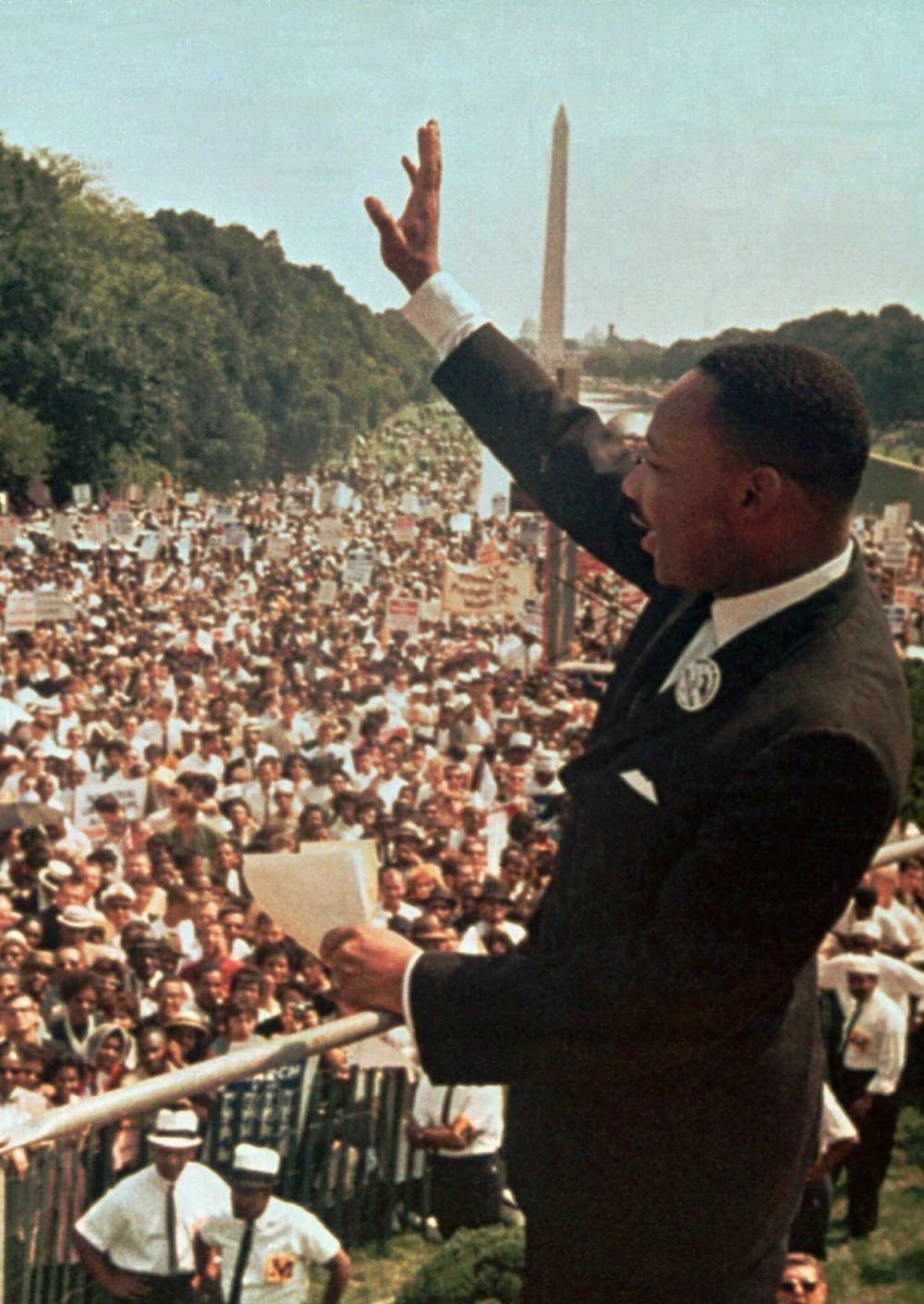
The Associated Press files
In this Aug. 28, 1963 photo, Dr. Martin Luther King Jr. acknowledges the crowd at the Lincoln Memorial while giving his “I Have a Dream” speech during the March on Washington, D.C.
King was radicalized by his experience. He could see that minor reforms were not enough. It was necessary, he now realized, to tackle “the structural roots of racial inequality and class exploitation.” LBJ’s war on poverty briefly created that possibility, but was largely abandoned when hundreds of billions of dollars were diverted to Vietnam. Even though the majority of Americans then supported the war in Vietnam, King opposed it, consistent with his commitment to nonviolence and his awareness that the war was preventing the structural changes he had come to see were needed to address the deep poverty and racialized violence.
King’s growing radicalism, and the rising urban violence in the face of governments’ steadfast refusals to act on the demands being made by African-Americans, stimulated a right-wing political response. Barry Goldwater’s unsuccessful presidential run for the Republicans in 1964 cleared a path for far-right policies. George Wallace’s run for the Democratic presidential nomination in 1968 made evident the growing support, even in the north, for racist, right-wing policies. Richard Nixon won the presidency in 1968, reflecting the shifting allegiance of the white working class away from the Democrats because of their support of African-Americans’ civil rights struggle. That shift continued through the Reagan years and became especially apparent during and since the presidency of Donald Trump, who further encouraged organizations and individuals committed to white supremacy and far-right violence.

There are many reasons King’s 1963 dream became the long-lasting nightmare so evident in America today; key among these is that his calls for the kind of transformation that would dramatically reduce poverty and inequality went unanswered by the many in America whose vision is blurred by racism and hatred of the poor.
King was a visionary and a radical, as Eig so rightly argues. He saw that if poverty and racial hatred were to be overcome, “you’ve got to have a reconstruction of the entire society, a revolution of values.” That revolution of values has not happened. In its place we see the persistence of racial violence and deep poverty and, equally worrisome, the severe white supremacist, right-wing backlash that so darkens America.
King was assassinated April 4, 1968, while in Memphis, Tenn. supporting striking sanitation workers.
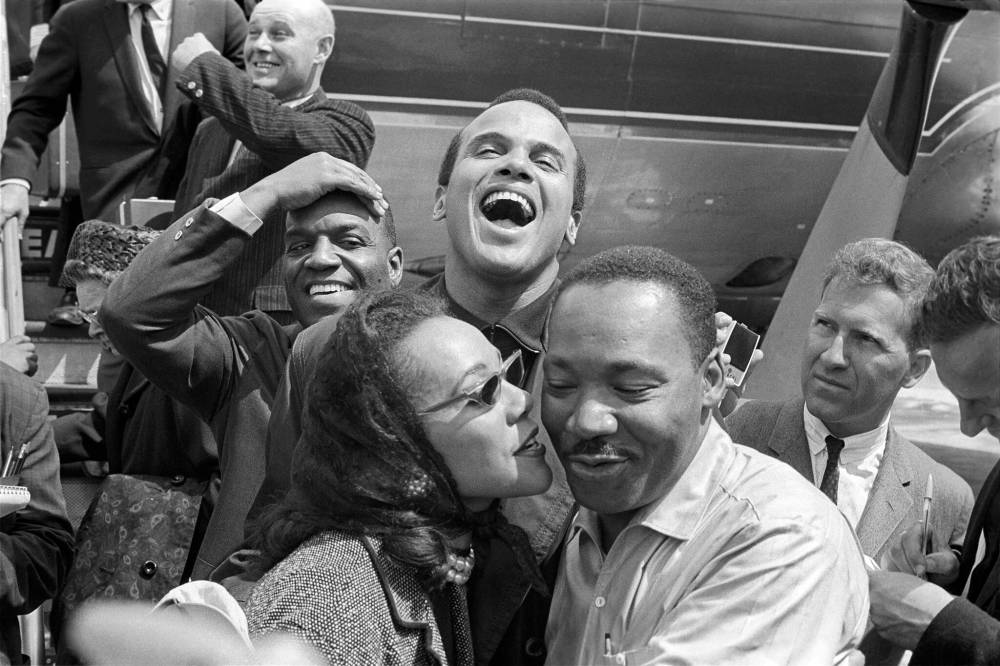
Ivan Massar/Take Stock/The Image Works
In this 1963 photo, taken at an Alabama airport King (right) shares a laugh with (clockwise from rear left) Nipsey Russell, Harry Belafonte and Coretta Scott King.
His dream — his courageous, nonviolent fight for an America not scarred by deep poverty and racial hatred — has been replaced by a nightmare. It is evidence that the refusal to respond to the legitimate needs of the victims of poverty and racism only produces greater problems down the road.
Jim Silver is the author of Scoundrels and Shirkers: Capitalism and Poverty in Britain, published by Fernwood in 2023, and a research associate with the Canadian Centre for Policy Alternatives-Manitoba.
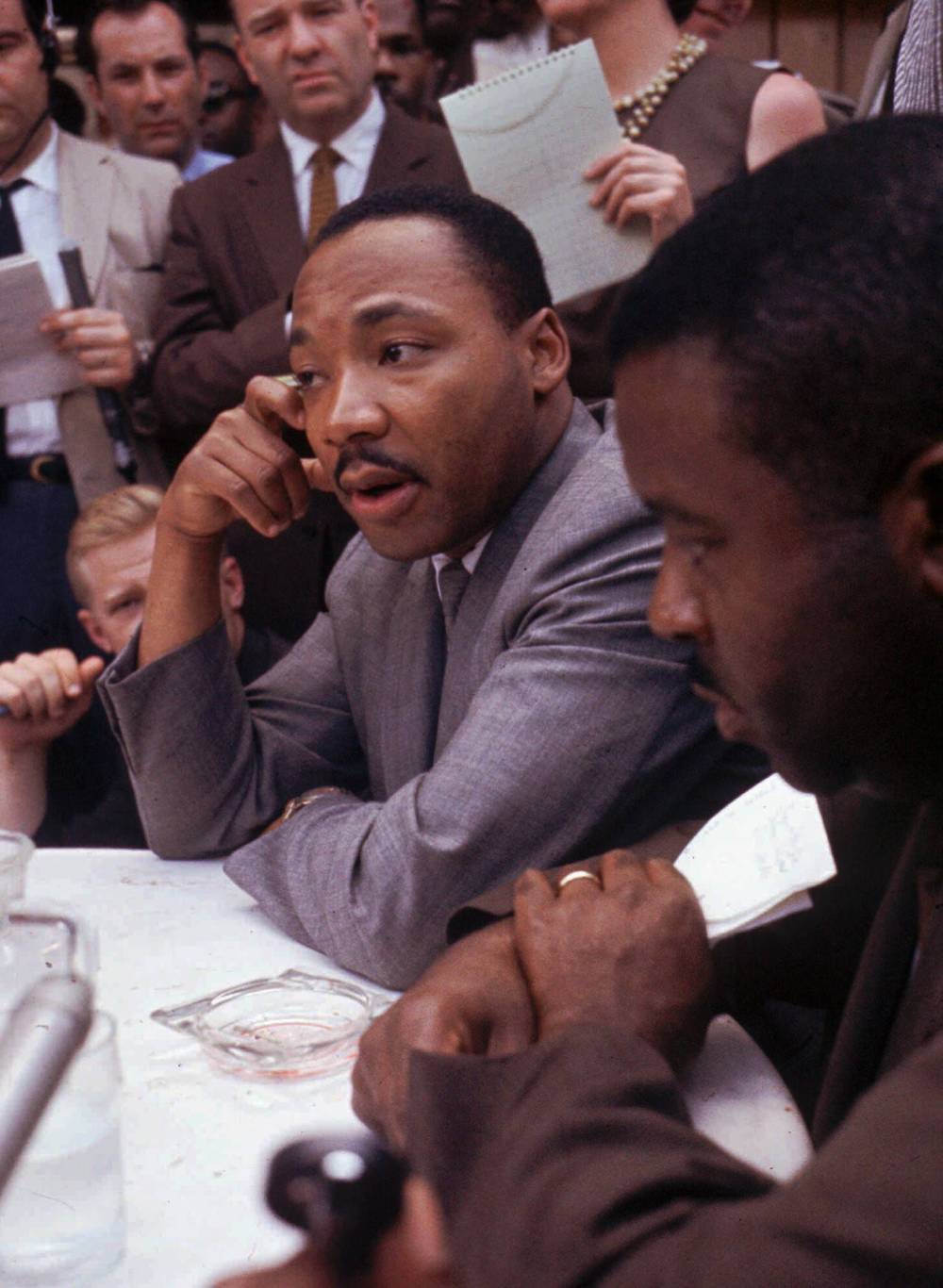
The Associated Press files
In this May 1963 photo, King answers questions at a news conference in Birmingham, Ala.