

Plant-based protein’s future may not be as meat mimic
Advertisement
Read this article for free:
or
Already have an account? Log in here »
To continue reading, please subscribe:
Digital Subscription
One year of digital access for only $1.44 a week*
- Enjoy unlimited reading on winnipegfreepress.com
- Read the E-Edition, our digital replica newspaper
- Access News Break, our award-winning app
- Play interactive puzzles
*Billed as $5.77 plus GST every four weeks. After 52 weeks, price increases to the regular rate of $19.95 plus GST every four weeks. Offer available to new and qualified returning subscribers only. Cancel any time.
To continue reading, please subscribe:
Add Free Press access to your Brandon Sun subscription for only an additional
$1 for the first 4 weeks*
- Enjoy unlimited reading on winnipegfreepress.com
- Read the E-Edition, our digital replica newspaper
- Access News Break, our award-winning app
- Play interactive puzzles
*Your next Brandon Sun subscription payment will increase by $1.00 and you will be charged $17.95 plus GST for four weeks. After four weeks, your payment will increase to $24.95 plus GST every four weeks.
Read unlimited articles for free today:
or
Already have an account? Log in here »
Hey there, time traveller!
This article was published 26/08/2023 (1148 days ago), so information in it may no longer be current.
Plant-based proteins have been part of my family’s diet for as long as I can remember.
I learned early from my mother, who was the head cook in our household, how we could achieve a comparable protein profile to meat in a meal by pairing legumes such as beans with bread.
Hence, a familiar meal in our household was baked beans with fresh buns. It was delicious, filling, nutritious and relatively inexpensive. The family also regularly consumed meat, but no one complained about the lack of it in meals like that.
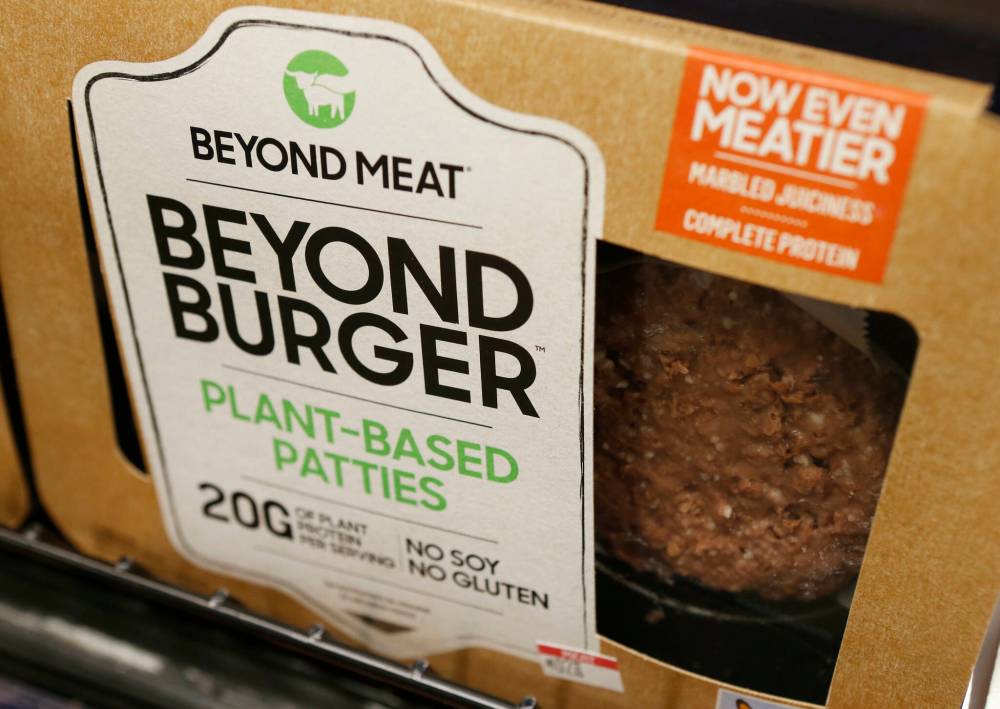
Consumers were happy to experiment with new products and sales soared — until they didn’t. (Steve Helber / Associated Press files)
In the years when we farmed, legumes were a great fit with the crop rotation because they produce their own nitrogen fertilizer. The farm also raised livestock, which provided another natural source of nitrogen and phosphorus fertilizer.
So-called veggie burgers first came to market in the 1980s — various concoctions of seeds, cereals, beans, vegetables, mushrooms and herbs formed into patties served on a bun. They provided people who wanted a burger that wasn’t meat with an alternative. Those who were inclined could easily replicate them at home.
They tasted fine — but they didn’t taste like meat, and no one was suggesting they should.
Fast-forward 30 years, and the whole plant-based protein sector took a sharp left turn into the laboratories and manufacturing plants, where researchers focused on alternative proteins using ingredients designed to mimic the taste and consistency of meats. They even created an additive called “heme,” a genetically modified version of iron that makes these products appear to bleed.
The results cost significantly more than traditional meats, which means only the wealthy can afford to eat them all the time. They remain a novelty for the masses. They are not even an option for the 1.3 billion people in the world who rely on livestock as a source of nutrition and food security. Many of them are herders living far away from a supermarket with a freezer section.
Although these alt-meat products taste OK and are scientifically marvellous because they seem almost like the real thing, the operative word here is “almost.” No one is fooled into thinking they are. In other words, we’re paying for a steak and getting a wannabe burger.
And good luck trying to replicate those in a home kitchen. They don’t call it the Impossible Burger for nothing.
Nevertheless, investors rushed to the table. Consumers were happy to experiment with these new products. Sales soared — until they didn’t.
Numerous reports over the past couple of years suggest that investors and consumers are becoming disenchanted with plant-based “meats.”
The latest is an analysis published this month by the U.S.-based CoBank, a co-operative lender serving rural America, that succinctly says consumer interest is waning “amid high prices and product shortcomings.”
CoBank cites data from consumer behaviour research firm Circana that says sales of meat alternatives have fallen steadily since 2021. Volume sales dropped nearly 21 per cent over the past year.
CoBank says the decline is partly due to economics, as inflation-weary consumers revert to more affordable protein sources. “Beyond cost, lingering negative perceptions surrounding taste, value and versatility are also obstacles the category has yet to overcome,” it says.
Consumers who initially tried these new products, thinking they were healthier, have become more skeptical of the long list of ingredients, their highly processed nature and high sodium content.

Plant-based alternatives are purportedly more environmentally friendly than meats, requiring fewer production resources and creating less pollution. That has marketable appeal, particularly with younger demographics. The livestock sector is under pressure to improve its track record on numerous fronts.
However, consuming plant proteins as whole foods as they were traditionally prepared instead of turning them into highly processed ingredients makes even more sense environmentally.
Some consumers don’t want to eat animals. It’s understandable why they would make that choice. But if animal protein is so distasteful, why would they want to consume products that taste just like it?
I’m convinced we will eat more plant-based proteins in the future for many economic and environmental reasons. But I don’t think mimicking meat is the way to get there.
Laura Rance is vice-president of content for Glacier FarmMedia. She can be reached at lrance@farmmedia.com