Canadian banks face squeeze between climate expectations, market pressures
Advertisement
Read this article for free:
or
Already have an account? Log in here »
To continue reading, please subscribe:

Digital Subscription
One year of digital access for only $205*
- Enjoy unlimited reading on winnipegfreepress.com
- Read the E-Edition, our digital replica newspaper
- Access News Break, our award-winning app
- Play interactive puzzles
*First annual payment billed as $205.00 + GST for one year. This annual subscription will automatically renew at $233.00 + GST every 52 weeks (10% off the regular annual price of $259.35). Offer available to new and qualified returning subscribers only. Cancel any time.
To continue reading, please subscribe:
Add Free Press access to your Brandon Sun subscription for only an additional
$1 for the first 4 weeks*
- Enjoy unlimited reading on winnipegfreepress.com
- Read the E-Edition, our digital replica newspaper
- Access News Break, our award-winning app
- Play interactive puzzles
*Your next Brandon Sun subscription payment will increase by $1.00 and you will be charged $17.95 plus GST for four weeks. After four weeks, your payment will increase to $24.95 plus GST every four weeks.
Read unlimited articles for free today:
or
Already have an account? Log in here »
Hey there, time traveller!
This article was published 27/08/2023 (1123 days ago), so information in it may no longer be current.
TORONTO – In May, Canadian banks offered support to those affected by an early wave of wildfires in Alberta. In June, they extended the offer to those hit in Nova Scotia, and some expanded it further as fires also raged in Quebec and Ontario.
This past week, banks said they would again offer support, through donations and potential payment deferrals, this time to help Canadians reeling from fires in the Northwest Territories and British Columbia.
But while banks recognize that Canadians are living through a wildfire season like no other, activists say they aren’t delivering where they’re most needed: on efforts against the climate change trends making the infernos worse.
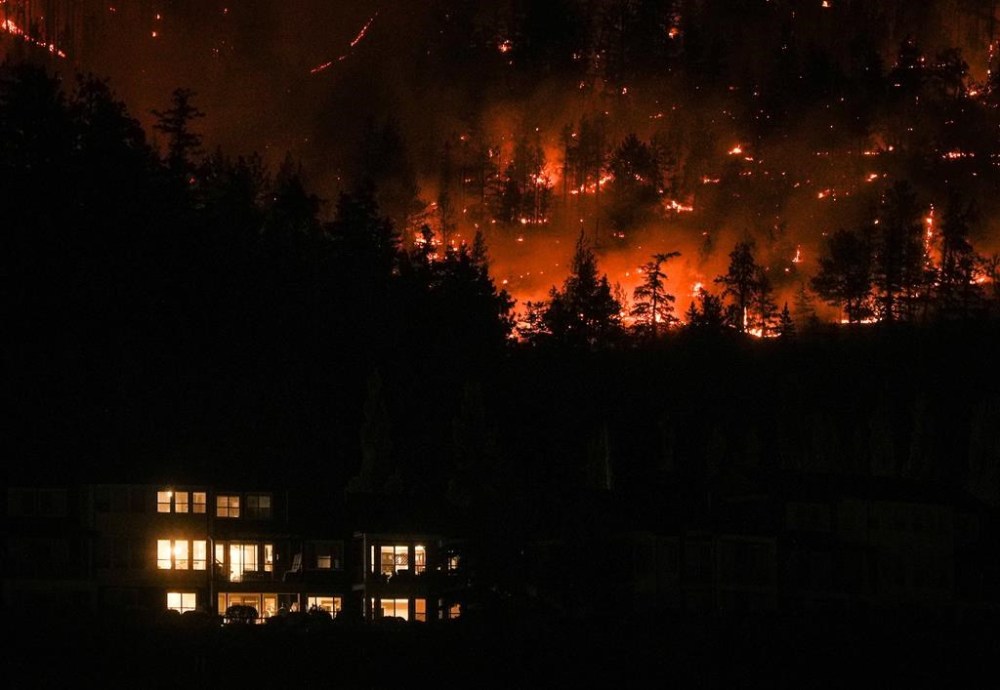
“The Arctic is on fire at the same time as Hawaii, and a hurricane has hit Baja California for the first time in 90 years — what more will it take to get our banks to take the right actions?” said Stand.earth climate finance director Richard Brooks.
The group has long been pushing for banks to direct money away from oil and gas and towards clean energy, and though the trend has been gaining momentum, it’s not with the urgency Brooks and other activists say is needed.
He pointed to a report from BloombergNEF released earlier this year that showed Canadian banks lag in their low-carbon energy supply funding, compared with what the most frequently referenced climate scenarios say is necessary.
The report found that RBC, for example, was directing about 40 cents towards clean energy solutions for every dollar into oil and gas in 2021, half of the global average ratio of 0.8-to-one and well below the four-to-one ratio needed by 2030 to keep warming to 1.5 degrees.
Meanwhile, in late July, advocacy group Investors for Paris Compliance issued a report card on bank climate policies that found “no urgency” in their actions.
To get an updated sense of bank action, Stand.earth compiled oil and gas funding from January to the end of July from RBC, TD, BMO, Scotiabank, CIBC and National Bank, resulting in a mixed picture. It found the number of capital deals was up about six per cent from a year earlier to 341, while the amount of funding was down to a still notable US$55.7 billion.
The group attributes the lower dollar amount to record earnings last year amid a spike in energy prices, rather than to any notable shift in bank policy.
Asked directly whether they were adjusting climate plans in light of the record-breaking wildfires and global heat this year, Canada’s biggest banks largely stuck to their established messages that they are committed to climate action and helping clients transition.
RBC, which was ranked as the top fossil fuel funder globally last year by the Banking on Climate Chaos report, did not outline any policy changes, but did say it was working to expand its capabilities to support client transitions, and seeking to grow its leadership team focused on climate.
“We firmly believe there is a need for more concerted action at a faster pace to address climate change,” said Jennifer Livingstone, vice-president of enterprise climate strategy at the bank, in a statement.
But while climate advocates call for more action from banks, the lenders are currently hard-pressed to make big lending shifts to renewables from oil and gas, said Ryan Riordan, director of research at Queen’s University’s Institute for Sustainable Finance.
Given high interest rates and economic uncertainty, banks are finding it difficult to find enough green energy projects that meet their lending criteria, he said.
“I think for the most part, what they find is there just aren’t a lot of renewable energy or sustainable projects to fund that meet their risk-return characteristics.”
The challenge comes as banks are being more cautious on lending generally, said Shilpa Mishra, managing director of BDO’s capital advisory services practice.
The accountancy firm found that in the second quarter, lending growth slowed to five per cent quarter-over-quarter, compared with an average of 8.3 per cent in the past two years.
“There is a slower pace of lending in the market, and this is primarily driven by a more conservative risk appetite at the large Canadian institutions,” said Mishra.
She said she hasn’t seen any notable shift in oil and gas lending trends, but that ESG strategies are increasingly part of the investment criteria.
Banks are also limited in climate funding by slow movement from the federal government on setting out rules about what counts as a sustainable investment, said Riordan.
The so-called green taxonomy proposal was published in March, but is in limbo until further action from the Finance Minister. A spokesperson said the government is still studying it and reviewing stakeholder feedback.
Alberta’s recent six-month moratorium on renewable projects won’t help matters either, said Riordan.
But while there are indications climate funding is still lagging, there are also signs it’s gaining momentum.
In May, the International Energy Agency said that, thanks to major government policy shifts and changes to renewable economics, it figures $1.70 will be spent on clean energy investments this year for every $1 on fossil fuels, a ratio that was 1:1 five years ago.
But even as progress continues, the scale of the challenge ahead remains clear. The IEA, whose report was broader in scope than the BloombergNEF study, figures the spending ratio needs to get to 9:1 by 2030.
With the funding needs becoming increasing clear, financing the transition will be a key focus at COP28, the next UN climate summit set to start in November.
Last week organizers said private finance flows need to grow much faster to deliver the US$2.4 trillion a year needed by 2030 to address climate change in emerging markets and developing economies.
“The time for action is right now,” said COP28 president-designate Sultan Al Jaber in a statement.
“Climate finance is the issue that lies at the core of the COP28 agenda because finance is how we transform goals into reality.”
This report by The Canadian Press was first published Aug. 27, 2023.
Companies in this story: (TSX:RY; TSX:TD; TSX:CM; TSX:BNS; TSX:BMO; TSX:NA)