What happens when you give 50 homeless people $7,500 each? A B.C. study found out
Advertisement
Read this article for free:
or
Already have an account? Log in here »
To continue reading, please subscribe:

Digital Subscription
One year of digital access for only $205*
- Enjoy unlimited reading on winnipegfreepress.com
- Read the E-Edition, our digital replica newspaper
- Access News Break, our award-winning app
- Play interactive puzzles
*First annual payment billed as $205.00 + GST for one year. This annual subscription will automatically renew at $233.00 + GST every 52 weeks (10% off the regular annual price of $259.35). Offer available to new and qualified returning subscribers only. Cancel any time.
To continue reading, please subscribe:
Add Free Press access to your Brandon Sun subscription for only an additional
$1 for the first 4 weeks*
- Enjoy unlimited reading on winnipegfreepress.com
- Read the E-Edition, our digital replica newspaper
- Access News Break, our award-winning app
- Play interactive puzzles
*Your next Brandon Sun subscription payment will increase by $1.00 and you will be charged $17.95 plus GST for four weeks. After four weeks, your payment will increase to $24.95 plus GST every four weeks.
Read unlimited articles for free today:
or
Already have an account? Log in here »
Hey there, time traveller!
This article was published 01/09/2023 (1095 days ago), so information in it may no longer be current.
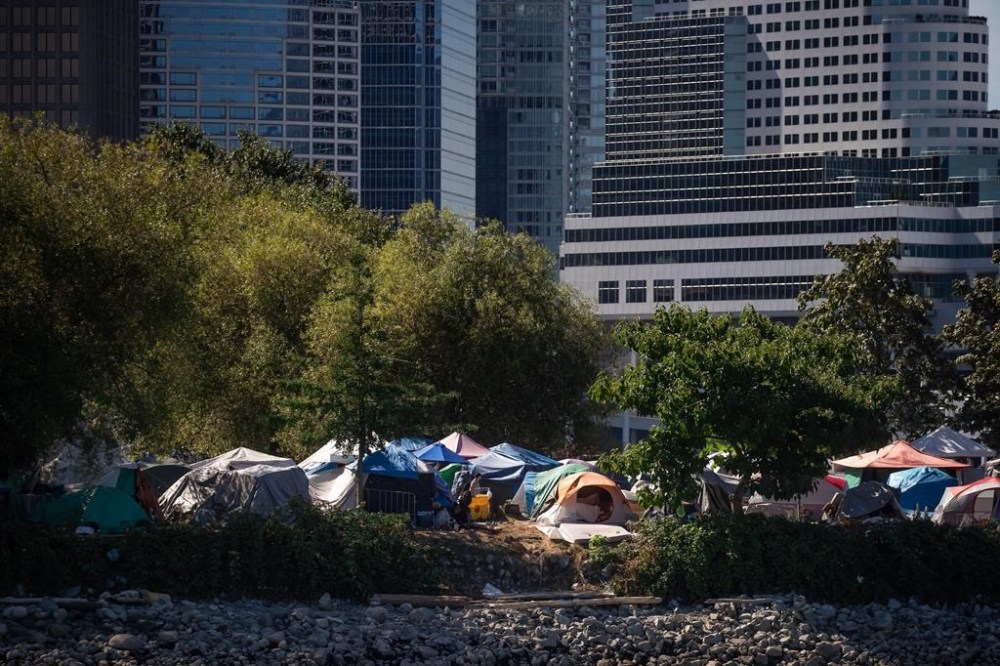
VANCOUVER – There’s a stark contrast between public perception and the reality of how homeless people spend money, says a researcher who gave 50 homeless people in British Columbia $7,500 each to do with as they wished.
Instead of blowing the windfall on “temptation goods”, such as alcohol, drugs or cigarettes, they spent it on rent, clothing and food, the study led by University of British Columbia researcher Jiaying Zhao found.
The handout even generated a net saving of almost $800 per recipient, taking into account the costs that would have been involved in providing shelter accommodation.
“The goal is to do something about the homelessness crisis here in Canada, and specifically Vancouver because the current approaches are failing,” said Zhao, who is working with policymakers on the problem. “I think this study provides very strong evidence in favour of a basic-income policy.”
Researchers tracked the spending of the recipients for a year after they received the cash. They also followed a control group of 65 homeless people who did not get the handout.
The study, recently published in Proceedings of the National Academy of Sciences, found recipients spent 99 fewer days homeless, and spent 55 more days in stable housing. They also retained $1,160 more savings.
Zhao, an associate professor of psychology at UBC, said in an interview Wednesday that the researchers “found a range of surprising positive benefits of a cash transfer.”
Spending on “temptation goods” was no different between the recipients and the control group. However, the study did not include people with severe substance or alcohol use or mental health symptoms. Other criteria required participants to have been homeless for less than two years.
Participants were recruited from 22 homeless shelters across the B.C. Lower Mainland.
The study said that by reducing time in shelters, the cash transfer was “cost-effective.”
It said the societal cost of a shelter stay in Vancouver was about $93 per night, and the fewer nights in shelters resulted in “societal cost savings” of $8,277 per recipient.
That represented a net saving of $777 compared to the cost of the handout.
“Alternatively, freed-up shelter beds can be reallocated, so the benefits can trickle down by helping others avoid sleeping on the street,” the study noted.
Zhao said the study was funded by a grant from the federal government and by private donors and foundations she declined to identify.
The researchers also conducted an online survey of about 1,100 U.S. residents to understand public perceptions of homeless people’s spending.
“I think this study provides very strong evidence in favour of a basic-income policy.” – Jiaying Zhao
Vancouverites were not recruited because researchers were seeking a “representative voice” in North America, and Zhao said “people in Vancouver are more progressive than an average person in North America.”
Survey respondents predicted that recipients of an unconditional $7,500 cash transfer would spend 81 per cent more on goods like alcohol, drugs and tobacco if they were homeless than if they were housed.
Zhao said most also predicted homeless people would spend $300 on such goods a month, while the study found those individuals only spent about $100 per month on such goods.

“That’s an unfortunate, pervasive belief held by many people, so we wanted to actually examine or look at this bias,” she said.
Zhao said her team found public perception can be challenged through effective messaging and policy changes.
“I’m working with politicians and policymakers in Canada on bills like this,” she said, referring to Bill S-233 that is currently before the Senate and aims to create a national framework for a guaranteed basic income to cover essential living expenses for people in Canada over age 17.
She said researchers are now replicating the study with a larger sample of people, and expanding it to other cities in Canada and the U.S.
This report by The Canadian Press was first published Sept. 1, 2023.

Advertisement Advertise With Us
Advertisement Advertise With Us