In Mississippi, a tiny fish is reintroduced to the river where it disappeared 50 years ago
Advertisement
Read this article for free:
or
Already have an account? Log in here »
To continue reading, please subscribe:

Digital Subscription
One year of digital access for only $205*
- Enjoy unlimited reading on winnipegfreepress.com
- Read the E-Edition, our digital replica newspaper
- Access News Break, our award-winning app
- Play interactive puzzles
*First annual payment billed as $205.00 + GST for one year. This annual subscription will automatically renew at $233.00 + GST every 52 weeks (10% off the regular annual price of $259.35). Offer available to new and qualified returning subscribers only. Cancel any time.
To continue reading, please subscribe:
Add Free Press access to your Brandon Sun subscription for only an additional
$1 for the first 4 weeks*
- Enjoy unlimited reading on winnipegfreepress.com
- Read the E-Edition, our digital replica newspaper
- Access News Break, our award-winning app
- Play interactive puzzles
*Your next Brandon Sun subscription payment will increase by $1.00 and you will be charged $17.95 plus GST for four weeks. After four weeks, your payment will increase to $24.95 plus GST every four weeks.
Read unlimited articles for free today:
or
Already have an account? Log in here »
Hey there, time traveller!
This article was published 01/09/2023 (1118 days ago), so information in it may no longer be current.
PINOLA, Miss. (AP) — A species of tiny fish that once flourished in a river running hundreds of miles from central Mississippi into southeastern Louisiana is being reintroduced to the Pearl River after disappearing 50 years ago.
Wildlife experts say a number of factors likely contributed to the disappearance of the pearl darter from the Pearl River system, including oil and gas development, agricultural runoff, urban pollution, and dam construction. All are deemed detrimental to the pearl darter’s habitat and survival.
And even though pollution and other threats to habitat remain today within the Pearl River, more than 400 miles (644 kilometers) long, officials say the 1972 federal Clean Water Act has helped make it cleaner. Clean enough, in fact, that Mississippi and the federal government wildlife experts say there are signs that the pearl darter may be able to thrive there again.
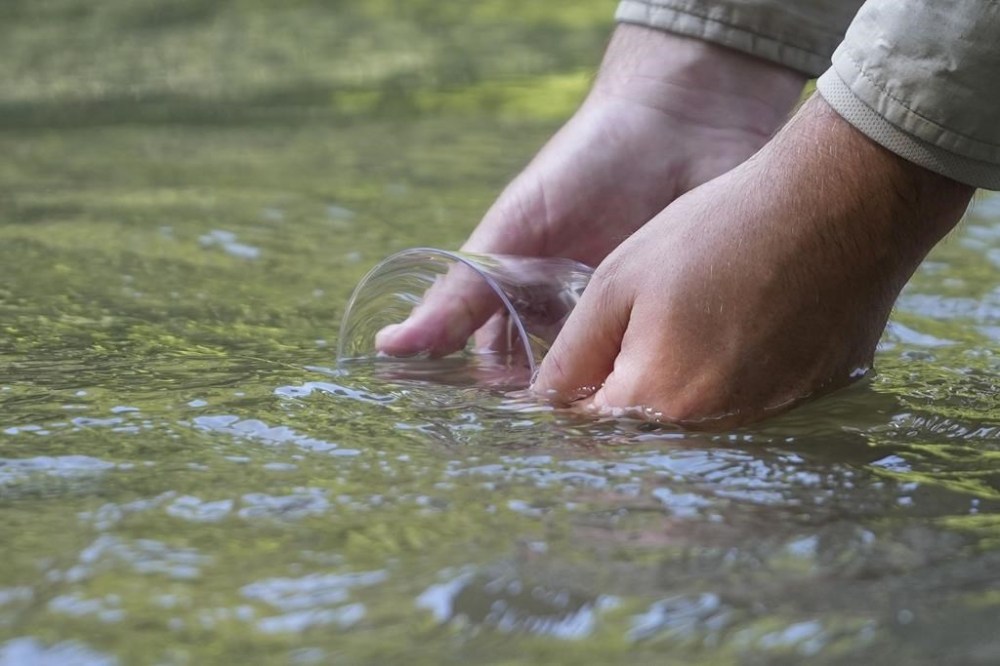
“This site has some of the highest species diversity in the entire Pearl River,” said Matt Wagner, a U.S. Fish and Wildlife Service biologist who last month joined workers wading into the Strong River, a headwater tributary of the Pearl. They dipped bowls into buckets full tiny pearl darters from a private hatchery and eased them into the water.
“There’s more species here than most other places, and a lot of the species that we find here are what we call sensitive species. They are species that are not very tolerant of things like pollution, high disturbance and things of that nature.”
The presence of those species bodes well for the return of the pearl darter to the Pearl River, Wagner said.
The pearl darter is a bottom-dwelling fish that measures about 2.5 inches (6.4 centimeters) long. It is named for the iridescent coloring around its gills, according to the U.S. Fish and Wildlife Service, which listed it as a threatened species in 2017.
It had not vanished completely by 1973. It was still found in Mississippi’s Pascagoula River system. But that accounted for only about 43% of its historic range.
Wagner is optimistic about its future in the Pearl River.

“This is the biggest win of my career as a biologist so far,” Wagner said. “It’s very seldom that you get to restore a species back to its historic range. As a biologist, when you go to school, this is the type of day you’re all dreaming about.”
There will be regular sampling of the waters to see how the species is surviving. The hope is that they will thrive and spread throughout the Pearl system and federal protection will some day no longer be needed.
“They should, ideally, get delisted from the Endangered Species Act,” Wagner said.
___
McGill reported from New Orleans.