Canadian evangelical churches see changes

Advertisement
Read this article for free:
or
Already have an account? Log in here »
To continue reading, please subscribe:

Digital Subscription
One year of digital access for only $205*
- Enjoy unlimited reading on winnipegfreepress.com
- Read the E-Edition, our digital replica newspaper
- Access News Break, our award-winning app
- Play interactive puzzles
*First annual payment billed as $205.00 + GST for one year. This annual subscription will automatically renew at $233.00 + GST every 52 weeks (10% off the regular annual price of $259.35). Offer available to new and qualified returning subscribers only. Cancel any time.
To continue reading, please subscribe:
Add Free Press access to your Brandon Sun subscription for only an additional
$1 for the first 4 weeks*
- Enjoy unlimited reading on winnipegfreepress.com
- Read the E-Edition, our digital replica newspaper
- Access News Break, our award-winning app
- Play interactive puzzles
*Your next Brandon Sun subscription payment will increase by $1.00 and you will be charged $17.95 plus GST for four weeks. After four weeks, your payment will increase to $24.95 plus GST every four weeks.
Read unlimited articles for free today:
or
Already have an account? Log in here »
Hey there, time traveller!
This article was published 02/09/2023 (1120 days ago), so information in it may no longer be current.
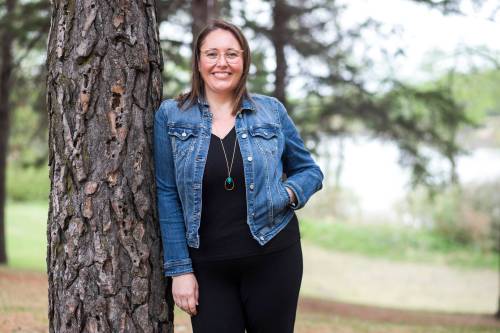
Lots has been written about evangelicals in the U.S. Less has been published about Canadian evangelicals. Sam Reimer is trying to change that.
Reimer, who teaches sociology at Crandall University in Moncton, N.B., is the author of the new book Caught in the Current: British and Canadian Evangelicals in an Age of Self-Spirituality (McGill-Queens University Press).
“The U.S. version of evangelicals have been getting a lot of time and attention,” he said. This is especially true since a majority of American evangelicals voted for Trump in the 2016 and 2020 presidential elections.
“It’s a different story in Canada,” Reimer said.
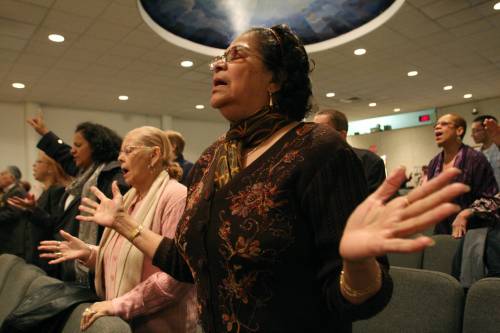
Reimer wanted to know more about what evangelicals in Canada are like, comparing them not to Americans but to their counterparts in Great Britain. What he found is that evangelicals in Canada are caught in the currents of contemporary culture.
“They want to go one way, but they are being pulled in different directions,” he said. “There is a difference in what they are saying they believe and what they do, words versus actions.”
Through surveys and interviews with Canadian and British evangelicals, Reimer found their views on the Bible and leaders as sources of authority and guidance are changing.
Now, he said, they are “pulled towards an internal locus for spiritual authority.” Instead of following official church doctrines, or its teaching about what the Bible says, they “tend to listen to their own hearts” and are more interested in finding their own path.
Many still go to church, he said, “but they don’t necessarily believe everything the preacher says,” on things such as the welcome and affirmation of LGBTTQ+ people, same-sex marriage and on Medical Assistance in Dying.
Their denominations and churches may officially be against those two issues, but many Canadian evangelicals don’t support those positions, Reimer found.
“I am seeing changes in those areas,” he said, adding that evangelical denominations and churches no longer dictate what their members are supposed to believe.
This “inward turn,” as he called it, is most prevalent among baby boomers and younger evangelicals, with many evangelicals today see spirituality as a private journey.
But this change isn’t only happening among the laity — it’s happening to evangelical clergy, too.
“While the clergy I spoke to embrace evangelical orthodoxy, the presentation of the ‘good news’ is increasingly experiential, digital, and welcoming of all, while exclusive beliefs and contentious moral positions are toned down,” Reimer said.
They are doing this because they recognize the world, and their members, have changed. Many clergy know it is no longer possible to prescribe beliefs and practices in sermons and then expect people to follow them.
Clergy may still preach official denominational doctrines, but in their pastoral work and in their relations with members and others they are less judgmental and more accepting of practices and ideas that might be officially forbidden by their denominations.
Why these changes among Canadian evangelicals? Reimer suggests one reason is the current zeitgeist, or the defining mood or spirit of our times, where people feel they should decide their own spiritual path.
But Reimer also cites a desire among Canadian evangelicals to “avoid being labelled as intolerant like U.S. evangelicals … They are reacting against the portrayal of that group.”
As for the future, Reimer thinks Canadian evangelicals would do better to look to Great Britain — a country that is further down the secularism road — than to the U.S. for answers.
“There is a lot we could learn from them,” said Reimer, noting that evangelicals in Canada, as in Great Britain, are a minority religious group.
“We need to accept our minority status in this country,” he said, noting that evangelicals in Canada today make up only six to eight per cent of the population, down from 11 per cent a decade or more ago.
Canadian evangelical churches should also accept they can’t expect to grow through evangelistic efforts, he said.
“Evangelicals can expect few people to convert through evangelism,” he said, noting that conversion today is rare.
The days of traditional church growth strategies — such as starting new churches in new suburbs — may be numbered, Reimer suggests.

“It’s no longer a matter of build it and they will come,” he said, adding that many evangelical churches today are losing more members than they are gaining.
If any increases are to be had, it is through immigration, according to Reimer.
“Immigration is the doorway to growth. Immigrants more religious, more likely to want to go to church.”
At the same time, churches that want to attract newcomers should “focus on meeting the real needs of people,” he said. “Churches should try to provide a strong sense of community and belonging.”
faith@freepress.mb.ca
The Free Press is committed to covering faith in Manitoba through our Religion in the News project. This reporting continues because readers like you step forward to fund it.
Donate now to support our reporting on religion.
Your donation is eligible for a charitable tax receipt.
BECOME A FAITH JOURNALISM SUPPORTER
Our newsroom depends on a growing audience of readers to power our journalism. If you are not a paid reader, please consider becoming a subscriber.
Our newsroom depends on its audience of readers to power our journalism. Thank you for your support.
The Free Press is committed to covering faith in Manitoba through our Religion in the News project. This reporting continues because readers like you step forward to fund it.
Donate now to support our reporting on religion.
Your donation is eligible for a charitable tax receipt.
BECOME A FAITH JOURNALISM SUPPORTER
Our newsroom depends on a growing audience of readers to power our journalism. If you are not a paid reader, please consider becoming a subscriber.
Our newsroom depends on its audience of readers to power our journalism. Thank you for your support.
Advertisement Advertise With Us
Advertisement Advertise With Us
The Free Press acknowledges the financial support it receives from members of the city’s faith community, which makes our coverage of religion possible.