Doctors explain serious kidney disease facing some Calgary kids infected with E. coli
Advertisement
Read this article for free:
or
Already have an account? Log in here »
To continue reading, please subscribe:
Digital Subscription
One year of digital access for only $1.44 a week*
- Enjoy unlimited reading on winnipegfreepress.com
- Read the E-Edition, our digital replica newspaper
- Access News Break, our award-winning app
- Play interactive puzzles
*Billed as $5.77 plus GST every four weeks. After 52 weeks, price increases to the regular rate of $19.95 plus GST every four weeks. Offer available to new and qualified returning subscribers only. Cancel any time.
To continue reading, please subscribe:
Add Free Press access to your Brandon Sun subscription for only an additional
$1 for the first 4 weeks*
- Enjoy unlimited reading on winnipegfreepress.com
- Read the E-Edition, our digital replica newspaper
- Access News Break, our award-winning app
- Play interactive puzzles
*Your next Brandon Sun subscription payment will increase by $1.00 and you will be charged $17.95 plus GST for four weeks. After four weeks, your payment will increase to $24.95 plus GST every four weeks.
Read unlimited articles for free today:
or
Already have an account? Log in here »
Hey there, time traveller!
This article was published 13/09/2023 (1137 days ago), so information in it may no longer be current.
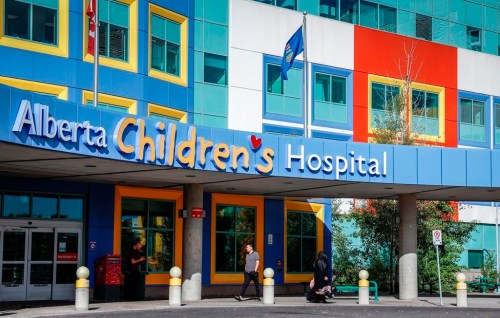
The number of E. coli infections linked to Calgary-area daycares could continue to rise, a doctor warns, potentially expanding the outbreak that’s already believed to be the largest of its kind in Canada involving children under five.
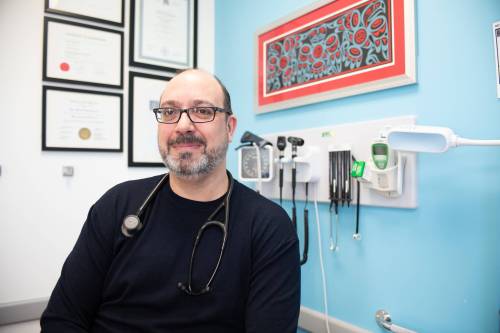
Dr. Stephen Freedman, an emergency physician at Alberta Children’s Hospital, said the illness could continue to spread in affected households and parents should ensure infected children wash their hands regularly so feces are not left on bathroom surfaces or elsewhere, potentially infecting others.
“Unfortunately, if their stool is shedding bacteria and there is a breakdown in hand hygiene procedures in the house, that can lead to somebody else getting it onto their hands and into their mouth. And hence the infection because it does not take a lot of this bacteria to cause symptomatic infection,” Freedman said.

There have been 310 lab-confirmed cases, mostly in children, of the bacterial infection since the outbreak at 11 daycares was declared on Sept. 4. The outbreak is believed to be linked to a kitchen that supplies meals to those daycares.
Among the 21 patients who were still hospitalized, 20 had a severe illness while seven kids were receiving dialysis as of Wednesday.
WHY DID THE CHILDREN GET SO SICK?
E. coli, or Escherichia coli, is a diverse group of bacteria that normally live in the intestines of humans and animals. There are thousands of E. coli strains, and most are harmless. The vast majority of E. coli infections causediarrhea that resolves in a few days, and are associated with eating undercooked beef or improperly washed vegetables and fruit exposed to contaminated soil from cattle shedding the bacteria in their feces.
But the childrenin Calgary were infected bya particular straincalled E. coli 0157, which secretes atoxin that can lead to organ damage.
Dr. Mark Joffe, Alberta’s chief medical health officer, has said a central kitchen shared by 11 daycares was the likely source of the infections. An inspection on Sept. 5 found the kitchen lacked proper sanitation and had two live cockroaches along with 20 dead ones, among other violations. Large numbers of children with diarrhea began showing up in hospitals a few days before the inspection. By Sept. 4, there were 17 lab-confirmed cases.
Children under age five are most at risk of developing a severe illness called hemolytic uremic syndrome (HUS), a kidney disease that can be caused byE. coli 0157. The strain is known as a Shiga toxin-producing E. coli(STEC). The risk declines as kids get older.
“Into the teenage years, the risk goes down into the two to three per cent range,” Freedman said. Adults over the age of 60 are also vulnerable, Freedman said.
“This is the single-largest outbreak of STEC infection in children under five years of age that has been reported,” he said, comparing it to other such illnesses.
Freedman said an E. coli outbreak in Walkerton, Ont., in 2000 may have involved 400 children of all ages, but that was not documented. That number included 24 cases of HUS in all the affected youth.
A 2011 outbreak in Germany linked to sprouts included 89 pediatric cases of HUS but the median age was 13, with very few of them under age five, he added.
WHEN DO SYMPTOMS START AFTER A STEC INFECTION?
Diarrhea begins within 10 days after young children in particular have eaten contaminated food. “It usually starts with one or two days of non-bloody diarrhea, followed by bloody, very frequent, often 20, 30, 40 times a day, of mucousy bloody diarrhea that lasts another two to three days,” Freedman said. Those cases tend to resolve.
However, somechildrendevelop HUS between seven to 10 days after the non-bloody diarrhea starts. Toxins from E. coli 0157 damage the lining of blood vessels, especially in the kidneys and intestines, and cause HUS.
WHAT TREATMENT IS AVAILABLE?
There is no specific treatment for those infected with STEC. Drinking lots of fluids is the most important factor. “If children are dehydrated when they develop HUS, they tend to have worse outcomes,” said Freedman, adding kids are given fluids intravenously in hospital and monitored closely.
Antibiotics do not work. “Giving antibiotics to children with Shiga toxin-producing E. coli infection increases the risk of developing HUS,” he said. That’s because antibiotics can release more Shiga toxins.
HOW WILL THE SICKEST CHILDREN BE MONITORED?
HUS destroys red blood cells, which can cause kidney failure, so nephrologists are monitoring the sickest children. Dr. Julian Midgley, a pediatric nephrologist who has treated some of the kids at Alberta Children’s Hospital, said infection can lower the number of platelets, which form clots to prevent bleeding after an injury.
Urine output is also measured. “The children may often get a urinary catheter to try and distinguish the urine output from the diarrhea, which can still be going on, even when they’re developing HUS.”
The children’s blood pressure is also monitored because it can rise when their kidney function is affected. Some severely ill children may need blood transfusions because of anemia.
“The HUS does affect every capillary in the body,” Midgley said. “Some organs are much more sensitive to it, like the kidney. But there’s concern about other organs like the pancreas, the brain. So, we intensely monitor a whole host of things in addition to the main issues.”
Most of the children will recover. But the sickest ones, especially those who have had dialysis, will be followed up for about 10 years, Midgley said. About two per cent of severely ill children are at risk of needing a kidney transplant.
HOW COULD INFECTION BE PREVENTED?
Fruit and vegetables should be thoroughly washed to remove any contamination and beef should be cooked to an internal temperature of 160 degrees to kill any bacteria on the meat.
“If you go to a barbecue run by a pediatric nephrologist, the hamburgers will be well cooked,” Midgley said.
Cleaning cutting boards is also important to prevent other foods from becoming contaminated. And hands should be washed after handling raw beef.
This report by The Canadian Press was first published Sept. 13, 2023.
Canadian Press health coverage receives support through a partnership with the Canadian Medical Association. CP is solely responsible for this content.
Related Articles
Money for families affected by daycare E. coli
Advertisement Advertise With Us
Advertisement Advertise With Us