Twin polls suggest slim majority of Albertans support oil and gas emissions cap

Advertisement

Advertise with us

EDMONTON - Most Albertans would support some kind of national cap on carbon emissions from the oil and gas sector, two new polls suggest.

Read this article for free:


or

Already have an account? Log in here »

To continue reading, please subscribe:

Subscribe and receive a limited-edition Free Press branded hat or tote.

Digital Subscription

One year of digital access for only $205*

  • Enjoy unlimited reading on winnipegfreepress.com
  • Read the E-Edition, our digital replica newspaper
  • Access News Break, our award-winning app
  • Play interactive puzzles

*First annual payment billed as $205.00 + GST for one year. This annual subscription will automatically renew at $233.00 + GST every 52 weeks (10% off the regular annual price of $259.35). Offer available to new and qualified returning subscribers only. Cancel any time.

To continue reading, please subscribe:

Add Free Press access to your Brandon Sun subscription for only an additional

$1 for the first 4 weeks*

  • Enjoy unlimited reading on winnipegfreepress.com
  • Read the E-Edition, our digital replica newspaper
  • Access News Break, our award-winning app
  • Play interactive puzzles
Start now

*Your next Brandon Sun subscription payment will increase by $1.00 and you will be charged $17.95 plus GST for four weeks. After four weeks, your payment will increase to $24.95 plus GST every four weeks.

Hey there, time traveller!
This article was published 14/09/2023 (1121 days ago), so information in it may no longer be current.

EDMONTON – Most Albertans would support some kind of national cap on carbon emissions from the oil and gas sector, two new polls suggest.

The polls, conducted by different polling firms at the same time with the same questions, come after Alberta Premier Danielle Smith warned Ottawa last month not to test the “resolve” of Albertans to oppose such measures.

“(The results) conflict with the narrative that our current government is telling Albertans and Canadians that Albertans do not support this kind of action,” said Joe Vipond of the Canadian Association of Physicians for the Environment, which commissioned the polls.
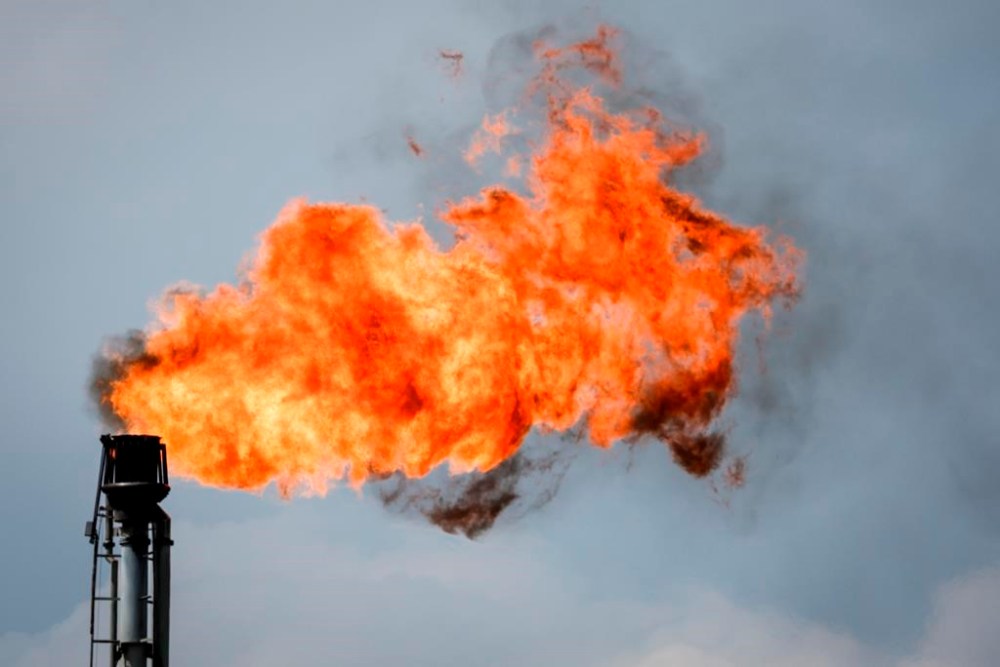
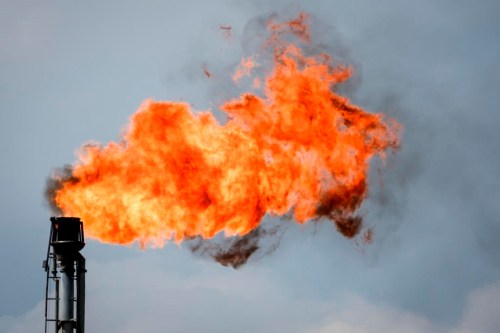
A flare stack burns off excess gas at a processing facility near Crossfield, Alta., Tuesday, June 13, 2023. Most Albertans would support some kind of national cap on carbon emissions from the oil and gas sector, two new polls suggest. THE CANADIAN PRESS/Jeff McIntosh

“Our polling suggests that’s not correct.”

The federal government has promised to bring in a cap on oil and gas emissions this fall. Smith has pledged to fight any such legislation, calling it an enforced production cap. Alberta has a 100-megatonne emissions cap on its books, although it’s never been implemented.

The association hired the polling firms Leger and Research Co. to conduct the online surveys of more than 800 Albertans between Aug. 25 and 27.

The polling industry’s professional body, the Canadian Research Insights Council, says online surveys cannot be assigned a margin of error because they do not randomly sample the population. A random sample of 1,000 respondents would have a margin of error of 3.1 percentage points, 19 times out of 20.

Neither pollster was aware of the other’s work. Both used the same questions, including, “Would you support or oppose setting a nationwide emissions cap on oil and gas carbon pollution in Canada?”

Leger found 57 per cent of respondents were at least somewhat in favour. Research Co.’s finding was 62 per cent in favour.

That rough agreement adds confidence to the results, said Mario Canseco of Research Co.

“The numbers for each of the samples are pretty much bang on,” he said. “I feel good because everything is similar.”

The Leger poll, with a slightly larger sample size, was able to break out some demographic results. Urban areas supported a cap by 62 per cent and suburban areas by 56 per cent, with 46 per cent of rural Albertans in support.

Results from the twin polls didn’t surprise University of Alberta political scientist Jared Wesley, who has been leading a long-term surveying project on Alberta called Common Ground. He said a decade’s worth of polling suggest that Albertans are much more environmentally conscious than they’re given credit for — and than they give each other credit for.

“Most Albertans feel that way, but they don’t think the average Albertan feels that way. There’s a false sense of social reality.

“Until that changes, until people’s perceptions of public opinion catches up with public opinion, there’s not much incentive for politicians to change their rhetoric.”

Albertans do show less support than those in other provinces for environmental measures that would affect its oilpatch. A poll released Wednesday on attitudes toward climate change, conducted by Leger and commissioned by The Canadian Press, found a nearly 30-percentage-point difference between Alberta and Quebec in those concerned about the issue.

Still, a slim majority of 55 per cent of Albertans expressed some level worry.

On Aug. 30, Smith’s office released a statement in which she was quoted as saying: “Under no scenario will the government of Alberta permit the implementation of the proposed federal electricity regulations or contemplated oil and gas emissions cap. We would strongly suggest the federal government refrain from testing our government’s or Albertans’ resolve in this regard.”

Vipond said the polling suggests otherwise.

“When (politicians) make statements like, ‘Albertans do not support a just transition or an emissions cap,’ those statements are not based in truth. Albertans understand that we cannot go on doing what we’ve done.”

This report by The Canadian Press was first published Sept. 14, 2023.
Report Error Submit a Tip

More Stories

Fraser Institute report places Manitoba near bottom of all provinces, states in productivity, income advancement

Gabrielle Piché 5 minute read Preview

Fraser Institute report places Manitoba near bottom of all provinces, states in productivity, income advancement

Gabrielle Piché 5 minute read Yesterday at 8:01 PM CDT

Manitoba trails behind most Canadian provinces and American states in economic well-being, according to a new study.

The Fraser Institute, a right-leaning think tank, compared provinces’ and U.S. states’ GDP per person, among other economic measures, in a report released Thursday.

It places Manitoba 56th of 60 jurisdictions. Most provinces and every state except Mississippi had a higher GDP per person in 2024 than Manitoba, the Fraser Institute calculated.

It used data from Statistics Canada and the United States Census Bureau.

Read
Yesterday at 8:01 PM CDT

Twin polls suggest Albertans support emissions cap

Bob Weber, The Canadian Press 4 minute read Preview

Twin polls suggest Albertans support emissions cap

Bob Weber, The Canadian Press 4 minute read Thursday, Sep. 14, 2023

EDMONTON - Most Albertans would support some kind of national cap on carbon emissions from the oil and gas sector, two new polls suggest.

The polls, conducted by different polling firms at the same time with the same questions, come after Alberta Premier Danielle Smith warned Ottawa last month not to test the "resolve" of Albertans to oppose such measures.

"(The results) conflict with the narrative that our current government is telling Albertans and Canadians that Albertans do not support this kind of action," said Joe Vipond of the Canadian Association of Physicians for the Environment, which commissioned the polls.

"Our polling suggests that's not correct."

Read
Thursday, Sep. 14, 2023

Can’t cut your way to being a better city

Molly McCracken 5 minute read 2:00 AM CDT

The powers that be in Winnipeg have pushed for cheap property taxes for decades. As a result, the city doesn’t have enough money to balance the books, let alone maintain infrastructure, deliver services and respond to challenges like homelessness and the toxic drug crisis.

Winnipeg’s fiscal problem stems from decades of keeping property-tax increases below inflation and relying on inadequate revenues to fund a growing city. The result? Today, Winnipeg spends less money per person on city services than it did in 2001.

A look at the books at city hall is stark. Winnipeg has run a deficit almost every year since the COVID-19 pandemic because of climate-change-driven heavy ice and snowstorms, higher fuel costs and increased policing overtime. During this time, city council tried to cut and freeze public service spending where it could; as a result, community services have been cut to the bone.

Departments responsible for what makes a city a good place to live have been squeezed. Since 1999, community services — responsible for libraries, recreation, swimming lessons and aspects of Winnipeg’s poverty-reduction work — has 149 fewer staff positions, an 18 per cent reduction, even as the city’s population has grown 35 per cent, or by 220,000 people.

Province to fund livestock cop to cut down on theft

Connor McDowell 3 minute read Preview

Province to fund livestock cop to cut down on theft

Connor McDowell 3 minute read Updated: Yesterday at 1:08 PM CDT

BRANDON — The Manitoba government will fund a new RCMP position dedicated to investigating livestock theft.

The province made the announcement Thursday.

Agriculture Minister Ron Kostyshyn said the investigative role will fill a pressing need.

“Personally speaking, I think this has been a long time waiting for this to come to reality,” the Dauphin MLA said Wednesday. “We are doing a great thing for the industry.”

Read
Updated: Yesterday at 1:08 PM CDT

Letters, Oct. 9

7 minute read 2:01 AM CDT

Manitoba Hydro at it again

As a former resident of Windsor Park, I often ride my bicycle through the neighbourhood or walk the shaded pathway from Elizabeth Road to Cottonwood Drive. It’s a favourite walkway for residents with dogs as well. While passing the pathway at Elizabeth Road the other day I was dismayed to see crews clear-cutting the mature trees between the pathway and the CPKC tracks that stretch the length of Archibald Street.

At first I thought that the crews were clearing out the dense bushes and trees at the start of the pathway. I made a note to return to see if that was all that was going to be done. (When) I drove by the trees had been clear-cut to the end of the first street and access point to it, much to my dismay and horror. I parked my car and went to speak with a worker doing the tree removal.

I was informed that it was a Hydro corridor and that the work would clear-cut every tree between Elizabeth Road and Cottonwood Road. Perhaps the plan is to continue on through Southdale and Island Lakes. At a time of diminishing tree canopies around Winnipeg and the drive to plant a million trees, this decision is outrageous and lacks respect for our current climate situation and neighbourhood esthetics.

Nurses disciplined for botched IV infusion

Nicole Buffie 3 minute read Preview

Nurses disciplined for botched IV infusion

Nicole Buffie 3 minute read Updated: Yesterday at 4:36 PM CDT

Two nurses working at the Grace Hospital have been reprimanded and fined $2,500 each for an IV infusion gone bad and an attempted coverup.

The incident happened on November 23, 2023 when a nurse asked a colleague to set up an IV infusion on him in an unused operating room.

During the attempted IV start, the nurse lost consciousness. The nurse who attempted the IV drip and another who was in the room called for help and several staff responded.

The nurse regained consciousness and vomited, but recovered and continued to work his shift, a March 18 decision by the College of Registered Nurses of Manitoba says.

Read
Updated: Yesterday at 4:36 PM CDT