Hajdu says ‘co-developed’ First Nations water legislation to be tabled this fall
Advertisement
Read this article for free:
or
Already have an account? Log in here »
To continue reading, please subscribe:
Digital Subscription
One year of digital access for only $1.44 a week*
- Enjoy unlimited reading on winnipegfreepress.com
- Read the E-Edition, our digital replica newspaper
- Access News Break, our award-winning app
- Play interactive puzzles
*Billed as $5.77 plus GST every four weeks. After 52 weeks, price increases to the regular rate of $19.95 plus GST every four weeks. Offer available to new and qualified returning subscribers only. Cancel any time.
To continue reading, please subscribe:
Add Free Press access to your Brandon Sun subscription for only an additional
$1 for the first 4 weeks*
- Enjoy unlimited reading on winnipegfreepress.com
- Read the E-Edition, our digital replica newspaper
- Access News Break, our award-winning app
- Play interactive puzzles
*Your next Brandon Sun subscription payment will increase by $1.00 and you will be charged $17.95 plus GST for four weeks. After four weeks, your payment will increase to $24.95 plus GST every four weeks.
Read unlimited articles for free today:
or
Already have an account? Log in here »
Hey there, time traveller!
This article was published 27/09/2023 (1120 days ago), so information in it may no longer be current.
OTTAWA – Indigenous Services Minister Patty Hajdu says she hopes to table a piece of legislation this fall that she says is the closest the federal government has come to co-developing law with First Nations.
“It’s really, to me, very important that it reflects the input of Indigenous Peoples,” she said.
The proposed bill would aim to begin addressing the protection of fresh water within First Nation communities, as well as water that flows into them.
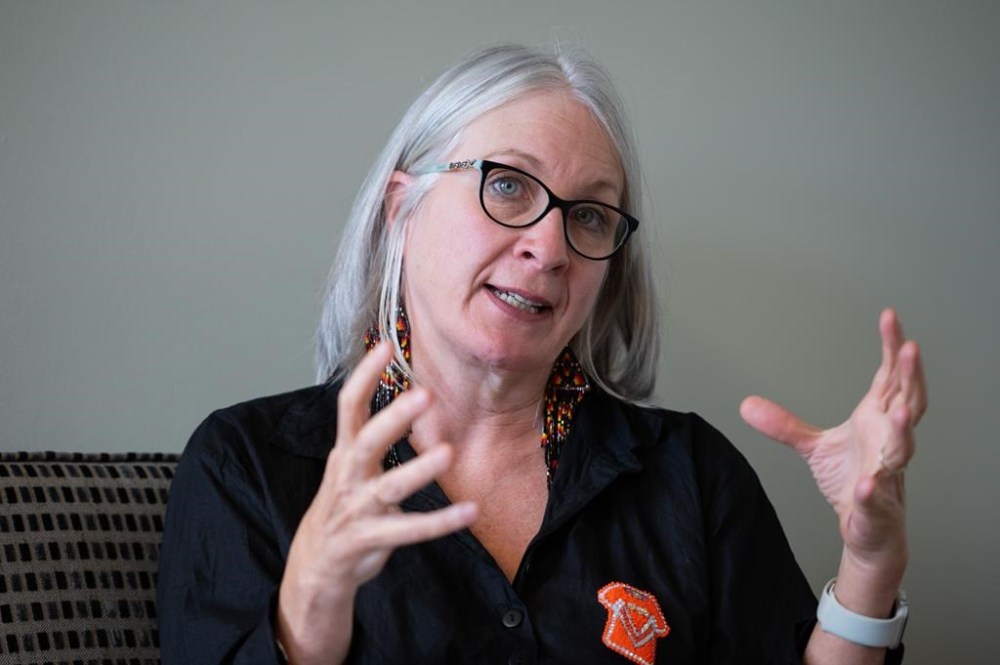
“I’m pretty excited about it,” Hajdu said in a wide-ranging interview with The Canadian Press.
“It’s an opportunity to show the country that we can do things together — even in this very Westminster parliamentary setting.”
The new bill is expected to come more than one year after Canada repealed the 2013 Safe Drinking Water for First Nations Act in June 2022.
The federal government that introduced the bill said it aimed to support the development of federal regulations to support First Nations’ access to clean drinking water and the effective treatment of wastewater.
First Nations, however, have long said that the Act was ineffective and dangerous, citing concerns about a lack of sustainable funding and the infringement of constitutional rights.
In December 2021, the Federal Court and the Court of Queen’s Bench of Manitoba decided to approve the settlement of an $8-billion class-action lawsuit covering any First Nations and their members who were subject to drinking water advisories lasting at least one year, anytime between November 1995 and June 2021.
The settlement included $1.5 billion in compensation, $400 million to create a First Nations Economic and Cultural Restoration Fund and a fresh commitment to lift all long-term drinking water advisories.
It also allocated at least $6 billion to help support access to drinking water in First Nations communities, and the modernization of First Nations drinking water legislation.
Hajdu said that while working with the Assembly of First Nations and other stakeholders, she understood that people who live in First Nations communities want to have control over the rules and regulations that govern their water delivery.
The Assembly of First Nations was not available for an interview with The Canadian Press.
Hajdu said the bill will be the first to be introduced under the United Nations Declaration on the Rights of Indigenous Peoples — an international human-rights framework that Canada adopted legislation to recognize in 2021.
The declaration states that Indigenous Peoples have the right to self-determination, and the right to participate in decision-making about matters that could affect their rights.
It also states that governments should consult Indigenous Peoples “in good faith” in order to obtain free, prior and informed consent before implementing legislation that could affect them.
Hajdu said the legislation she expects to table in the fall “is the closest to co-development that we’ve come.”
“We’ve heard clearly that people want to protect the water that they access for drinking water, that people want to have control over the rules and regulations that go into First Nations water delivery, that people want to have confidence that there will be sustainable funding for water, water operators and water delivery systems going forward,” said Hajdu.
“And so the bill is looking at how we make sure that we honor the kinds of areas of priority that the litigants have identified, and that our partners at AFN have worked really closely with us on.”
Hajdu didn’t share much more detail about what the bill will include, and she said it’s still being drafted.
The Liberals’ record on water issues in First Nations communities hasn’t always been celebrated.
The broken promise to end all boil-water advisories by 2021 is often cited as another example of how the Liberal government has failed to live up to expectations when it comes to reconciliation with Indigenous Peoples.
“It was a really ambitious goal, and for those of us that didn’t much understand what water and water delivery looks like at First Nations, it seemed like a really attainable goal,” Hajdu said.
“But in fact, water and water delivery in First Nations is super complicated.”
Dawn Martin-Hill, a professor at McMaster University who leads the Indigenous water research program Ohneganos Ohnegahdę:gyo, said the scope of the government’s water initiative has been too narrow.
It focused on boil-water advisories, rather than access to safe drinking water on reserves in general, where infrastructure is chronically underfunded.
And, she said, communities still experienced boil water advisories months after they were lifted.
“Who is going to fund these water treatment plants? Who’s going to operate and be trained to (run) these plants?” said Martin-Hill, whose own community of Six Nations of the Grand River has its own problems with water.
“It was not well through out because they, in my view, didn’t consult with leadership. They didn’t consult with the experts. They just rolled out an Ottawa policy without much thought.”
The solution, Martin-Hill said, is to have Indigenous Peoples at the table when talking about environmental management and water monitoring, with treaty rights respected and commitments to nation-to-nation relationships upheld.

The federal government says it has lifted 143 long-term drinking water advisories since November 2015.
Hajdu said most of the 28 long-term advisories that remain, affecting 26 communities, are in remote areas where access to infrastructure is a greater challenge.
Still, she said more than 96 per cent of First Nations now live in a community where they can access clean drinking water from the tap.
As for the rest: “We will finish this job.”
This report by The Canadian Press was first published Sept. 27, 2023.