Facing increasing pressure from customers, some miners are switching to renewable energy
Advertisement
Read this article for free:
or
Already have an account? Log in here »
To continue reading, please subscribe:

Digital Subscription
One year of digital access for only $205*
- Enjoy unlimited reading on winnipegfreepress.com
- Read the E-Edition, our digital replica newspaper
- Access News Break, our award-winning app
- Play interactive puzzles
*First annual payment billed as $205.00 + GST for one year. This annual subscription will automatically renew at $233.00 + GST every 52 weeks (10% off the regular annual price of $259.35). Offer available to new and qualified returning subscribers only. Cancel any time.
To continue reading, please subscribe:
Add Free Press access to your Brandon Sun subscription for only an additional
$1 for the first 4 weeks*
- Enjoy unlimited reading on winnipegfreepress.com
- Read the E-Edition, our digital replica newspaper
- Access News Break, our award-winning app
- Play interactive puzzles
*Your next Brandon Sun subscription payment will increase by $1.00 and you will be charged $17.95 plus GST for four weeks. After four weeks, your payment will increase to $24.95 plus GST every four weeks.
Read unlimited articles for free today:
or
Already have an account? Log in here »
Hey there, time traveller!
This article was published 01/10/2023 (1080 days ago), so information in it may no longer be current.
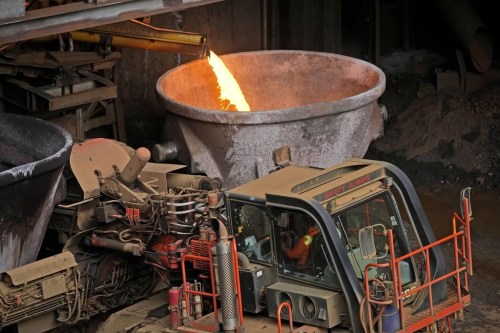
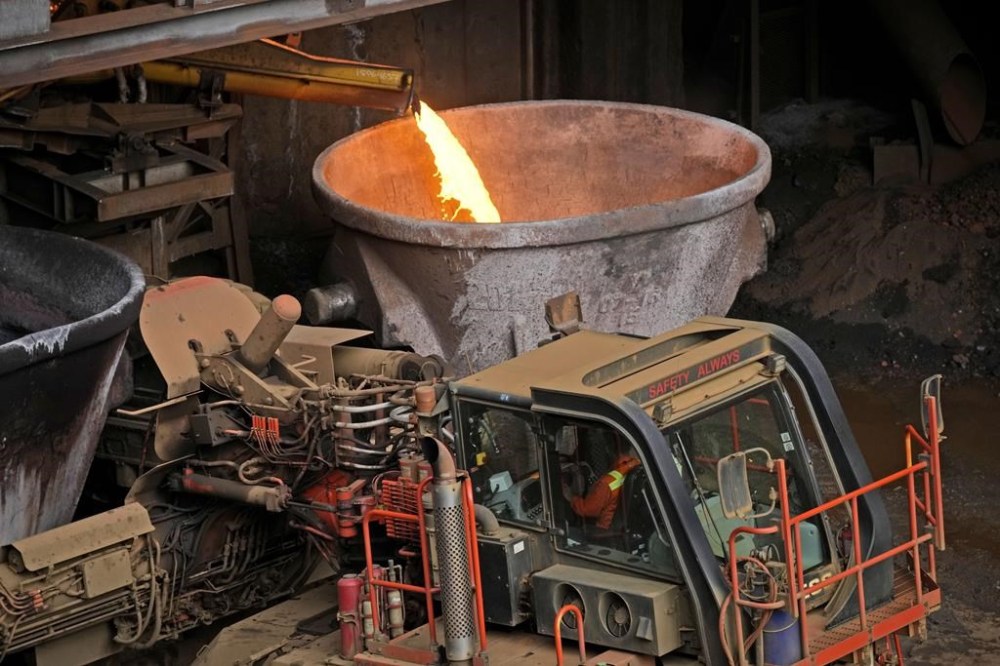
SOROWAKO, Indonesia (AP) — Red hot sparks fly through the air as a worker in a heat-resistant suit pokes a long metal rod into a nickel smelter, coaxing the molten metal from a crucible at a processing facility on the Indonesian island of Sulawesi.
The smelter run by global mining firm Vale and powered by electricity from three dams churns out 75,000 tons of nickel a year for use in batteries, electric vehicles, appliances and many other products.
While the smelting creates heavy emissions of greenhouse gases, the power used is relatively clean. Such possible reductions in emissions come as demand for critical minerals like nickel and cobalt is surging as climate change hastens a transition to renewable energy.
Mining operations account for some 4%-7% of global greenhouse gas emissions, according to global consulting firm McKinsey & Company. But some miners are moving to reduce use of fossil fuels in extracting and refining, partly due to pressure from downstream customers that want more sustainable supply chains.
Located beside a crystal-blue lake in the lush jungle of Sorowako, South Sulawesi, Vale Indonesia — a subsidiary of Vale international — runs its smelters entirely from hydroelectricity. Vale says that can reduce its emissions by over 1.115 million tons of carbon dioxide equivalent a year, compared to using diesel. Vale claims it has reduced its greenhouse gas emissions nearly a fifth since 2017.
As demand for materials needed for batteries, solar panels and other components vital for cutting global emissions rises, carbon emissions by miners and refiners will likewise rise unless companies actively work to decarbonize.
Experts say improved technology, pressure from customers and enforcement of clean energy policies all are needed to keep moving toward more sustainable mining and refining practices while raising output to keep pace with global needs for pivoting away from reliance on polluting fossil fuels.
Other companies and countries around the world also are reducing use of fossil fuels in their mining operations. Solar plants in Chile help power the mining sector, which consumes much of the country’s electricity demand to produce copper, lithium and other materials. In recent years, wind power has helped electrify the Raglan Mine in Canada.
Companies are learning from past mistakes of the industrial revolution, where reliance on fossil fuels was paramount for development, said Michael Goodsite, a pro vice chancellor and professor of civil and environmental engineering at the University of Adelaide in Australia.
“I think as you see the future of certain operations, you’ll see them transitioning,” he said. “The way that they transition and how they move from fossil fuel operations to other energy sources can and should be learned from by others.”
Indonesia is the world’s largest nickel producer and Indonesian President Joko Widodo has promoted the country developing its own industries.
The push to cut emissions and use cleaner energy has been helped by investment and interest from governments and multinational companies. Volvo, Mercedes, Hyundai, Apple and other manufacturers need materials made in a more sustainable way to meet their own environmental, social and governance, or ESG, commitments.
Widodo visited Vale Indonesia’s Sorowako facilities in March, the same month a deal was signed for a $4.5 billion nickel procession plant to be built by Vale Indonesia with investment by Ford Motor Co.
“Ford can help ensure that the nickel that we use in electric vehicle batteries is mined, produced within the same ESG standards as … our business around the world,” Christopher Smith, Ford’s chief government affairs officer, said at a signing ceremony for a new $4.5 billion nickel processing plant in Indonesia with Vale Indonesia in March this year.
Even companies already taking steps to decarbonize are still reliant on at least some fossil fuels.
At Vale Indonesia in Sorowako, coal is still used to power drying and reduction kilns. The company’s CEO, Febriany Eddy, said she plans to switch such operations to liquefied natural gas — cleaner but still another fossil fuel.
It’s the best option available given current technology, she said in an interview with The Associated Press.
“I have two options in front of me: I continue to say that there is no viable option, that we will wait until that perfect solution is to come, which (could take) 15 or 20 years to come. Or I work with LNG first, knowing it is not a perfect solution, knowing it is a transition only,” Eddy said. “But with conversion to LNG, I can reduce 40% of my emissions.”
The use as LNG as a “bridge fuel” has been contested by climate experts, as the fuel releases climate-warming methane and carbon dioxide when it’s produced, transported and burned.
Initial costs for switching to, expanding and building new renewable infrastructure are another steep barrier.
It took decades to recoup costs from building the three hydropower dams in the remote, sparsely populated area, that are used to power Vale’s Sorowako facilities. But now, having that infrastructure means big savings at a time when global energy prices are high.
“Hydropower isn’t just reducing our carbon emissions, but also reducing our costs today because we are no longer that (vulnerable) to fuel and coal costs— because we have hydropower,” Eddy said.
Having mining operations powered by renewable sources instead of fossil fuels could also help unlock green financing and attract future investors, said Aimee Boulanger, executive director of the Initiative for Responsible Mining Assurance.
“The finance and investment sector is more tuned in than it ever has before to the environmental and social responsibility of supply chains and their investments in them. And they’re looking at greenhouse gas emissions,” she said. “When the world is recovering from a global pandemic and facing the global crisis of climate change, there’s never been a time when they’ve been more interested in these issues.”
While many companies are stepping up efforts to decarbonize their supply chains, others — such as many of those making green energy materials in China, have less stringent requirements for their materials.
“We can find jurisdictions around the world that — if they’re able to do things cheaply because they have access to fossil fuels and they already have the capital assets and the capital expenditures— they’re going to continue doing that,” Goodsite said when asked about Chinese businesses.

Ultimately, investors and consumers play a vital role in getting companies to clean up their operations, he said.
But phasing out the mining industry’s reliance on fossil fuels will be costly, especially as the United States and other countries build up the capacity to bring production of critical materials onshore.
“If the end users care about them coming from …a green energy based process… then we all need to be prepared to pay a significant premium for that,” Goodsite said.
___
Associated Press climate and environmental coverage receives support from several private foundations. See more about AP’s climate initiative here. The AP is solely responsible for all content.