Long-serving mayor knew how to hog the headlines

Advertisement

Advertise with us

As hosts of the One Great History podcast, Sabrina Janke and Alex Judge love exploring Winnipeg’s past. With Winnipeg’s sesquicentennial approaching, the two have produced a podcast series that explores the city’s colourful history. The series is presented through the lens of 15 historical figures, focusing on critical events surrounding their lives and their impact on Winnipeg. The series will conclude Nov. 9, the day when Winnipeg became a city 150 years ago. Summaries from each podcast will be republished in the Free Press. The podcast can be found on Apple Podcasts, Spotify and through the One Great History website — onegreathistory.wordpress.com

Read this article for free:


or

Already have an account? Log in here »

To continue reading, please subscribe:

Subscribe and receive a limited-edition Free Press branded hat or tote.

Digital Subscription

One year of digital access for only $205*

  • Enjoy unlimited reading on winnipegfreepress.com
  • Read the E-Edition, our digital replica newspaper
  • Access News Break, our award-winning app
  • Play interactive puzzles

*First annual payment billed as $205.00 + GST for one year. This annual subscription will automatically renew at $233.00 + GST every 52 weeks (10% off the regular annual price of $259.35). Offer available to new and qualified returning subscribers only. Cancel any time.

To continue reading, please subscribe:

Add Free Press access to your Brandon Sun subscription for only an additional

$1 for the first 4 weeks*

  • Enjoy unlimited reading on winnipegfreepress.com
  • Read the E-Edition, our digital replica newspaper
  • Access News Break, our award-winning app
  • Play interactive puzzles
Start now

*Your next Brandon Sun subscription payment will increase by $1.00 and you will be charged $17.95 plus GST for four weeks. After four weeks, your payment will increase to $24.95 plus GST every four weeks.

Hey there, time traveller!
This article was published 07/10/2023 (1052 days ago), so information in it may no longer be current.

As hosts of the One Great History podcast, Sabrina Janke and Alex Judge love exploring Winnipeg’s past. With Winnipeg’s sesquicentennial approaching, the two have produced a podcast series that explores the city’s colourful history. The series is presented through the lens of 15 historical figures, focusing on critical events surrounding their lives and their impact on Winnipeg. The series will conclude Nov. 9, the day when Winnipeg became a city 150 years ago. Summaries from each podcast will be republished in the Free Press. The podcast can be found on Apple Podcasts, Spotify and through the One Great History website — onegreathistory.wordpress.com

At the end of Stephen Juba’s long mayoral career, a reporter identified his political strategy as “be jealously protective of the city’s reputation, pick an easily identifiable issue, attack a single recognizable enemy, use an outlandish gimmick that will attract the attention of photographers, and raise an outrageous ruckus that will command headlines.”

It was a strategy that had paid off for Juba time and time again. When Juba won his first mayoral election in late 1956, this later success seemed in no way guaranteed. Incumbent mayor George Sharpe seemed primed to win — he had the experience, and after all, the support of Winnipeg’s business class. Juba’s win, by around 2,000 votes, was an upset. Though Juba had recently been appointed an independent MLA and had run unsuccessfully for municipal office several times, he lacked Sharpe’s political experience and was extremely different to any of Winnipeg’s previous mayors. He was a North Ender, born to a Ukrainian immigrant family, and had only recently become wealthy thanks to his distribution firm, Keystone Supply Co. It was a sharp contrast to the established Anglo-Saxon men who had served before him, one that frequently baffled the press and political commentators.
BILL ROSE / WINNIPEG FREE PRESS FILES
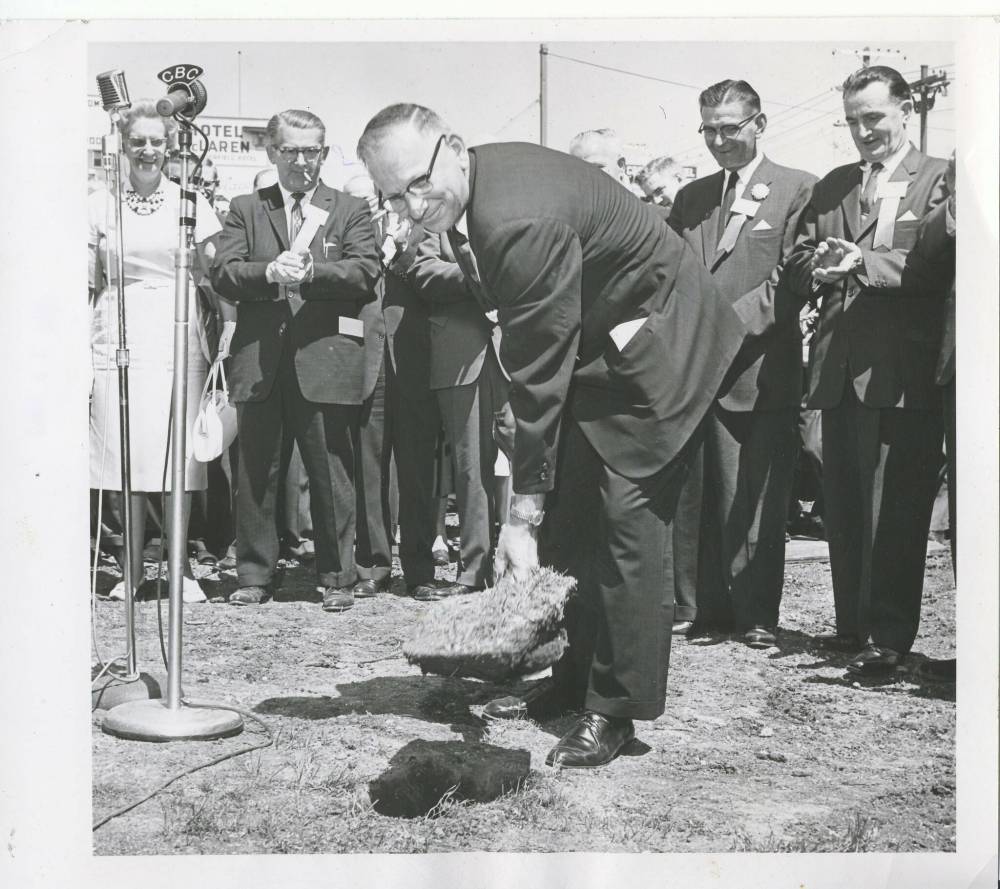
                                Then-mayor Stephen Juba breaks ground on Winnipeg’s new city hall in June 1962. The North Ender served as the city’s mayor from 1957 to 1977.

BILL ROSE / WINNIPEG FREE PRESS FILES

Then-mayor Stephen Juba breaks ground on Winnipeg’s new city hall in June 1962. The North Ender served as the city’s mayor from 1957 to 1977.

His initial campaign platforms varied from sensible ideas, like the amalgamation of the municipalities surrounding Winnipeg into one larger city, to the unusual, like promises for a local festival like Mardi Gras and the introduction of “beef sessions” into city council meetings, where members of the public could come and air their grievances.

Big, outlandish ideas were a staple of Juba’s career. Throughout his terms, he proposed initiatives including removable traffic lights that could be switched between intersections as needed, a plan to melt winter snow in large incinerators and the creation of a dome over downtown Winnipeg. During a feud with the provincial government over bathrooms at Memorial Park, Juba erected an outhouse with the provincial public works minister’s name on it.

And behind the stunts and the sometimes outlandish statements, Juba was a mayor looking to put Winnipeg on the map.

It was because of Juba that the first three-digit emergency telephone number (then 999) was introduced in Winnipeg in 1959. It was Juba who pushed to bring the Pan-American Games to Winnipeg in 1967. It was Juba who pushed for the demolition of Winnipeg’s infamous old city hall (which, regardless of the controversy surrounding the razing, was far too small for a city of Winnipeg’s size). It was replaced by a newer city hall, modern in style and scale, and fitting for a city searching to redefine itself architecturally. The move fit into a broader trend across the continent, reinventing urban buildings and spaces through bold new architecture.

More specifically, too, it was part of a larger civic complex planned for the area. The initial vision called for the removal of much of Winnipeg’s East Exchange District, but much of this was never realized. The core of the idea, a modernist civic complex built to celebrate Canada and Manitoba’s respective centennials, led to the creation of Winnipeg’s Centennial Concert Hall, the Manitoba Museum and the Royal Manitoba Theatre Centre. It also gave permanent, dedicated homes to Winnipeg’s prominent arts organizations — the Royal Winnipeg Ballet, the Winnipeg Symphony Orchestra and RMTC still perform out of these spaces.

The out-with-the-old, in-with-the-new sentiment behind these changes was not popular with everyone. Juba met frequent opposition in election campaigns. Advocacy groups, such as Heritage Winnipeg, were formed in response to the rapid demolition of Winnipeg’s heritage structures.
PHIL HOSSACK / WINNIPEG FREE PRESS FILES
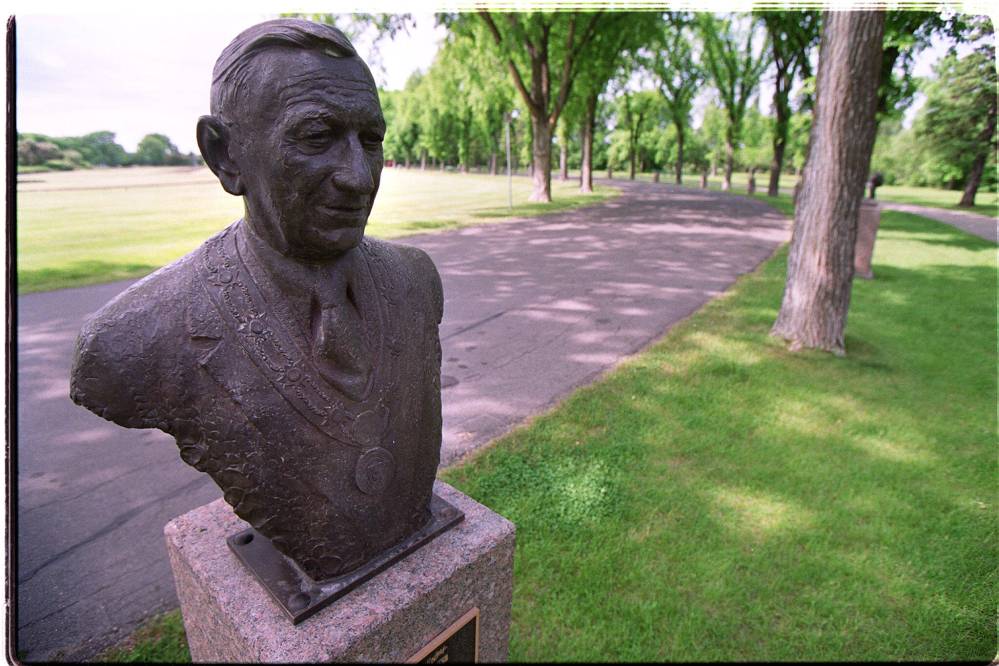
                                Juba is commemorated with a bust in the Citizens’ Hall of Fame at Assiniboine Park.

PHIL HOSSACK / WINNIPEG FREE PRESS FILES

Juba is commemorated with a bust in the Citizens’ Hall of Fame at Assiniboine Park.

When Fire Hall No. 1 (a.k.a. Central Fire Hall) was scheduled to be demolished and the land sold to developers, 60 University of Manitoba architecture students went to city hall to protest, holding signs reading “Plan before you destroy.” Juba met with the students, who proposed transforming the fire hall into an indoor/outdoor market. Until a decision could be reached, it was agreed the area would be turned into a public park — and out of this, Old Market Square was formed.

Ultimately, Stephen Juba was Winnipeg’s mayor for nine consecutive terms, spanning 20 years. Shortly after his election, in an interview with the Winnipeg Tribune, Juba remarked: “I might make a lot of mistakes, but I’ll give you lots to write about.”

It was a promise Juba lived up to.

Report Error Submit a Tip

More Stories

Swede leads Manitoba Open, Winnipegger sits 33rd

Mike McIntyre 6 minute read Preview

Swede leads Manitoba Open, Winnipegger sits 33rd

Mike McIntyre 6 minute read Saturday, Aug. 22, 2026

From Lars-Erik Sjoberg to Thomas Steen to Viggo Bjorck, there’s no shortage of Swedish athletes who have quickly become fan favourites here in Winnipeg.

Daniel Svard is hoping to add his name to the growing list.

Although he wields a golf club and not a hockey stick, the 23-year-old from Stockholm is opening plenty of eyes this week at Elmhurst. He carries a two-shot lead into Sunday’s final round of the Manitoba Open, looking to close out his first professional victory in his just his fourth career tournament.

Svard fired a six-under 66 on Saturday to move to 14-under through 54 holes of the PGA Tour Americas event.

Read
Saturday, Aug. 22, 2026

Frustration mounts as drug raids sweep problems out of downtown, into West End

Scott Billeck 7 minute read Preview

Frustration mounts as drug raids sweep problems out of downtown, into West End

Scott Billeck 7 minute read Friday, Aug. 21, 2026

West End business owners say their neighbourhood has been under siege for months, and some believe downtown police drug sweeps have made things worse by pushing more street disorder in their direction — and pushing customers away.

Read
Friday, Aug. 21, 2026

‘We got attacked’: Carney says retaliatory tariffs on U.S. to take effect next month

Catherine Morrison and David Baxter, The Canadian Press 8 minute read Preview

‘We got attacked’: Carney says retaliatory tariffs on U.S. to take effect next month

Catherine Morrison and David Baxter, The Canadian Press 8 minute read Saturday, Aug. 22, 2026

OTTAWA - Prime Minister Mark Carney says retaliatory tariffs will hit the U.S. starting next month after Canada walked away from what he called a "bad deal."

The U.S. introduced new 50 per cent tariffs on billions of dollars in Canadian exports on Saturday after trade talks failed.

"We got attacked," Carney told reporters on Parliament Hill Saturday when asked about the escalating trade war.

Carney suspended talks with the United States late Friday and summoned his negotiators back to Ottawa.

Read
Saturday, Aug. 22, 2026

Winnipeg team behind national LGBT monument spent six years bringing it to fruition

Nicole Buffie 5 minute read Preview

Winnipeg team behind national LGBT monument spent six years bringing it to fruition

Nicole Buffie 5 minute read Yesterday at 6:05 PM CDT

The Winnipeg team behind a national monument recognizing the LGBT Purge were in Ottawa to celebrate its official unveiling Friday.

Thunderhead is the work of local artists Shawna Dempsey and Lorri Millan, Liz Wreford and Peter Sampson of Public City Architecture, and knowledge keeper Albert McLeod, who served as cultural adviser for the project.

The team beat out 31 international submissions for the project, which is permanently located at 201 Wellington St. in Ottawa along the Ottawa River, in view of Parliament.

“We are a beacon internationally around the world of what democracies can do about inclusion, about human rights,” McLeod said.

Read
Yesterday at 6:05 PM CDT

Woman pleads guilty in toddler’s death

Erik Pindera 4 minute read Preview

Woman pleads guilty in toddler’s death

Erik Pindera 4 minute read 6:00 AM CDT

A woman who pleaded guilty to failing to provide the necessaries of life after her 13-month-old son died of an drug overdose in their Sherbrook Street apartment will serve a sentence of house arrest.

Latasha Stewart, in her mid-30s, was given the conditional sentence order of two years less a day by provincial court Judge Malcolm McDonald last Wednesday over the Dec. 29, 2022 death of her son Romeo.

“The circumstances in this case are truly tragic. As a result of an adult’s careless drug use, a 13-month-old boy lost his life,” said McDonald.

“It’s hard to imagine a clearer … lesson in the dangers of street-drug use in a household with young children present (than) in this case.”

Read
6:00 AM CDT

Long-serving mayor knew how to hog the headlines

Sabrina Janke 5 minute read Preview

Long-serving mayor knew how to hog the headlines

Sabrina Janke 5 minute read Saturday, Oct. 7, 2023

As hosts of the One Great History podcast, Sabrina Janke and Alex Judge love exploring Winnipeg’s past. With Winnipeg’s sesquicentennial approaching, the two have produced a podcast series that explores the city’s colourful history. The series is presented through the lens of 15 historical figures, focusing on critical events surrounding their lives and their impact on Winnipeg. The series will conclude Nov. 9, the day when Winnipeg became a city 150 years ago. Summaries from each podcast will be republished in the Free Press. The podcast can be found on Apple Podcasts, Spotify and through the One Great History website — onegreathistory.wordpress.com

At the end of Stephen Juba’s long mayoral career, a reporter identified his political strategy as “be jealously protective of the city’s reputation, pick an easily identifiable issue, attack a single recognizable enemy, use an outlandish gimmick that will attract the attention of photographers, and raise an outrageous ruckus that will command headlines.”

It was a strategy that had paid off for Juba time and time again. When Juba won his first mayoral election in late 1956, this later success seemed in no way guaranteed. Incumbent mayor George Sharpe seemed primed to win — he had the experience, and after all, the support of Winnipeg’s business class. Juba’s win, by around 2,000 votes, was an upset. Though Juba had recently been appointed an independent MLA and had run unsuccessfully for municipal office several times, he lacked Sharpe’s political experience and was extremely different to any of Winnipeg’s previous mayors. He was a North Ender, born to a Ukrainian immigrant family, and had only recently become wealthy thanks to his distribution firm, Keystone Supply Co. It was a sharp contrast to the established Anglo-Saxon men who had served before him, one that frequently baffled the press and political commentators.

His initial campaign platforms varied from sensible ideas, like the amalgamation of the municipalities surrounding Winnipeg into one larger city, to the unusual, like promises for a local festival like Mardi Gras and the introduction of “beef sessions” into city council meetings, where members of the public could come and air their grievances.

Read
Saturday, Oct. 7, 2023