War crimes inquiry research sheds fresh light on Canadian screening, policies
Advertisement
Read this article for free:
or
Already have an account? Log in here »
To continue reading, please subscribe:

Digital Subscription
One year of digital access for only $205*
- Enjoy unlimited reading on winnipegfreepress.com
- Read the E-Edition, our digital replica newspaper
- Access News Break, our award-winning app
- Play interactive puzzles
*First annual payment billed as $205.00 + GST for one year. This annual subscription will automatically renew at $233.00 + GST every 52 weeks (10% off the regular annual price of $259.35). Offer available to new and qualified returning subscribers only. Cancel any time.
To continue reading, please subscribe:
Add Free Press access to your Brandon Sun subscription for only an additional
$1 for the first 4 weeks*
- Enjoy unlimited reading on winnipegfreepress.com
- Read the E-Edition, our digital replica newspaper
- Access News Break, our award-winning app
- Play interactive puzzles
*Your next Brandon Sun subscription payment will increase by $1.00 and you will be charged $17.95 plus GST for four weeks. After four weeks, your payment will increase to $24.95 plus GST every four weeks.
Read unlimited articles for free today:
or
Already have an account? Log in here »
Hey there, time traveller!
This article was published 11/10/2023 (1070 days ago), so information in it may no longer be current.
OTTAWA – When an individual suspected of taking part in the Second World War murder of Jews in western Ukraine applied for admission to Canada in 1951, immigration officials did not follow up with potential witnesses who might have provided crucial details.
In another case, a Slovak leader hoping to unite émigrés under his leadership was allowed to visit Canada repeatedly in the 1950s and ’60s, despite a record of war crimes.
In 1962, the RCMP learned that a Soviet trial of concentration camp guards in what is now called Belarus had named two people living in Canada as active participants in the execution of civilians during the war.
These are among several unsettling vignettes in the latest, more revealing version of a September 1986 study prepared for a landmark federal commission of inquiry on war crimes.
Even though the cases are labelled with letters of the alphabet, not names of suspects, they were excised from the original version of researcher Alti Rodal’s study, initially released under the Access to Information Act in heavily censored form in 1987.
B’nai Brith Canada used the access law to obtain the most recent, fuller iteration last summer. “There was no reason not to disclose it originally,” said David Matas, senior legal counsel for the group.
Rodal’s archival research and case analysis — including the once-hidden elements — are finding new relevance amid a push for greater transparency about how Canada has dealt with suspected Nazi war criminals and collaborators.
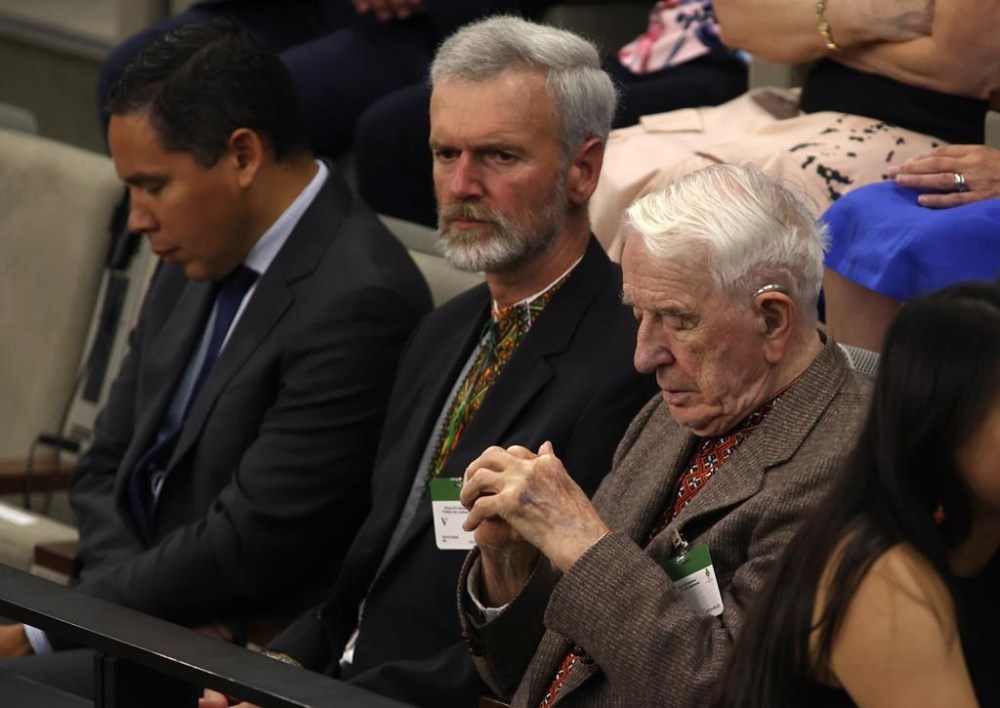
Yaroslav Hunka, who fought for the Waffen-SS Galicia Division, a voluntary unit created by the Nazis to help fight the Soviet Union, was welcomed to the House of Commons last month to hear a speech by Ukrainian President Volodymyr Zelenskyy.
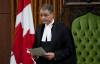
Liberal MP Anthony Rota, who invited the 98-year-old Hunka and introduced him as a hero, resigned as Speaker of the House over his decision.
Prime Minister Justin Trudeau also apologized on behalf of Parliament.
The episode sparked fresh calls for the full release of records from the inquiry on war criminals led by Jules Deschênes, including 822 opinions on individual cases.
The commission recommended in 1986 that Canada take appropriate action in 20 files of alleged Nazi war criminals and to investigate dozens of others.
In his public report, Deschênes said the Galicia Division should not be indicted as a group, stating that charges of war crimes against members had never been substantiated. “Further, in the absence of evidence of participation in or knowledge of specific war crimes, mere membership in the Galicia Division is insufficient to justify prosecution.”
Trudeau said last week that public servants were carefully weighing the question of disclosing additional Deschênes commission records and would make recommendations to the government.
Rodal’s research for the commission was intended to provide insight into the post-war policies of the government concerning immigration, refugees and war criminals, including how they evolved over the years.
Rodal noted that in order to carry out their massive program of extermination, the Nazis would have had to rely — and indeed did rely — on extensive co-operation from non-Germans in various parts of Europe.
“While many may very well have been forcibly conscripted into Waffen-SS units, a considerable number did volunteer to assist in the Nazi campaign, not only against Communism, but also in the destruction of populations deemed undesirable.”
Throughout the 1950s, there was a progressive relaxation of security-screening guidelines to permit legal entry for former members of Nazi organizations and for Nazi collaborators — the groups most likely to have included persons who had been involved in war crimes, Rodal found.
The predominant concern of screening policy and practice in the postwar decade was, in fact, not to identify Nazis, but to weed out possible Communist infiltrators and spies, now seen as the primary security threat, she wrote.
Rodal concluded that in the decade following the war, there was “ample opportunity” for war criminals and Nazi collaborators to enter Canada.
“The inclination of policy and practice with regard to a background of collaboration with the Nazis and possible involvement in war crimes was toward leniency rather than rigour,” the study says.
“Special dispensation, particularly for those who were of preferred ethnic background, was provided in the regulations for persons guilty mainly of collaboration with the Nazis.”
Where screening was not waived, it was “in significant measure ineffectual,” the study adds.
“Understaffed screening posts, manned by persons with the most rudimentary training and knowledge with respect to wartime events in the lands from which the prospective immigrants came, were overwhelmed by the large numbers of persons displaced by the war.”
People presented meagre, sometimes falsified, documentation, and much of the processing and screening of refugees and displaced individuals was done by international agencies whose role was to repatriate or resettle as many people in as short a time as possible, the study says.
Canadian security screening officers in Germany, finding little information about the personal histories of displaced persons, checked only “suspicious characters” for a Nazi criminal background.
In addition, there were no fingerprinting requirements, application forms did not include written questions about wartime military service until 1953 and official lists of war criminals compiled by the United Nations and others were not consulted, Rodal’s study says.

Directives were issued to screening officers to ignore SS tattoo marks for Baltic Waffen-SS cases as early as 1948, she found. Indeed, members of the Nazi Party and the Waffen-SS were admissible to Canada by 1950-51.
A determining factor in Allied war crimes policy was the utilization, against the Soviet Union, of former Nazis and Nazi collaborators by American, British and French intelligence agencies and by the Vatican, and subsequent help in resettling such individuals, the study notes.
Rodal cites April 1953 correspondence that said Canada’s interdepartmental committee on defectors would require assurances in any case involving a German defector or ex-agent that “the subject’s past political connections, particularly with the Nazi Party, will not be of such a nature that disclosure here might prove embarrassing.”
Even so, RCMP checks on the background of an Estonian who entered Canada as a defector in 1957 revealed that he had served in a police battalion in 1941-42 and later joined the Waffen-SS.
This report by The Canadian Press was first published Oct. 11, 2023.