Scientists pry a secret from the `Mona Lisa’ about how Leonardo painted the masterpiece

Advertisement

Advertise with us

PARIS (AP) — The “Mona Lisa” has given up another secret.

Read this article for free:


or

Already have an account? Log in here »

To continue reading, please subscribe:

Subscribe and receive a limited-edition Free Press branded hat or tote.

Digital Subscription

One year of digital access for only $205*

  • Enjoy unlimited reading on winnipegfreepress.com
  • Read the E-Edition, our digital replica newspaper
  • Access News Break, our award-winning app
  • Play interactive puzzles

*First annual payment billed as $205.00 + GST for one year. This annual subscription will automatically renew at $233.00 + GST every 52 weeks (10% off the regular annual price of $259.35). Offer available to new and qualified returning subscribers only. Cancel any time.

To continue reading, please subscribe:

Add Free Press access to your Brandon Sun subscription for only an additional

$1 for the first 4 weeks*

  • Enjoy unlimited reading on winnipegfreepress.com
  • Read the E-Edition, our digital replica newspaper
  • Access News Break, our award-winning app
  • Play interactive puzzles
Start now

*Your next Brandon Sun subscription payment will increase by $1.00 and you will be charged $17.95 plus GST for four weeks. After four weeks, your payment will increase to $24.95 plus GST every four weeks.

Hey there, time traveller!
This article was published 11/10/2023 (1096 days ago), so information in it may no longer be current.

PARIS (AP) — The “Mona Lisa” has given up another secret.

Using X-rays to peer into the chemical structure of a tiny speck of the celebrated work of art, scientists have gained new insight into the techniques that Leonardo da Vinci used to paint his groundbreaking portrait of the woman with the exquisitely enigmatic smile.

The research, published Wednesday in the Journal of the American Chemical Society, suggests that the famously curious, learned and inventive Italian Renaissance master may have been in a particularly experimental mood when he set to work on the “Mona Lisa” early in the 16th century.
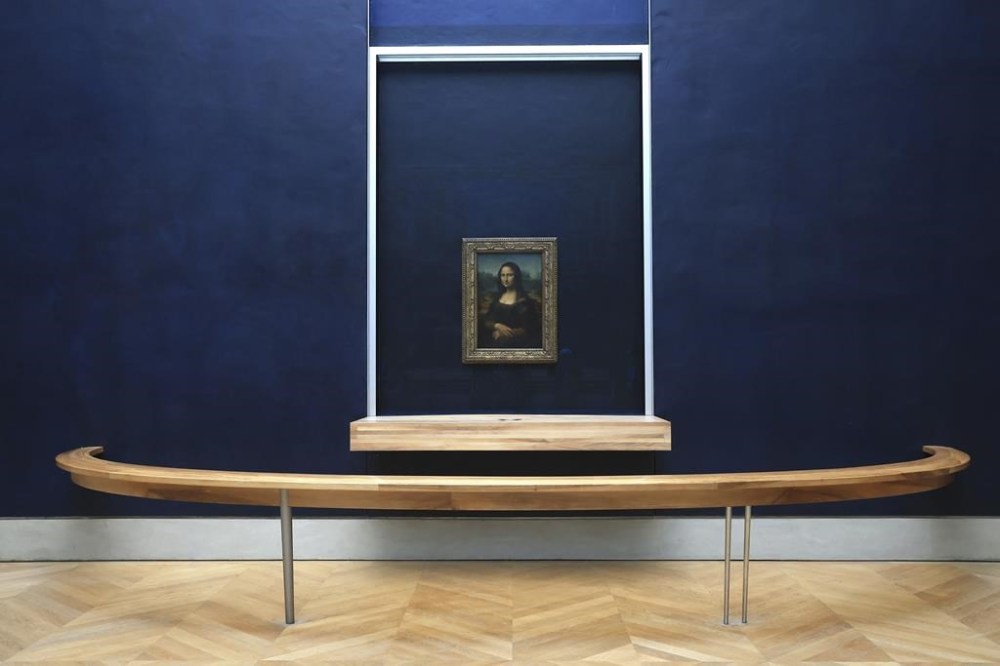
FILE - The Mona Lisa by Leornado da Vinci is pictured at the Louvre museum Wednesday, June 7, 2023 in Paris. Using X-rays to peer into the chemical structure of a tiny speck of the celebrated work of art, scientists have gained new insight into the techniques that Leonardo da Vinci used to paint his groundbreaking portrait of the woman with the exquisitely enigmatic smile. (AP Photo/Aurelien Morissard, Pool, File)

The oil-paint recipe that Leonardo used as his base layer to prepare the panel of poplar wood appears to have been different for the “Mona Lisa,” with its own distinctive chemical signature, the team of scientists and art historians in France and Britain discovered.

“He was someone who loved to experiment, and each of his paintings is completely different technically,” said Victor Gonzalez, the study’s lead author and a chemist at France’s top research body, the CNRS. Gonzalez has studied the chemical compositions of dozens of works by Leonardo, Rembrandt and other artists.

“In this case, it’s interesting to see that indeed there is a specific technique for the ground layer of ‘Mona Lisa,’” he said in an interview with The Associated Press.

Specifically, the researchers found a rare compound, plumbonacrite, in Leonardo’s first layer of paint. The discovery, Gonzalez said, confirmed for the first time what art historians had previously only hypothesized: that Leonardo most likely used lead oxide powder to thicken and help dry his paint as he began working on the portrait that now stares out from behind protective glass in the Louvre Museum in Paris.

Carmen Bambach, a specialist in Italian art and curator at New York’s Metropolitan Museum of Art, who was not involved in the study, called the research “very exciting” and said any scientifically proven new insights into Leonardo’s painting techniques are “extremely important news for the art world and our larger global society.”

Finding plumbonacrite in the “Mona Lisa” attests “to Leonardo’s spirit of passionate and constant experimentation as a painter – it is what renders him timeless and modern,” Bambach said by email.

The paint fragment from the base layer of the “Mona Lisa” that was analyzed was barely visible to the naked eye, no larger than the diameter of a human hair, and came from the top right-hand edge of the painting.

The scientists peered into its atomic structure using X-rays in a synchrotron, a large machine that accelerates particles to almost the speed of light. That allowed them to unravel the speck’s chemical make-up. Plumbonacrite is a byproduct of lead oxide, allowing the researchers to say with more certainty that Leonardo likely used the powder in his paint recipe.

“Plumbonacrite is really a fingerprint of his recipe,” Gonzalez said. “It’s the first time we can actually chemically confirm it.”

After Leonardo, Dutch master Rembrandt may have used a similar recipe when he was painting in the 17th century; Gonzalez and other researchers have previously found plumbonacrite in his work, too.

“It tells us also that those recipes were passed on for centuries,” Gonzalez said. “It was a very good recipe.”

Leonardo is thought to have dissolved lead oxide powder, which has an orange color, in linseed or walnut oil by heating the mixture to make a thicker, faster-drying paste.

“What you will obtain is an oil that has a very nice golden color,” Gonzalez said. “It flows more like honey.”

But the “Mona Lisa” — said by the Louvre to be a portrait of Lisa Gherardini, the wife of a Florentine silk merchant — and other works by Leonardo still have other secrets to tell.

“There are plenty, plenty more things to discover, for sure. We are barely scratching the surface,” Gonzalez said. “What we are saying is just a little brick more in the knowledge.”


Report Error Submit a Tip

More Stories

Police looking into robbery of children captured on video

Morgan Modjeski 3 minute read Preview

Police looking into robbery of children captured on video

Morgan Modjeski 3 minute read Friday, Oct. 9, 2026

The Winnipeg Police Service said it is aware of a video circulating online that appears to show two children robbed while walking home from the library.

The mother of the siblings said the Sept. 26 incident, which happened in the area of Andrews Street and Magnus Avenue at around 7:30 p.m., has left her children afraid and her feeling guilty.

“I should have been there with them. I felt horrible,” said Brittany Beaudet. “I would have been out the door if I knew any sooner to help them out.”

In the 40-second video, the two children, 14-year-old Mason and nine-year-old Kenzie, are approached by a man wearing a black shirt, black pants and white shoes.

Read
Friday, Oct. 9, 2026

Bombers ride Collaros’s arm to win over Stamps

Taylor Allen 6 minute read Preview

Bombers ride Collaros’s arm to win over Stamps

Taylor Allen 6 minute read Yesterday at 11:51 PM CDT

Zach Collaros must’ve found the fountain of youth during his most recent absence.

Nobody has feared the Winnipeg Blue Bombers’ passing attack all season, and yet, their veteran pivot aired it out early and often on Saturday night in a game they needed to win.

Led by Collaros and go-to target Dorian Singer, the Bombers prevailed 33-28 over the Calgary Stampeders in front of a sold-out crowd at Princess Auto Stadium to heavily increase their odds of making the playoffs.

“That’s vintage Eight-Ball right there. You love to see it,” said receiver Nic Demski. “Especially the opportunity that we had and him coming back this week, it was just a picture-perfect story.”

Read
Yesterday at 11:51 PM CDT

A Life's Story: Writer built bridges with genuine curiosity, compassion for diversity of religious practices

Janine LeGal 6 minute read Preview

A Life's Story: Writer built bridges with genuine curiosity, compassion for diversity of religious practices

Janine LeGal 6 minute read Yesterday at 6:00 AM CDT

Brenda Suderman knew how to make people feel comfortable. For a journalist, that character trait is a real strength, and it made people trust and appreciate her.

Whether covering musicals, worship spaces, the effects of pandemic shutdowns, death rituals and practices of different traditions, the discovery of the burial of 2,284 infants in unmarked graves, or any other of the countless topics she wrote about in her four- decade career, Suderman did it with genuine interest and care.

Born and raised in Winkler, Suderman grew up on a farm. Much of her childhood was spent in gardens and sugar beet fields.

Baptized at 16, she became a member of the Winkler Bergthaler Mennonite Church. The restrictions against women at the time contributed to planting the seeds of Suderman’s feminist perspective.

Read
Yesterday at 6:00 AM CDT

Is this the season of secession?

David McLaughlin 5 minute read Preview

Is this the season of secession?

David McLaughlin 5 minute read Yesterday at 2:01 AM CDT

Canada has entered its season of secession. Like El Nino, the currents of grievance can blow hot and cold. Today, they are hot. But how hot for how long? The odds of Alberta and now Quebec separating from Canada are not high, but they are never zero.

After a year of waving the flag in a surge of national patriotism to confront Donald Trump’s attacks on Canada — economic and verbal — it is both jarring and frustrating for most Canadians to be reminded of the pervasive and persistent tensions that come with governing our federation.

When we need new national purpose to confront big economic sovereignty and security challenges from outside, that purpose is undermined and diminished by having to confront homegrown grievances.

We’ve seen and seen off two separation referendums in Quebec. Now we have a newly elected separatist party coming to power. In Alberta, voters will soon decide whether the independence road is one they want to travel.

Read
Yesterday at 2:01 AM CDT

Careful work goes into preserving vintage threads at costume museum

AV Kitching 6 minute read Preview

Careful work goes into preserving vintage threads at costume museum

AV Kitching 6 minute read Friday, Oct. 9, 2026

Every Friday morning seven retired women — Diane Zakala, Helen Leeds, Margaret Mills, Melinda Barr, Therese Leneveu, Karen Eastwood and Letizia Sandron — make their way from homes across the city to a nondescript warehouse in downtown Winnipeg.

The group members troop in right at 9 a.m., as they have been doing every week for the last eight years, towards the back of the brightly lit warehouse where the bulk of the collection of the Costume Museum of Canada (410-70 Arthur St.) is stored.

The vintage fashion pieces — some dating back to more than a century — have been carefully packed away in long, flat garment boxes, stacked on rows of shelves.

Some clothes are in mint condition, impeccably taken care of by their owners, while a few show signs of wear and tear and need little bit of care courtesy of expert seamstress Barr, who lovingly restores items which have incurred minimal damage.

Read
Friday, Oct. 9, 2026

Piece of Winnipeg’s magic history disappears

Kelly-Anne Riess 5 minute read Preview

Piece of Winnipeg’s magic history disappears

Kelly-Anne Riess 5 minute read Updated: Yesterday at 9:38 PM CDT

A piece of Winnipeg’s magic history has vanished, and internationally renowned escape artist Dean Gunnarson is offering a $500 reward to anyone who can make it reappear.

The plaque marked the birthplace of what has become the world’s largest organization of professional and amateur magicians, the International Brotherhood of Magicians, which was founded in Winnipeg more than a century ago.

Gunnarson said fellow magician and local magic historian Bruce Thompson discovered the disappearance Tuesday while on his way to work.

Thompson returned to inspect the site and found what appeared to be evidence it had been forcibly removed.

Read
Updated: Yesterday at 9:38 PM CDT