Breaking the rules

Historians chronicle how prominent politicians duped Indigenous communities out of land, compensation

Advertisement

Advertise with us

Many Canadians are aware that as a new nation Canada, anticipating a rush of western settlers, signed Treaties 1-7 with Prairie First Nations in the 1870s. But how many of us knew that over 20 per cent of the reserve land allotted in the 1870s was surrendered, most of it under pressure from the Department of Indian Affairs, just a few years later? The subtitle of Bill Waiser and Jennie Hansen’s book Cheated says it all: The Laurier Liberals and the Theft of First Nations Land.

Read this article for free:


or

Already have an account? Log in here »

To continue reading, please subscribe:

Subscribe and receive a limited-edition Free Press branded hat or tote.

Digital Subscription

One year of digital access for only $205*

  • Enjoy unlimited reading on winnipegfreepress.com
  • Read the E-Edition, our digital replica newspaper
  • Access News Break, our award-winning app
  • Play interactive puzzles

*First annual payment billed as $205.00 + GST for one year. This annual subscription will automatically renew at $233.00 + GST every 52 weeks (10% off the regular annual price of $259.35). Offer available to new and qualified returning subscribers only. Cancel any time.

To continue reading, please subscribe:

Add Free Press access to your Brandon Sun subscription for only an additional

$1 for the first 4 weeks*

  • Enjoy unlimited reading on winnipegfreepress.com
  • Read the E-Edition, our digital replica newspaper
  • Access News Break, our award-winning app
  • Play interactive puzzles
Start now

*Your next Brandon Sun subscription payment will increase by $1.00 and you will be charged $17.95 plus GST for four weeks. After four weeks, your payment will increase to $24.95 plus GST every four weeks.

Hey there, time traveller!
This article was published 21/10/2023 (1053 days ago), so information in it may no longer be current.

Many Canadians are aware that as a new nation Canada, anticipating a rush of western settlers, signed Treaties 1-7 with Prairie First Nations in the 1870s. But how many of us knew that over 20 per cent of the reserve land allotted in the 1870s was surrendered, most of it under pressure from the Department of Indian Affairs, just a few years later? The subtitle of Bill Waiser and Jennie Hansen’s book Cheated says it all: The Laurier Liberals and the Theft of First Nations Land.

In 1998 the Indian Claims Commission reported that 34 Prairie reserves surrendered land between 1896 and 1911. Cheated traces the course of each of those surrenders to see how and why they occurred and who benefitted. The book makes it clear that numerous rules were broken under pressure from prominent politicians, civil servants and their Liberal supporters. Often land was sold to speculators with inside information and First Nations ended up getting a fraction of what the land ultimately sold for.

Waiser is a professor of history at the University of Saskatchewan. He has written a number of books including A World We Have Lost: Saskatchewan Before 1905, which won the Governor-General’s Literary Award for non-fiction in 2016. Hansen is also a Saskatchewan historian who studied under Waiser as a graduate student.
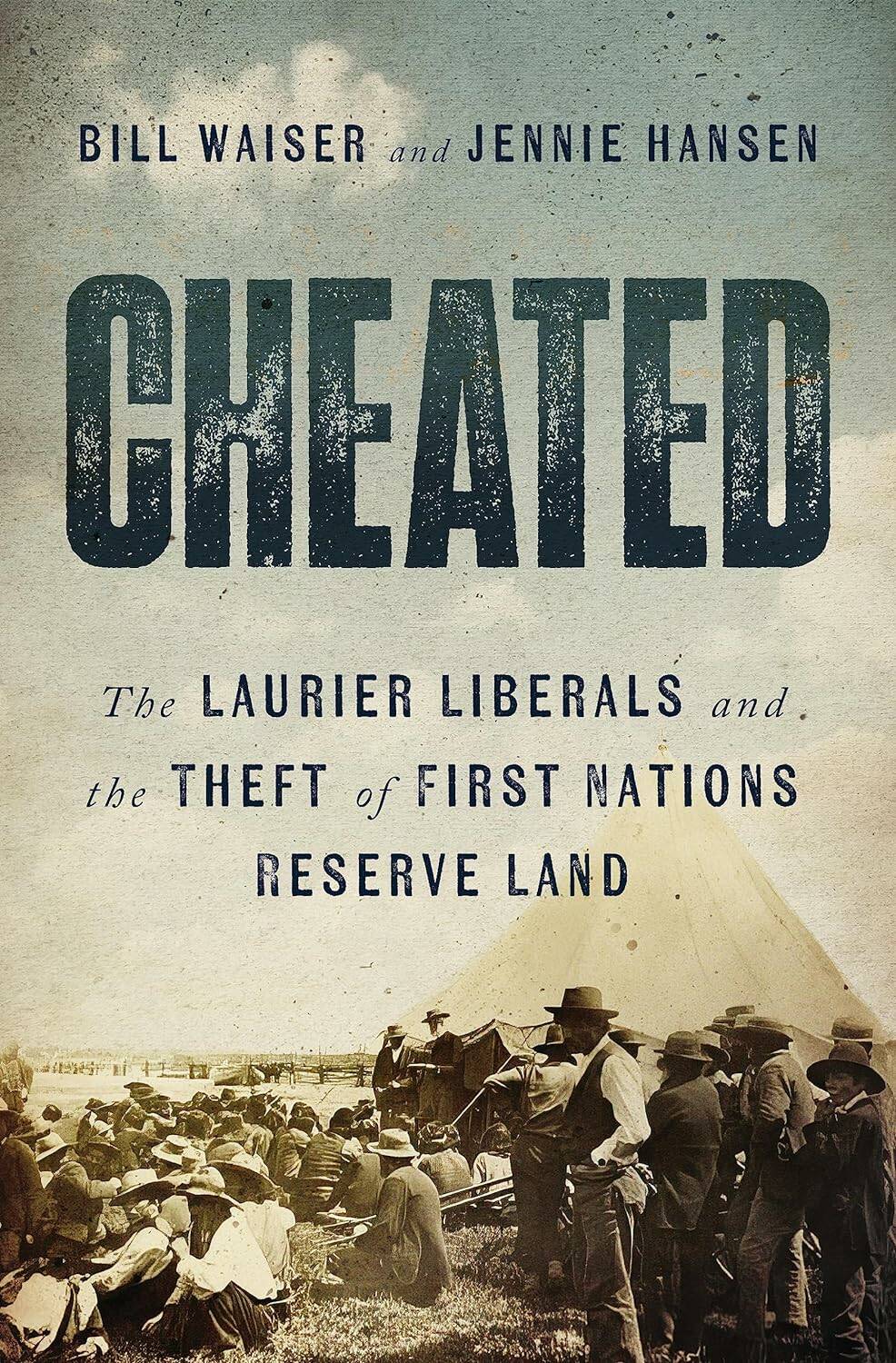
Cheated

Cheated

The authors have scoured the files of Indian Affairs, Hansard and newspapers, as well as the report of the Indians Land Claims Commission (First Nations land surrenders on the Prairies 1896-1911), to document how each land surrender occurred, often after many attempts. In Manitoba, for example, the St. Peter’s reserve near Selkirk was finally surrendered in 1907 after at least half a dozen meetings in which the band had rejected a surrender. The vote at that final meeting was 107-98. It is likely that the offer of an immediate cash payment of $90 to each band member tipped the balance.

In the case of the Swan Lake reserve southwest of Winnipeg, a partial surrender was negotiated in 1908 by using the services of a missionary named John McDougall who spoke several Indigenous languages. In this case the inducements appear to have been $100 in cash plus a false promise that the band could once again hold sundances. The band later appealed directly to the Governor General about being misled: “He made a lot of nice promises on behalf of the government… and we believed everything he said was true.”

Frustrating for readers — and likely for the authors as well — is the spotty reporting to Indian Affairs of exactly what occurred at each surrender meeting. Often the Indian agent, or whatever government official conducted the meeting, only reported the final vote. Regulations required that a majority of male band members support a surrender, but time and time again this requirement was ignored — only a majority of those who attended the meeting often sufficed (possibly while others were out hunting or hunkering down in the cold).

There is far more detailed information here on how the cheaters benefitted when the surrendered land was tendered or auctioned off. The list of culprits includes two deputy ministers of Indian affairs, James Smart and Frank Pedley, as well as Frank Oliver, minister of Indian Affairs and the Interior between 1905 and 1911. Clifford Sifton, Minister of Indian Affairs and the Interior from 1896 to 1905, seems not to have been involved, but he did let the scams happen while he concentrated on immigration schemes.

The only positive note to this story is that First Nations groups have been working for compensation since the 1970s and some are finally receiving it. In 2008 Peguis First Nation received $126 million for surrendering St. Peter’s in 1907.

William James Topley / Library and Archives Canada item 3436595
                                Cheated details how deputy minister of the Interior and Indian Affairs James Smart (above), among others, benefitted when surrendered First Nations land was tendered or auctioned off.

William James Topley / Library and Archives Canada item 3436595

Cheated details how deputy minister of the Interior and Indian Affairs James Smart (above), among others, benefitted when surrendered First Nations land was tendered or auctioned off.

Faith Johnston is a writer and former teacher who is constantly being reminded that she still has a lot to learn.

William James Topley / Library and Archives Canada item 3412164
                                Frank Pedley, superintendent of immigration, later replaced Smart as deputy minister of Indian Affairs and is also benefitted from the auctioning off of First Nations land.

William James Topley / Library and Archives Canada item 3412164

Frank Pedley, superintendent of immigration, later replaced Smart as deputy minister of Indian Affairs and is also benefitted from the auctioning off of First Nations land.

Newton McConnell / Public Archives of Ontario, C 301-0-0-0-853
                                This political cartoon from the time portrays Frank Oliver, minister of the Interior and Indian Affairs between 1905-11, as a gun-slinging desperado for his handling of the surrender of the St. Peter’s (Peguis) reserve.

Newton McConnell / Public Archives of Ontario, C 301-0-0-0-853

This political cartoon from the time portrays Frank Oliver, minister of the Interior and Indian Affairs between 1905-11, as a gun-slinging desperado for his handling of the surrender of the St. Peter’s (Peguis) reserve.

Jennie Hansen and Bill Waiser
                                Key locations in Manitoba that are explored in Cheated include Swan Lake, Roseau River, St. Peter’s and The Pas.
Jennie Hansen and Bill Waiser

Key locations in Manitoba that are explored in Cheated include Swan Lake, Roseau River, St. Peter’s and The Pas.
Report Error Submit a Tip

More Stories

The first day of school is a promise

ann Evangelista 6 minute read Preview

The first day of school is a promise

ann Evangelista 6 minute read 2:00 AM CDT

This week, thousands of Manitoba students will walk through school doors carrying backpacks filled with new supplies, new hopes and, for some, new worries.

For parents and caregivers, this may be a familiar September routine — shopping for school supplies, adjusting schedules, preparing lunches and getting children ready for another year of learning.

For educators and school staff, it is the beginning of another demanding year.

But for Manitoba, this week should mean something more. It should be a renewal of our promise to every child.

Read
2:00 AM CDT

Four teens dead in crash near Winnipeg Beach

1 minute read Yesterday at 4:52 PM CDT

Four teenagers have died in a highway crash near Winnipeg Beach.

Manitoba RCMP are investigating the two-vehicle collision, which happened at about 9:15 p.m. Sept. 6. A vehicle travelling west on Highway 229 was struck while crossing Highway 8, RCMP stated in a news release Monday.

Everyone inside the westbound vehicle died at the scene, including the driver, an 18-year-old female from Winnipeg, and three passengers: an 18-year-old male from Gimli, an 18-year-old female from Sandy Hook and a 17-year-old male from Ear Falls, Ont.

The intersection is controlled by stop signs for westbound and eastbound traffic. Both vehicles went into the southwest ditch, with one vehicle rolling and landing on its roof, RCMP stated.

Man injured in downtown shooting

1 minute read Sunday, Sep. 6, 2026

A man in his 20s is in critical condition after he was shot in downtown Winnipeg early Sunday morning.

The Winnipeg Police Service's major crimes unit is investigating and no arrests have been made.

Police responded to the area of Portage Avenue and Balmoral Street, near the University of Winnipeg campus, at about 4:20 a.m. Sept. 6 for the report of a male suffering a gunshot wound. Police provided first aid to the victim, who was taken to hospital.

‘We belong… and we are giving back”: Sikh celebration enlivens downtown Winnipeg

Melissa Martin 3 minute read Preview

‘We belong… and we are giving back”: Sikh celebration enlivens downtown Winnipeg

Melissa Martin 3 minute read Sunday, Sep. 6, 2026

Downtown Winnipeg came alive with vibrant sights, sounds, and scents on Sunday, as Manitoba’s Sikh community flocked to Memorial Park to celebrate its annual Nagar Kirtan procession and festival.

This year marked the 422nd anniversary of the completion of the Guru Granth Sahib, the holy scripture central to the Sikh faith. Shortly after 1 p.m., a palanquin bearing a copy of the scripture was led in parade through downtown Winnipeg, with musical accompaniment.

“This is a chance to tell the public and the whole community where we come from and who we are,” said volunteer Prabh Grewal shortly before the procession got underway. “In a community there are people from every race and every country, and our main objective is to have everybody live in peace and harmony together.”

Before, during, and after the procession, the park hummed with life. As many as 55,000 people converged on the site, with the majority dressed in festive traditional attire. Near the height of the day’s 30 C heat, families relaxed in patches of shade, enjoying plates of Punjabi cuisine dished out for free at dozens of tents sponsored by local businesses.

Read
Sunday, Sep. 6, 2026

All that glitters … could work here

Editorial 4 minute read Preview

All that glitters … could work here

Editorial 4 minute read 2:00 AM CDT

Sometimes, it’s hard to even suggest a change, because it seems there is always a plethora of people ready to tell you that your idea just won’t work.

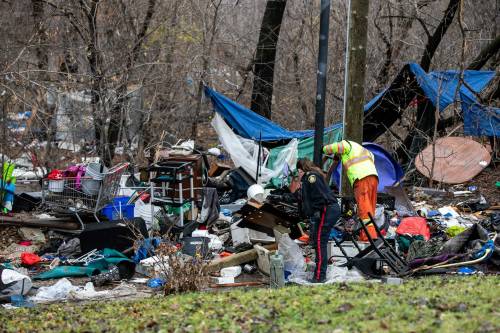
But a unique program is working in Portland, Ore. and some version of that program could work in Winnipeg as well. Something that glitters may just be a small nugget of gold.

G.L.I.T.T.E.R. stands for Ground Score Leading Inclusivity Together Through Environmental Recovery.

It’s a long handle for a simple concept. Launched in 2021, the program hires people who are either unhoused or have recently been unhoused to do litter collection and tentside garbage collection for homeless encampments in the Portland region.

Read
2:00 AM CDT

NDP minister needs lesson in political civility

Dan Lett 5 minute read Preview

NDP minister needs lesson in political civility

Dan Lett 5 minute read Friday, Sep. 4, 2026

Families Minister Nahanni Fontaine’s decision to intercede in Winnipeg’s mayoral election may be surprising to some political observers. To others, however, it is entirely on brand.

On Tuesday, Fontaine posted a video on social media in which she expressed concern that former city councillor and Progressive Conservative cabinet minister Kevin Klein was entering the race to challenge incumbent Mayor Scott Gillingham.

The caption on the video was blunt: “I mean, really, who chooses to work for Count Dracula?”

“Kevin Klein once worked for Peter Nygard. Peter Nygard is Canada’s equivalent to (American sex offender) Jeffrey Epstein — had his own little island, did unspeakable, disgusting things to women and girls … anyways, I just thought that Winnipeggers would want to know that Kevin Klein, at one point, worked for Peter Nygard,” she says in the video.

Read
Friday, Sep. 4, 2026