Carbon pricing in Canada: What it is, what it costs and why you get a rebate
Advertisement
Read this article for free:
or
Already have an account? Log in here »
To continue reading, please subscribe:

Digital Subscription
One year of digital access for only $205*
- Enjoy unlimited reading on winnipegfreepress.com
- Read the E-Edition, our digital replica newspaper
- Access News Break, our award-winning app
- Play interactive puzzles
*First annual payment billed as $205.00 + GST for one year. This annual subscription will automatically renew at $233.00 + GST every 52 weeks (10% off the regular annual price of $259.35). Offer available to new and qualified returning subscribers only. Cancel any time.
To continue reading, please subscribe:
Add Free Press access to your Brandon Sun subscription for only an additional
$1 for the first 4 weeks*
- Enjoy unlimited reading on winnipegfreepress.com
- Read the E-Edition, our digital replica newspaper
- Access News Break, our award-winning app
- Play interactive puzzles
*Your next Brandon Sun subscription payment will increase by $1.00 and you will be charged $17.95 plus GST for four weeks. After four weeks, your payment will increase to $24.95 plus GST every four weeks.
Read unlimited articles for free today:
or
Already have an account? Log in here »
Hey there, time traveller!
This article was published 01/11/2023 (1057 days ago), so information in it may no longer be current.
OTTAWA – Canada has had a national price on pollution since 2019, but the policy remains a political battleground — and Opposition Conservatives made clear Wednesday they intend to fight the next election over it.
Here is a brief overview.
What is the carbon price?
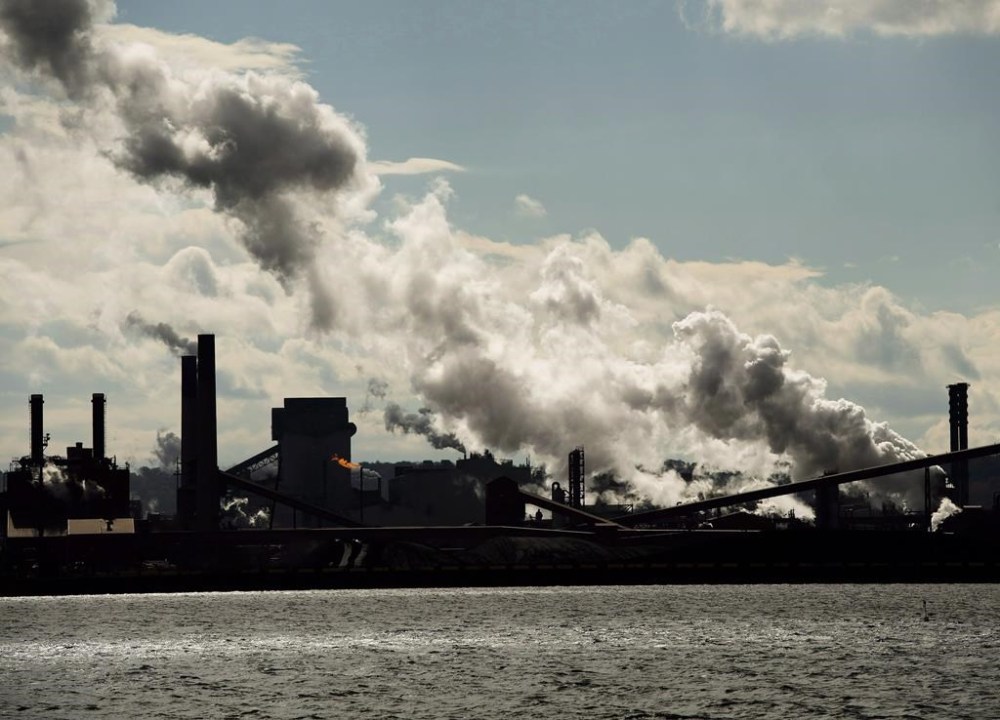
In 2018, Parliament passed the Greenhouse Gas Pollution Pricing Act, which established the legal mechanism under which the federal government requires provinces and territories to either establish a levy on greenhouse gas emissions or adopt the federal system. The legislation was first applied as of April 1, 2019.
There are two components to the policy. The first, the “fuel charge,” applies to all purchases of 21 different fuels (including combustible waste like asphalt shingles or tires) that is burned to produce heat or electricity. The distributor of the fuel typically pays the levy, with the cost passed down through the supply chain to consumers when they gas up their car, pay the household gas bill or fill a propane tank. It can be felt indirectly in the price of goods.
The second component, known as the “output-based pricing system,” applies to businesses with bigger carbon footprints, mainly industrial companies such as oil producers, chemical manufacturers, automakers and coal or gas power plants. They are exempted from paying the carbon price on fuel for their operations, instead paying on a portion of the emissions they actually produce. That portion is determined by each industry for competitive reasons, with industries that face stiffer foreign competition charged for a smaller portion.
The output-based system applies automatically to companies that produce more than 50,000 tonnes of carbon dioxide, or an equivalent measure of other greenhouse gases like methane and nitrous oxide. Those companies with emissions between 10,000 tonnes and 50,000 tonnes can choose to opt in. In 2021 there were 562 companies that reported emissions above 50,000 tonnes, and about 1,000 more who reported emissions between 10,000 and 50,000 tonnes.
How does a carbon price work?
A carbon price makes it more expensive to burn fossil fuels, which produces the greenhouse gases that cause global warming. The price is meant to encourage people and companies to use less. The price starts low but increases over time, giving consumers time to change their consumption habits. Eventually, non-emitting options become cheaper to use, fewer fossil fuels are burned and emissions go down.
What provinces use the federal systems?
Currently British Columbia, Quebec and Northwest Territories are the only provinces or territories with their own carbon price for all sources of emissions. Manitoba, P.E.I., Yukon and Nunavut use both the federal fuel charge and the output-based pricing system.
Alberta, Saskatchewan, Ontario, New Brunswick, Nova Scotia and Newfoundland and Labrador use the federal fuel charge but have their own provincial systems for big industry. Provinces must have their own plans approved by Ottawa.
How much does it actually cost?
The price per tonne is the same in both systems. It started at $20 for every tonne of carbon dioxide or equivalent, increasing $10 per tonne each year until a $50 ceiling reached in 2022. As of this year, it began increasing by $15 a year, and will continue at that rate until $170 per tonne in 2030.
Every fossil fuel has a different carbon footprint. Gasoline, for example, produces approximately 2.3 kilograms for every litre burned, while diesel is about 2.7 kilograms per litre.
So the price charged for each unit of fuel is based on that footprint. Currently the price is set at $65 per tonne, which means consumers pay a carbon levy of about 14 cents per litre of gasoline. It adds $5.60 to a 40 litre fill.
Natural gas is charged at 12.4 cents for every cubic metre, or about $24 per month on the average Canadian natural gas heating bill.
What are carbon price rebates?
The federal government introduced a carbon price to encourage people to rely less on fossil fuels without leaving households financially worse off. They call the rebates the “climate action incentive.”
While it may seem counterproductive for the government to collect the fuel charge only to give it back, the mechanism is designed to encourage people to save money by curbing their fossil fuel use without penalizing those who don’t.
Canada’s parliamentary budget officer has confirmed that about 80 per cent of households get more from the rebate than they pay in carbon pricing. The other 20 per cent are higher-income households with bigger carbon footprints. People who drive fancier cars or live in bigger houses tend to use more fuel and buy more things that have the carbon price embedded in the cost.
When the federal government implemented the carbon price, it required that 90 per cent of the proceeds be returned to households in the province or territory where they were collected. The other 10 per cent is used to fund programs that help small businesses, municipalities, hospitals, schools and Indigenous communities to reduce their fuel consumption. It is also used to increase the rebate for rural residents, who often have to drive longer distances and have fewer fuel-saving options.
The rebates are now delivered every three months through direct deposit, with the sum determined by province and household size; different provinces have different fuel consumptions. Saskatchewan, for instance, burns coal to produce a lot of its electricity, while Manitoba uses none.
A base amount is provided for an individual, ranging from $488 per year in Ontario to $772 in Alberta. Additional amounts are added for spouses and children. A family of four would get anywhere from $976 in Ontario to $1,544 in Alberta. The rebates increase each year with the carbon price.
What impact has carbon pricing had on Canada’s emissions?
That’s the million-dollar question, one with no clear answer. Carbon pricing has a bigger impact over time, but it is difficult to quantify since it’s not the only climate policy in Canada and the changes people make as a result are not easy to measure.
Between 2019 and 2021 — after the carbon price was first applied and through the latest year for which there is data —Canada’s emissions overall fell by 53 million tonnes. How much of that was due to carbon pricing is hard to say.
What other countries or jurisdictions have carbon pricing?
Currently about 39 countries, and 33 subnational jurisdictions including states and provinces, have a carbon price. The World Bank carbon pricing dashboard says those systems cover about 23 per cent of global greenhouse gas emissions.
This report by The Canadian Press was first published Nov. 1, 2023.
Related Articles
Liberals’ carbon tax in big trouble after heating-oil blunder ignites into political firestorm







Advertisement Advertise With Us
Advertisement Advertise With Us