Over a barrel
How the vessel used to age wine impacts taste

Advertisement
Read this article for free:
or
Already have an account? Log in here »
To continue reading, please subscribe:

Digital Subscription
One year of digital access for only $205*
- Enjoy unlimited reading on winnipegfreepress.com
- Read the E-Edition, our digital replica newspaper
- Access News Break, our award-winning app
- Play interactive puzzles
*First annual payment billed as $205.00 + GST for one year. This annual subscription will automatically renew at $233.00 + GST every 52 weeks (10% off the regular annual price of $259.35). Offer available to new and qualified returning subscribers only. Cancel any time.
To continue reading, please subscribe:
Add Free Press access to your Brandon Sun subscription for only an additional
$1 for the first 4 weeks*
- Enjoy unlimited reading on winnipegfreepress.com
- Read the E-Edition, our digital replica newspaper
- Access News Break, our award-winning app
- Play interactive puzzles
*Your next Brandon Sun subscription payment will increase by $1.00 and you will be charged $17.95 plus GST for four weeks. After four weeks, your payment will increase to $24.95 plus GST every four weeks.
Read unlimited articles for free today:
or
Already have an account? Log in here »
Hey there, time traveller!
This article was published 04/11/2023 (1005 days ago), so information in it may no longer be current.
Between the vineyard and the bottle, there are hundreds of decisions made during the winemaking process that impact the final product that ends up in your glass. Of those decisions, few have as big an impact on a bottle of wine as the type of vessel used for aging before a wine is bottled.
Winemakers looking to preserve maximum freshness in a wine — think lighter white wines, rosés and some reds — stainless steel tanks are usually the way to go. They’re relatively inexpensive, low maintenance, generally impart no flavours and are airtight, meaning there’s little to no contact with oxygen. Wines aged in stainless steel typically stay in there for a short period of time and are crisp and fruit-forward.
Eric Risberg / The Associated Press files A concrete fermentation egg stands surrounded by wooden barrels in the cellar at Château du Tertre in France’s Bordeaux region.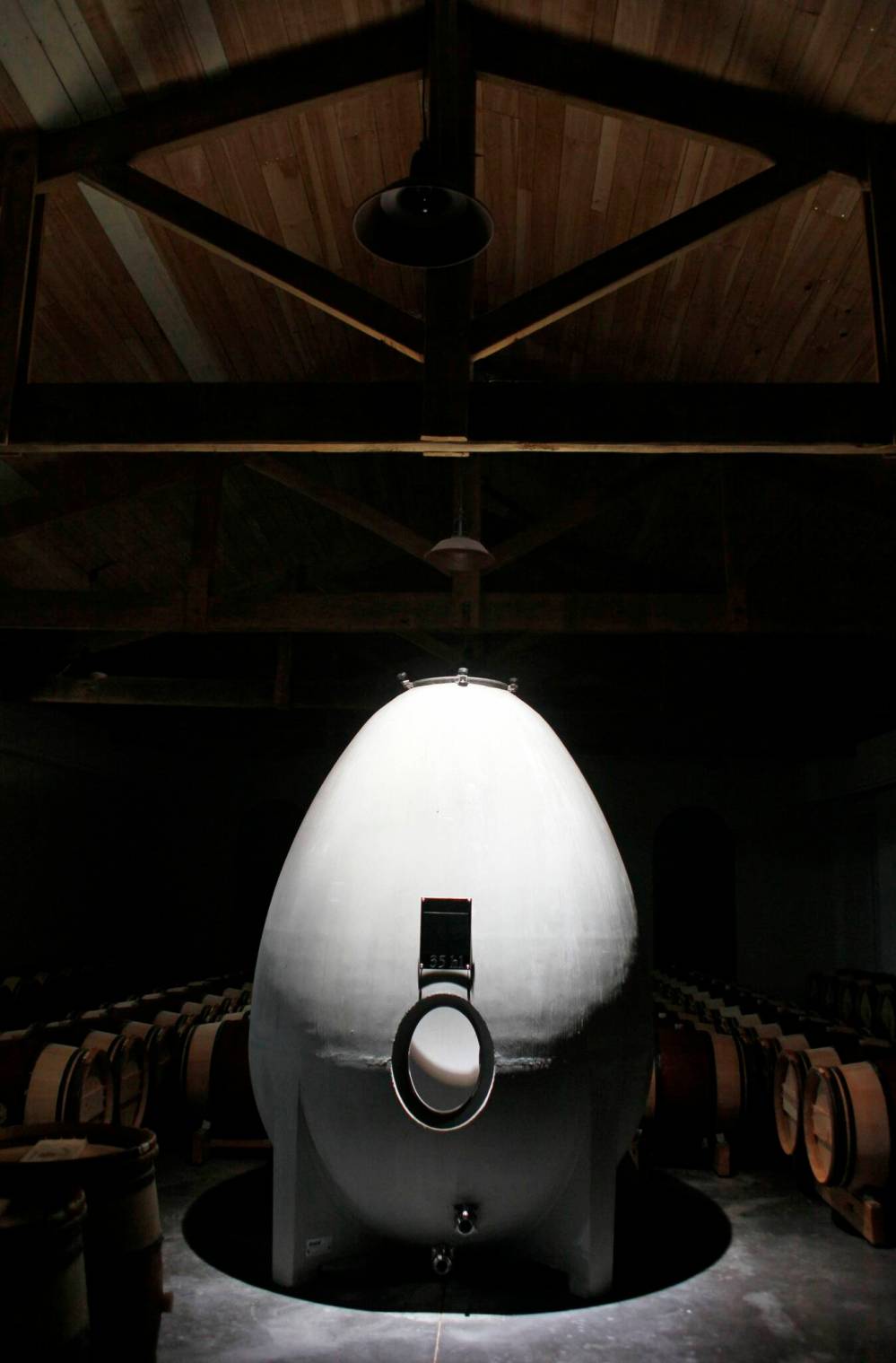
Concrete and clay vessels were among the original containers for wine, dating back to the beginnings of what we know as winemaking today. Clay amphorae that held wine have been discovered in Greece dating back to the Bronze Age, while qvevri — large, egg-shaped earthenware vessels — were developed in the country of Georgia, which is thought by many to be one of the birthplaces of wine as we know it.
Clay and earthenware vessels have become fashionable in recent years among wineries looking to preserve freshness in wines without sacrificing complexity. Like stainless steel, these vessels impart little to no flavours in a wine, but the slightly porous and bumpy interior surface changes the way a wine evolves and can soften up wines with higher acidity.
One of the vessels most widely associated with winemaking — particularly the making of red wines — is the wooden barrel. Before the glass bottles that are ubiquitous today, wine was often initially sold in barrels of various sizes. When armies and merchants were traveling abroad by boat, they found barrels to be lighter and less fragile than earth or clay jugs.
A wine that goes into a barrel rarely tasted the same as it did weeks or months later. Unlike steel or concrete tanks, barrels are rarely airtight, meaning the wine would come into contact with oxygen and evolve over time. Plus the barrel itself would impart woody notes as time passed.
Winemakers learned to harness the effects of oak barrels, which these days sit undisturbed in most winery cellars of the world. Part of that learning was discovering that flavours imparted from wood vary based on the type of material used, how old and big the barrel is and how much the inside of the barrel has been toasted or charred by the cooper.
Oak is far and away the most popular type of wood used in the world of wine barrels, the bulk of which comes from either French or American oak trees. French oak tends to impart more spice flavours and is used in wines that offer more complexity, while American oak tends to be more aggressive, bringing more vanilla and coconut notes to the product inside. Hungarian and Slavonian oak are also relatively popular among winemakers in some areas of the world.

Coopers use fire to char the insides of barrels at varying levels of what is called toasting — light, medium or heavy. The heavier the toast, the more intense the flavours of the wood that comes through.
The number of times a barrel has been used also plays a large role in how much flavour is coming from the wood. A new barrel brings bigger, woodier flavours and each successive use of the barrel mellows out those notes until eventually, it’s a neutral vessel.
Then there’s the size of the barrel itself. The most common in the winemaking world is the barrique, a 225-litre barrel. But many wineries (particularly Old World producers) also use larger casks such as puncheons (500 litres), stücks (1,200 litres) or foudres, whose capacity can be in the thousands of litres.
Using larger barrels means there’s less surface of the wine in contact with the wood relative to the volume of the wine in the barrel, which results in less intense woody flavours. These larger oak vessels are often used for many years, meaning they eventually don’t impart woody flavours at all.
Curious about how your wine was aged before bottling? Many bottles tell the story on the back label; failing that, check the winery website.
uncorked@mts.net
@bensigurdson
Ben Sigurdson
Literary editor, drinks writer
Ben Sigurdson is the Free Press‘s literary editor and drinks writer. He graduated with a master of arts degree in English from the University of Manitoba in 2005, the same year he began writing Uncorked, the weekly Free Press drinks column. He joined the Free Press full time in 2013 as a copy editor before being appointed literary editor in 2014. Read more about Ben.
In addition to providing opinions and analysis on wine and drinks, Ben oversees a team of freelance book reviewers and produces content for the arts and life section, all of which is reviewed by the Free Press’s editing team before being posted online or published in print. It’s part of the Free Press‘s tradition, since 1872, of producing reliable independent journalism. Read more about Free Press’s history and mandate, and learn how our newsroom operates.
Our newsroom depends on a growing audience of readers to power our journalism. If you are not a paid reader, please consider becoming a subscriber.
Our newsroom depends on its audience of readers to power our journalism. Thank you for your support.
Wines of the week
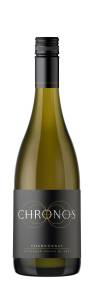
Time Family of Wines 2021 Chronos Chardonnay (Okanagan Valley, B.C. — $34.99, Liquor Marts and beyond)
Pale straw in colour, this Okanagan Valley Chardonnay offers subtle red apple, pear, pineapple candy, lemon zest and pie crust notes on the nose. There’s maybe just the slightest hint of sweetness on the light-plus bodied palate, bringing ripeness to the tree fruit, lemon and pineapple flavours and an underlying marmalade note. It’s not aged in oak at all, allowing the fruit to shine through, while the modest acidity and 12.8 per cent alcohol balance each other out nicely. Fruit-forward and fresh, but with great elegance and complexity. 4.5/5

Tommasi 2020 Rafaèl (Valpolicella Classico Superiore (Italy — $29.99, Liquor Marts and beyond)
A 60-25-15 blend of indigenous grapes Corvina, Rondinella and Molinara, grapes for this red are trained using the Veronese pergola system before spending 15 months aging in large Slavonian oak casks. It’s ruby-brick in colour, and aromatically offers lacquer, plum, raspberry, spice and subtle peppery aromas. It’s full-bodied and dry, with ripe red berry, plum and cherry flavours that come with black tea, earth and white pepper flavours along with medium-grippy tannins and a modest, 12.5 per cent alcohol finish. Drink now with rustic pasta dishes, roasted meats or antipasto, or hold for 2-3 years. Very well done. 4/5
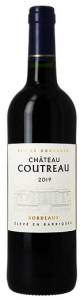
Chateau Coutreau 2019 Bordeaux (Bordeaux, France — around $26, private wine stores)
This Merlot-dominant red blend from Bordeaux offers plum, leather, raspberry, cassis and bell pepper notes aromatically. It’s full-bodied, dry and dense, with jammy cassis, cherry, tart raspberry and lacquer notes as well as vanilla, white pepper and spice notes on the palate plus grippy tannins thanks to 18 months aging in French oak barrels (presumably barriques). Drink now or hold for 24-36 months. Available at Kenaston Wine Market. 4/5
Ben Sigurdson
Literary editor, drinks writer
Ben Sigurdson is the Free Press‘s literary editor and drinks writer. He graduated with a master of arts degree in English from the University of Manitoba in 2005, the same year he began writing Uncorked, the weekly Free Press drinks column. He joined the Free Press full time in 2013 as a copy editor before being appointed literary editor in 2014. Read more about Ben.
In addition to providing opinions and analysis on wine and drinks, Ben oversees a team of freelance book reviewers and produces content for the arts and life section, all of which is reviewed by the Free Press’s editing team before being posted online or published in print. It’s part of the Free Press‘s tradition, since 1872, of producing reliable independent journalism. Read more about Free Press’s history and mandate, and learn how our newsroom operates.
Our newsroom depends on a growing audience of readers to power our journalism. If you are not a paid reader, please consider becoming a subscriber.
Our newsroom depends on its audience of readers to power our journalism. Thank you for your support.
Advertisement Advertise With Us
Advertisement Advertise With Us
History
Updated on Saturday, November 4, 2023 10:39 AM CDT: Minor copy edit