

Questions surround mayor’s proposal
Advertisement
Read this article for free:
or
Already have an account? Log in here »
To continue reading, please subscribe:
Monthly Digital Subscription
$1 per week for 24 weeks*
- Enjoy unlimited reading on winnipegfreepress.com
- Read the E-Edition, our digital replica newspaper
- Access News Break, our award-winning app
- Play interactive puzzles
*Billed as $4.00 plus GST every four weeks. After 24 weeks, price increases to the regular rate of $19.95 plus GST every four weeks. Offer available to new and qualified returning subscribers only. Cancel any time.
Monthly Digital Subscription
$4.99/week*
- Enjoy unlimited reading on winnipegfreepress.com
- Read the E-Edition, our digital replica newspaper
- Access News Break, our award-winning app
- Play interactive puzzles
*Billed as $19.95 plus GST every four weeks. Cancel any time.
To continue reading, please subscribe:
Add Free Press access to your Brandon Sun subscription for only an additional
$1 for the first 4 weeks*
*Your next subscription payment will increase by $1.00 and you will be charged $16.99 plus GST for four weeks. After four weeks, your payment will increase to $23.99 plus GST every four weeks.
Read unlimited articles for free today:
or
Already have an account? Log in here »
Hey there, time traveller!
This article was published 09/11/2023 (902 days ago), so information in it may no longer be current.
There are more questions than answers around Winnipeg Mayor Scott Gillingham’s proposed plan to adopt sweeping changes to infill housing rules.
In July, city council approved an application for funding of up to $192 million from the newly created Housing Accelerator Fund, a federal program launched earlier this year to address the country’s housing shortage.
In order to access resources from the fund, Canadian municipalities must comply with Ottawa’s demands that they take “bold steps” to accelerate housing construction, including eliminating “red tape” the federal government says is preventing the construction of multi-family units in mature neighbourhoods.
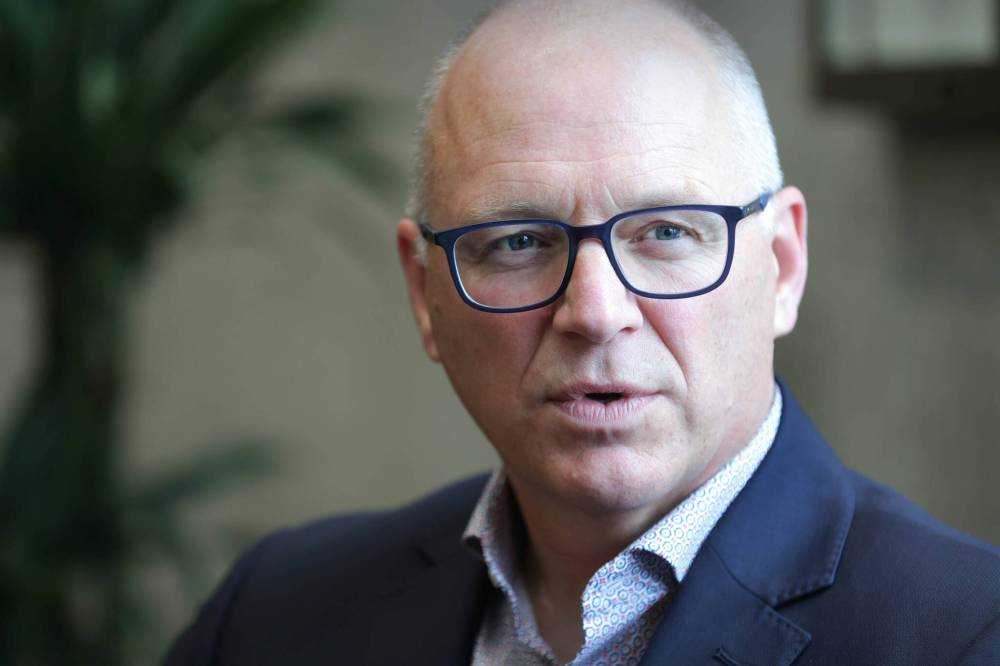
RUTH BONNEVILLE / WINNIPEG FREE PRESS Files
Winnipeg Mayor Scott Gillingham in his office at city hall.
Winnipeg has been asked by the federal government to amend its application to better comply with Ottawa’s requirements. That includes adopting so-called “as-of-right” bylaws that would eliminate the need for zoning variances (and the public input processes that go along with them) to construct multi-family homes, such as fourplexes and mid-rise buildings, in older neighbourhoods.
Gillingham unveiled a proposal last week to meet those requirements.
The federal government argues zoning variances are a drag on infill development and are slowing down efforts to densify neighbourhoods. To that end, Ottawa has attached strings to the funding by demanding municipalities comply with its terms.
It’s an enticing offer cash-strapped cities like Winnipeg would be hard-pressed to turn down.
Other Canadian cities, including London, Ont. and Halifax, N.S. have already complied with similar requests and have secured funding from the program.
But is it good policy? Should the federal government be dictating housing policy through a one-size-fits-all approach with the lure of money? That is something the city’s executive policy committee will consider at its Nov. 14 meeting when it votes on Gillingham’s proposal. Any changes would require the approval of city council.
Conditional funding from senior levels of government is not a new concept. It’s been used in health care for decades and more recently in early childhood learning through $10-a-day child care.
This program is different in that it proposes to eliminate public consultation in exchange for funding. It would require that communities forgo input into individual construction projects.
There are pros and cons to that proposition. It would, on the one hand, combat NIMBYism by making it more difficult to block well-designed infill projects. That would help boost housing development in an environmentally sustainable way by densifying more neighbourhoods across the city.

On the other hand, it would prevent people from expressing legitimate concerns when infill projects are proposed.
The biggest problem with Mr. Gillingham’s proposal is there has been a dearth of information on it, including how funding from the project would be spent. The public is largely in the dark on what the city is contemplating.
That must change. The city needs to do a better job of communicating what is on the table and what is at stake if the city fails to seize this opportunity.
What is known is that Winnipeg, like many Canadian cities, is suffering from an acute shortage of housing, particularly affordable housing. Most of the development is occurring on the outskirts of the city, which is driving up infrastructure costs.
The city needs resources to fund and incentivize multi-unit housing construction in established neighbourhoods. The resources available through this federal program, which are significant, may be the way to do that. It deserves a full examination and the public should be consulted on it.