Last 12 months on Earth were the hottest ever recorded, analysis finds
Advertisement
Read this article for free:
or
Already have an account? Log in here »
To continue reading, please subscribe:
Digital Subscription
One year of digital access for only $1.44 a week*
- Enjoy unlimited reading on winnipegfreepress.com
- Read the E-Edition, our digital replica newspaper
- Access News Break, our award-winning app
- Play interactive puzzles
*Billed as $5.77 plus GST every four weeks. After 52 weeks, price increases to the regular rate of $19.95 plus GST every four weeks. Offer available to new and qualified returning subscribers only. Cancel any time.
To continue reading, please subscribe:
Add Free Press access to your Brandon Sun subscription for only an additional
$1 for the first 4 weeks*
- Enjoy unlimited reading on winnipegfreepress.com
- Read the E-Edition, our digital replica newspaper
- Access News Break, our award-winning app
- Play interactive puzzles
*Your next Brandon Sun subscription payment will increase by $1.00 and you will be charged $17.95 plus GST for four weeks. After four weeks, your payment will increase to $24.95 plus GST every four weeks.
Read unlimited articles for free today:
or
Already have an account? Log in here »
Hey there, time traveller!
This article was published 09/11/2023 (1077 days ago), so information in it may no longer be current.
The last 12 months were the hottest Earth has ever recorded, according to a new report by Climate Central, a nonprofit science research group.
The peer-reviewed report says burning gasoline, coal, natural gas and other fossil fuels that release planet-warming gases like carbon dioxide, and other human activities, caused the unnatural warming from November 2022 to October 2023.
Over the course of the year, 7.3 billion people, or 90% of humanity, endured at least 10 days of high temperatures that were made at least three times more likely because of climate change.
“People know that things are weird, but they don’t they don’t necessarily know why it’s weird. They don’t connect back to the fact that we’re still burning coal, oil and natural gas,” said Andrew Pershing, a climate scientist at Climate Central.
“I think the thing that really came screaming out of the data this year was nobody is safe. Everybody was experiencing unusual climate-driven heat at some point during the year,” said Pershing.
The average global temperature was 1.3 degrees Celsius (2.3 degrees Fahrenheit) higher than the pre-industrial climate, which scientists say is close to the limit countries agreed not to go over in the Paris Agreement — a 1.5 C (2.7 F) rise. The impacts were apparent as one in four humans, or 1.9 billion people, suffered from dangerous heat waves.
At this point, said Jason Smerdon, a climate scientist at Columbia University, no one should be caught off guard. “It’s like being on an escalator and being surprised that you’re going up,” he said. ”We know that things are getting warmer, this has been predicted for decades.”
Here’s how a few regions were affected by the extreme heat:
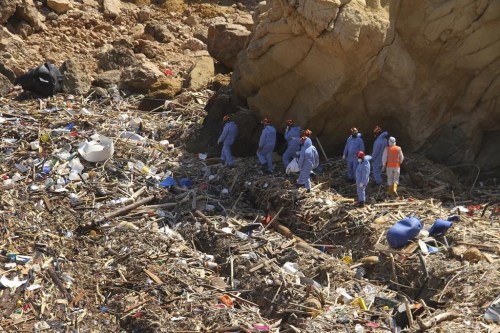
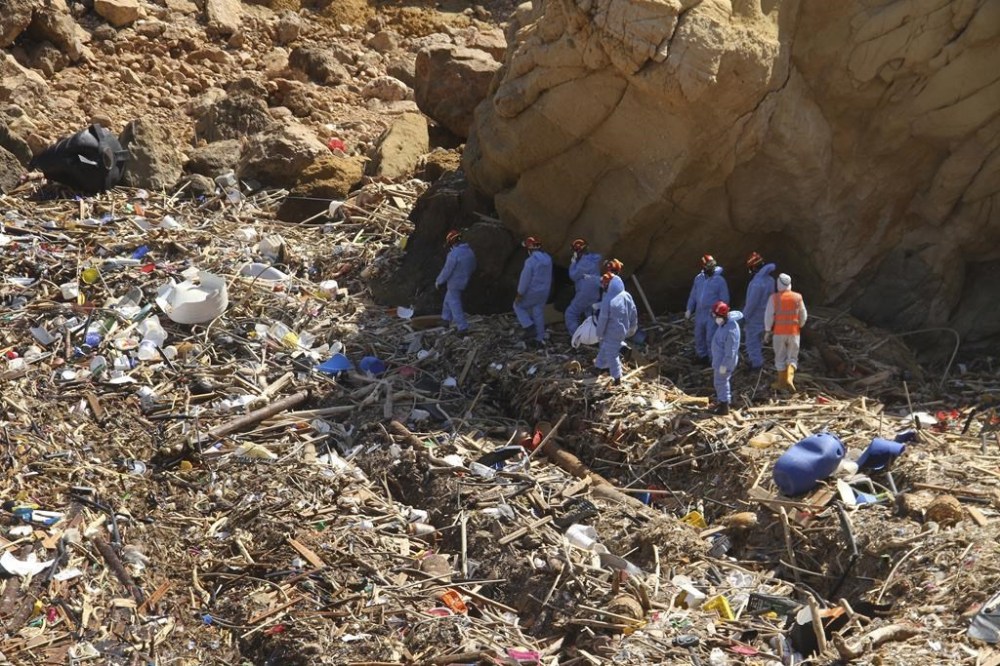
1. Extreme heat fueled destructive rainfall because a warmer atmosphere holds more water vapor, which lets storms release more precipitation. Storm Daniel became Africa’s deadliest storm with an estimated death toll that ranges between 4,000 and 11,000, according to officials and aid agencies. Greece, Bulgaria, and Turkey also saw damages and fatalities from Storm Daniel.
2. In India, 1.2 billion people, or 86% of the population, experienced at least 30 days of elevated temperatures, made at least three times more likely by climate change.
3. Drought in Brazil’s Amazon region caused rivers to dry to historic lows, cutting people off from food and fresh water.
4. At least 383 people died in U.S. extreme weather events, with 93 deaths related to the Maui wildfire event, the deadliest U.S. fire of the century.
5. One of every 200 people in Canada evacuated their home due to wildfires, which burn longer and more intensely after long periods of heat dry out the land. Canadian fires sent smoke billowing across much of North America.

6. On average, Jamaica experienced high temperatures made four times more likely by climate change during the last 12 months, making it the country where climate change was most powerfully at work.
“We need to adapt, mitigate and be better prepared for the residual damages because impacts are highly uneven from place to place,” said Kristie Ebi, a professor at the Center for Health and the Global Environment at the University of Washington, citing changes in precipitation, sea level rise, droughts, and wildfires.
The heat of the last year, intense as it was, is tempered because the oceans have been absorbing the majority of the excess heat related to climate change, but they are reaching their limit, said Kim Cobb, a climate scientist at Brown University. “Oceans are really the thermostat of our planet … they are tied to our economy, food sources, and coastal infrastructure.”
____
Associated Press climate and environmental coverage receives support from several private foundations. See more about AP’s climate initiative here. The AP is solely responsible for all content.