

Canada’s Cam Alexander happy to be healthy to start men’s World Cup downhill season
Advertisement
Read this article for free:
or
Already have an account? Log in here »
To continue reading, please subscribe:

Digital Subscription
One year of digital access for only $205*
- Enjoy unlimited reading on winnipegfreepress.com
- Read the E-Edition, our digital replica newspaper
- Access News Break, our award-winning app
- Play interactive puzzles
*First annual payment billed as $205.00 + GST for one year. This annual subscription will automatically renew at $233.00 + GST every 52 weeks (10% off the regular annual price of $259.35). Offer available to new and qualified returning subscribers only. Cancel any time.
To continue reading, please subscribe:
Add Free Press access to your Brandon Sun subscription for only an additional
$1 for the first 4 weeks*
- Enjoy unlimited reading on winnipegfreepress.com
- Read the E-Edition, our digital replica newspaper
- Access News Break, our award-winning app
- Play interactive puzzles
*Your next Brandon Sun subscription payment will increase by $1.00 and you will be charged $17.95 plus GST for four weeks. After four weeks, your payment will increase to $24.95 plus GST every four weeks.
Read unlimited articles for free today:
or
Already have an account? Log in here »
Hey there, time traveller!
This article was published 27/11/2023 (1035 days ago), so information in it may no longer be current.
Cameron Alexander strong and ready to launch from the start hut in the first World Cup downhill of the season is a novel feeling for him.
Knee injuries limited the 26-year-old ski racer from North Vancouver, B.C., early in the last two seasons before he posted big results in the back half.
Alexander claimed world championship bronze in men’s downhill in Courcheval, France in February.
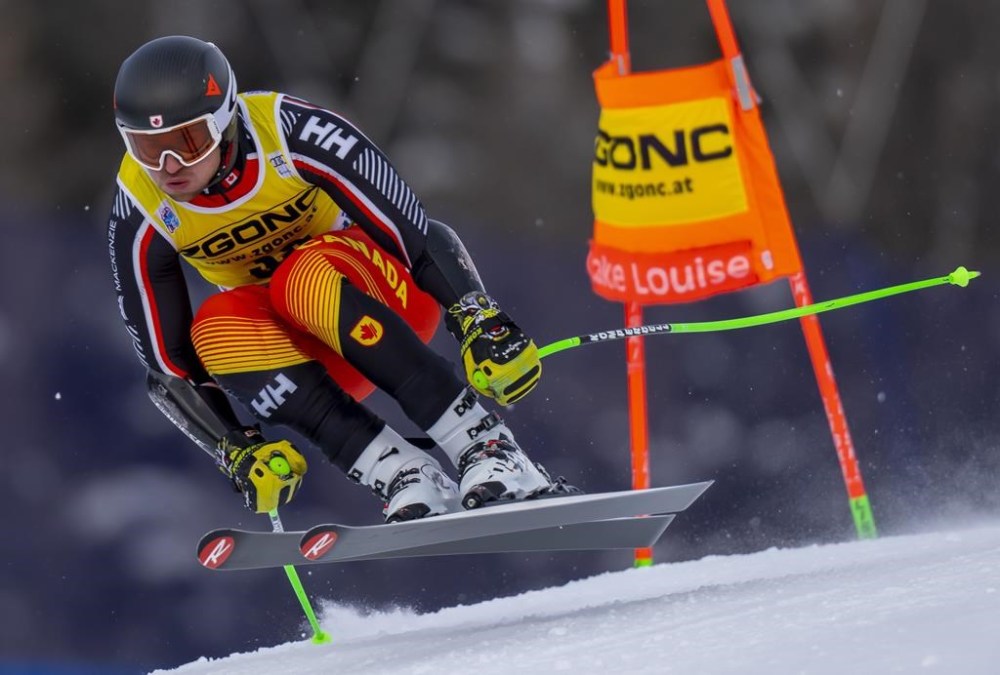
He became the first Canadian since 2014 to win a World Cup downhill in March 2022 in Kvitfjell, Norway.
A catastrophic knee injury Dec. 13, 2020 in Val-d’Isere, France sidelined him for a year. Alexander reinjured in the spring of 2022 and managed pain heading into the world championship.
He’ll race downhills in Beaver Creek, Colo., for the first time since his rookie World Cup season. The first of two on the Birds of Prey course is Friday, followed by Sunday’s super-G.
“Health-wise, my knee is the best its ever felt,” Alexander said. “It’s been nice having a full off-season, full pre-season under my belt coming into racing.
“I’m excited to see how I stack up in the first race of a World Cup season when I’m healthy and ready to go.”
Lake Louise, Alta., is no longer the traditional start of the international speed season for both men and women. The 2022 men’s and women’s World Cups in Banff National Park were the last.
The women’s speed races have been replaced by giant slaloms Saturday and Sunday in Mont-Tremblant, Que. Alpine Canada chief executive officer Therese Brisson says she’s searching for a men’s speed site in Western Canada.
The world governing body of skiing and snowboarding (FIS) has twice attempted to start the speed season earlier in November by scheduling Zermatt-Cervinia races that start in Switzerland and finish in Italy.
An intriguing idea has yet to produce a live race. Weather conditions forced the cancellation of the event a second straight year, so Beaver Creek is the men’s opener for 2023-24. The first of three training runs is Tuesday.
Alexander and reigning world super-G champion James (Jack) Crawford of Toronto lead a Canadian men’s downhill team of 20-somethings who have been pushing each other into the world’s elite.
Crawford, Calgary’s Jeff Read and Brodie Seger of North Vancouver rank in the world’s top 28 in super-G. Seger won’t race in Beaver Creek as he’s coming back from a knee injury sustained in France.
Crawford, 26, was a downhill medallist three times last season with two silver and a bronze. He placed third in Beaver Creek.
Broderick Thompson of Whistler, B.C. was a super-G bronze medallist in Beaver Creek two years ago. Kyle Alexander and Riley Seger join their older brothers on the Canadian team.
“We have some high-level super-G skiers in our group, but that’s a strength that’s just going to help us build our downhill,” Canadian team coach John Kucera said.
“Some of those guys who are still not in the top 30 in downhill have had some really fast training runs, top-10 training runs, winning sections out there. When it comes to racing, it’s just about not trying to do too much, but trusting what you’re doing is going to work and putting it together on the days that matter most.
“We’re going to be just as strong in downhill as we are in super-G. We’re going to be a true multi-discipline speed team.”
The top 30 finishers earn prize money and points toward rankings. A top-30 start bib is an advantage because those skiers race a more pristine race course than those starting later. Kucera wants more Canadian men in the top 30 more often this season.
“I would expect to see a bigger step forward this year,” said Kucera, who was the men’s world downhill champion in 2009. “We don’t want to just see one or two guys successful. We have seven racers here who we feel can do something.
“I think we can have multiple guys in the top 30 and multiple guys pushing for the podium every week and that’s our goal.”
Kucera describes the men’s downhill team as “the tightest group you’re ever going to see.”
“The major thing with us is we’re all very close and have known each other for a long time,” Alexander explained. “We grew up racing together. We’ve very, very competitive with each other, but it’s in a healthy way where it doesn’t cause any strife between anybody.
“Everybody believes they can beat the other guy, so when you see somebody else on the team have a big result, you’re excited for the guy, but you’re like ‘man, that could have been me.’ It’s just like a building up and off each other all the time and just pushing each other consistently.”
This report by The Canadian Press was first published Nov. 27, 2023.