

Province, municipalities seek to see each other in new light

Advertisement
Read this article for free:
or
Already have an account? Log in here »
To continue reading, please subscribe:

Digital Subscription
One year of digital access for only $205*
- Enjoy unlimited reading on winnipegfreepress.com
- Read the E-Edition, our digital replica newspaper
- Access News Break, our award-winning app
- Play interactive puzzles
*First annual payment billed as $205.00 + GST for one year. This annual subscription will automatically renew at $233.00 + GST every 52 weeks (10% off the regular annual price of $259.35). Offer available to new and qualified returning subscribers only. Cancel any time.
To continue reading, please subscribe:
Add Free Press access to your Brandon Sun subscription for only an additional
$1 for the first 4 weeks*
- Enjoy unlimited reading on winnipegfreepress.com
- Read the E-Edition, our digital replica newspaper
- Access News Break, our award-winning app
- Play interactive puzzles
*Your next Brandon Sun subscription payment will increase by $1.00 and you will be charged $17.95 plus GST for four weeks. After four weeks, your payment will increase to $24.95 plus GST every four weeks.
Read unlimited articles for free today:
or
Already have an account? Log in here »
Hey there, time traveller!
This article was published 28/11/2023 (1007 days ago), so information in it may no longer be current.
After years of frozen operating funds under the former Tory government, Manitoba municipalities are welcoming a thaw in relations with the province and the potential for predictable funding in the years ahead.
“That operating funding freeze meant that municipalities had to increase taxes and/or cut services to our residents and put economic development and residential growth on the back burner,” Kam Blight, president of the Association of Manitoba Municipalities, said Tuesday at the start of the organization’s fall convention in Brandon.
In February, the then-Tory government announced a 28 per cent increase in municipal operating funds — the first hike since it took office in 2016. In October, the NDP claimed a majority victory in the provincial election, relegating the Tories to official Opposition.
Kam Blight, Association of Manitoba Municipalities president, said he hopes a new government will translate to predictable funding for municipalities. (Matt Goerzen/The Brandon Sun)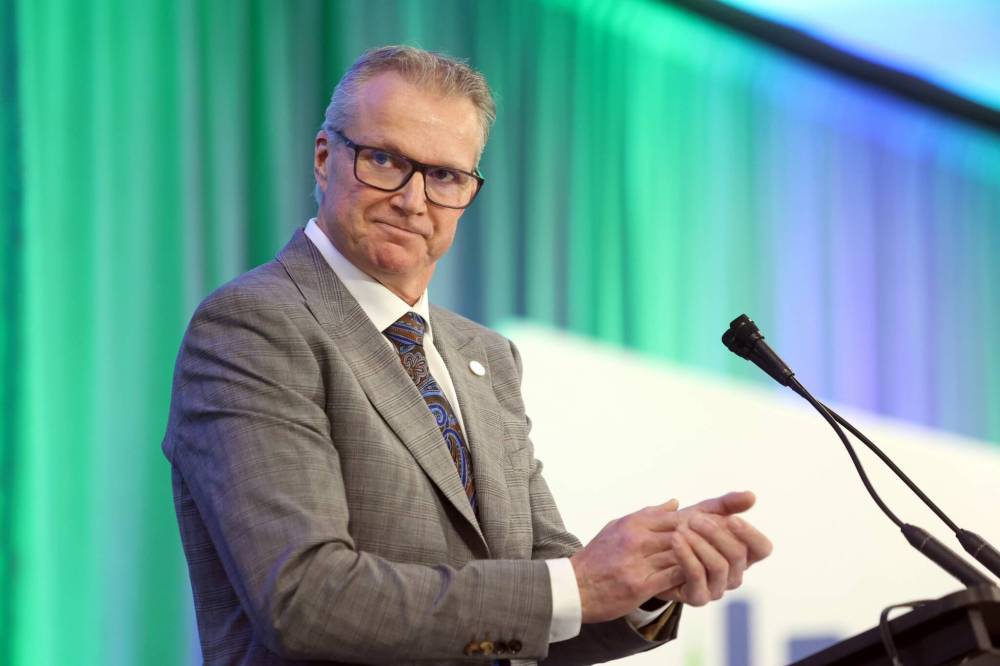
The impact of successive years of a funding freeze is a “difficult hurdle” to overcome, Blight said in a phone interview.
“Now, everything costs that much more. There’s also supply chain challenges and human resource-related issues that are creating more issues and challenges for municipalities to accomplish a lot of the goals and projects they want to see moving forward,” he said.
“We need to make sure the dollars going forward recognize inflationary pressures and challenges municipalities are facing.”
In Brandon, Premier Wab Kinew promised municipal governments they would be treated as serious partners to boost economic development and improve health care.
Kinew also confirmed his government wouldn’t tinker with the Tories’ budget plan to hike municipal operating funds, despite fiscal challenges.
“If you want to get things done — economic development, health care — you need to change the way the province deals with municipalities,” Kinew said Tuesday, relaying advice he was given.
“You need to start treating municipalities like a serious order of government, and show them respect… That’s what our team fully intends to do.”
The AMM will be watching the NDP government’s first budget in early 2024 closely, the association’s president said.
“We’re looking for a multi-year, predictable funding model with a built-in escalator” and better lines of communication with the provincial government, said Blight.
“I think there’s a strong appetite from this provincial government to better understand municipalities outside the City of Winnipeg. Premier Kinew has made mention of that on numerous occasions and we’re seeing that here at our convention. There’s an excellent turnout of representation from this NDP government.”
RM of St. Anne Coun. Brad Ingles shakes hands with Manitoba Premier Wab Kinew following the premier’s speach at the opening day of the Association of Manitoba Municipalities conference in Brandon on Tuesday afternoon. Kinew said an NDP government would treat municipalities like "a serious order of government." (Matt Goerzen/The Brandon Sun)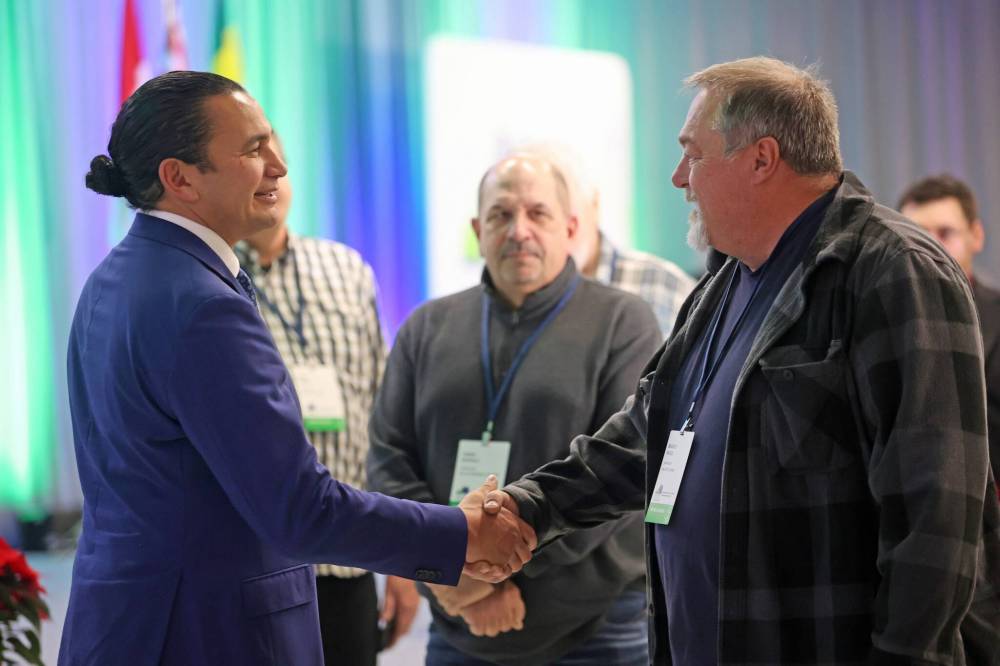
In Winnipeg, during question period at the legislature, the Opposition Tories asked about funding for municipalities, which wasn’t mentioned in the recent speech from the throne setting out the NDP government’s priorities.
Opposition Leader Heather Stefanson asked if Kinew expects municipalities to “tighten their belts.”
Deputy premier Uzoma Asagwara responded for the premier, saying municipalities had to deal with PCs cuts and funding freezes for years and the NDP are taking a different approach.
“Our government believes in working with municipalities to strengthen what they’re able to deliver to Manitobans,” the Union Station MLA said.
In an interview from Brandon, Municipal and Northern Relations Minister Ian Bushie said he’s met with many municipal leaders at the conference who are “very excited” about the NDP commitments.
“They’re very used to having their belts tightened for the last seven years under the previous government,” Bushie said. “A lot of their concerns were around the lack of an ability to plan and the lack of predictability to plan.”
Infrastructure has been a common theme in his meetings, he added.
“We know they’ve had to make some very hard decisions over the last number of years, so we’re looking forward to being able to support them over a few years in terms of the funding model so they can have that predictability.”
Northern and rural municipalities are key contributors to the provincial economy, said the Keewatinook MLA.
“When the municipalities do well, Manitoba does well.”
— with files from Brandon Sun
carol.sanders@freepress.mb.ca
Carol Sanders
Legislature reporter
Carol Sanders is a reporter at the Free Press legislature bureau. The former general assignment reporter and copy editor joined the paper in 1997. Read more about Carol.
Every piece of reporting Carol produces is reviewed by an editing team before it is posted online or published in print — part of the Free Press‘s tradition, since 1872, of producing reliable independent journalism. Read more about Free Press’s history and mandate, and learn how our newsroom operates.
Our newsroom depends on a growing audience of readers to power our journalism. If you are not a paid reader, please consider becoming a subscriber.
Our newsroom depends on its audience of readers to power our journalism. Thank you for your support.
Carol Sanders
Legislature reporter
Carol Sanders is a reporter at the Free Press legislature bureau. The former general assignment reporter and copy editor joined the paper in 1997. Read more about Carol.
Every piece of reporting Carol produces is reviewed by an editing team before it is posted online or published in print — part of the Free Press‘s tradition, since 1872, of producing reliable independent journalism. Read more about Free Press’s history and mandate, and learn how our newsroom operates.
Our newsroom depends on a growing audience of readers to power our journalism. If you are not a paid reader, please consider becoming a subscriber.
Our newsroom depends on its audience of readers to power our journalism. Thank you for your support.
Advertisement Advertise With Us
Advertisement Advertise With Us