Ocean noise strategy delayed, but whale report by military may sound out path forward
Advertisement
Read this article for free:
or
Already have an account? Log in here »
To continue reading, please subscribe:
Digital Subscription
One year of digital access for only $1.44 a week*
- Enjoy unlimited reading on winnipegfreepress.com
- Read the E-Edition, our digital replica newspaper
- Access News Break, our award-winning app
- Play interactive puzzles
*Billed as $5.77 plus GST every four weeks. After 52 weeks, price increases to the regular rate of $19.95 plus GST every four weeks. Offer available to new and qualified returning subscribers only. Cancel any time.
To continue reading, please subscribe:
Add Free Press access to your Brandon Sun subscription for only an additional
$1 for the first 4 weeks*
- Enjoy unlimited reading on winnipegfreepress.com
- Read the E-Edition, our digital replica newspaper
- Access News Break, our award-winning app
- Play interactive puzzles
*Your next Brandon Sun subscription payment will increase by $1.00 and you will be charged $17.95 plus GST for four weeks. After four weeks, your payment will increase to $24.95 plus GST every four weeks.
Read unlimited articles for free today:
or
Already have an account? Log in here »
Hey there, time traveller!
This article was published 01/12/2023 (1056 days ago), so information in it may no longer be current.
VANCOUVER – Marine scientist Kieran Cox calls it “probably the most pervasive, unregulated pollutant in Canada and globally.”
It’s not plastic, petrochemicals or another chemical toxin. It’s underwater noise.
“Noise pollution is certainly something that everything from small invertebrates to big cetaceans are interacting with and so that’s why we’re moving forward as a country on this topic,” said Cox, a biological sciences post-doctoral fellow at Simon Fraser University.
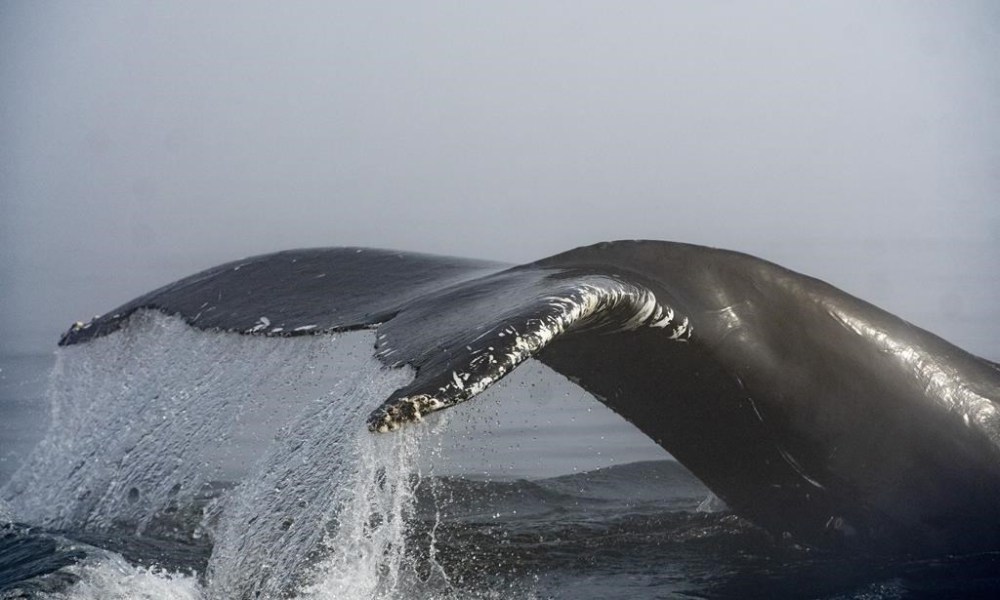
Cox led a team of researchers who examined a report commissioned by the Defence Department on safeguarding whales from the sound of weapons during training exercises.
He said while the report has flaws, it’s a step in the right direction while Canada decides on its national ocean noise strategy that has been delayed after years of development.
Noise created in the oceans, through activities like shipping, can interfere with underwater animals’ ability to locate prey and communicate.
The federal government has called noise “an identified threat to the recovery of many marine species listed in the Species At Risk Act.”
The noise strategy was scheduled to be released this year but Fisheries and Oceans Canada says it needs more time because of the pandemic.
“The publication of the Ocean Noise Strategy for Canada is anticipated before the end of the 2023-2024 fiscal year with an associated period of public engagement to immediately follow,” Tomie White, a spokesperson for the department, said in a statement.
Cox’s work, published Friday in the journal Marine Policy, looked at the Department of National Defence’s decision in 2019 to pause military training exercises in a 330-square-kilometre area of the Strait of Juan de Fuca, know as “Whiskey Hotel.”
The area overlaps the critical habitat of B.C.’s endangered southern resident killer whales.
Exercises were halted until January this year.
The third-party report commissioned by the department concluded the impact of noise on marine mammals was expected to be “limited,” thanks to protections such as avoiding certain areas when whales are nearby, training and monitoring.
Cox said the report is a rare example of an organization that wasn’t legally required to consider noise impacts pausing work, commissioning a third-party report and implementing protections.
“In some regards, to me, they kind of pave the route forwards for what we do in the interim, while we have the ocean noise strategy conversation, which will certainly be a decade-long discussion,” Cox said.
No one from the Navy was available for an interview.
Cox said the commissioned report was completed by “world-class” experts and is unique in that it puts the onus on the group doing an activity to pause and research potential impacts and then implement measures to protect animals.
“You can really follow this as a template for how we would say, ‘OK, this activity is going to occur, what kind of impacts (is it) going to have? How do we mitigate those and move forwards with this shared space of the oceans?” he said.
A number of flaws with the military’s report would need to be addressed before its model could be expanded as part of Canada’s national plan, Cox said.
While it focused on whales, thousands of fish and invertebrates in the ocean rely on sound and can also be impacted by noise.
“They’re harder to see than whales are. So some of the mitigation measures will need to be modified and they also don’t leave the area as easily, they are going to stay there more long term,” Cox said.
“So I think at a minimum, including species we know that are drawing whales to the area is important because you don’t want to impact them.”
He said the report also only considers the sounds of the weapons used by ships and not the sound of the navy vessels themselves.
“I think (the report) is a step forward but it’s certainly by no means the end of the discussion for noise pollution in Canada. That’s just starting,” he said.
White said the federal government is committed to protecting ecosystems.
“The purpose of the strategy is to develop a whole-of-government approach to guide federal science, research, and technology development, and to co-ordinate the management of human-generated marine noise in Canada’s oceans.”
This report by The Canadian Press was first published Dec. 1, 2023