What is Bodhi Day? And when do Buddhists celebrate it?

Advertisement

Advertise with us

Buddhists around the world are celebrating Bodhi Day.

Read this article for free:


or

Already have an account? Log in here »

To continue reading, please subscribe:

Subscribe and receive a limited-edition Free Press branded hat or tote.

Digital Subscription

One year of digital access for only $205*

  • Enjoy unlimited reading on winnipegfreepress.com
  • Read the E-Edition, our digital replica newspaper
  • Access News Break, our award-winning app
  • Play interactive puzzles

*First annual payment billed as $205.00 + GST for one year. This annual subscription will automatically renew at $233.00 + GST every 52 weeks (10% off the regular annual price of $259.35). Offer available to new and qualified returning subscribers only. Cancel any time.

To continue reading, please subscribe:

Add Free Press access to your Brandon Sun subscription for only an additional

$1 for the first 4 weeks*

  • Enjoy unlimited reading on winnipegfreepress.com
  • Read the E-Edition, our digital replica newspaper
  • Access News Break, our award-winning app
  • Play interactive puzzles
Start now

*Your next Brandon Sun subscription payment will increase by $1.00 and you will be charged $17.95 plus GST for four weeks. After four weeks, your payment will increase to $24.95 plus GST every four weeks.

Hey there, time traveller!
This article was published 08/12/2023 (1006 days ago), so information in it may no longer be current.

Buddhists around the world are celebrating Bodhi Day.

Also called Buddha’s Enlightenment Day, it commemorates when Siddhartha Gautama attained awakening — or enlightenment — some 2,600 years ago, becoming the Buddha.

When is Bodhi Day celebrated?

Japan celebrates on Dec. 8, following the Western calendar.

It varies elsewhere in East Asia, but generally, the holiday falls between the winter solstice and the lunar new year, said Scott Mitchell, dean of students at Berkeley, California-based Institute of Buddhist Studies.

Southeast Asian and Tibetan Buddhists celebrate Buddha’s enlightenment in May and June respectively, said Judith Simmer-Brown, professor emeritus of contemplative and religious studies at Colorado’s Naropa University.

How did Siddhartha Gautama achieve enlightenment?

It happened after years of spiritual seeking and meditation, including gaining insights into the ultimate nature of existence: “In particular, the origins of human suffering, the cycle of birth and death (samsara), and the path to liberation (nirvana),” Manuel Lopez, a professor of Buddhist Studies and Religion at New College of Florida, said via email.

Buddhism is regarded as the world’s fourth-largest religion after Christianity, Islam and Hinduism. Most Buddhists live in the Asia-Pacific region.

Which Buddhist traditions observe Bodhi Day?

Not all Buddhists celebrate Bodhi Day. It is most common in East Asia’s Buddhist Mahayana traditions found in Japan, Korea and Vietnam.

In Japan’s Zen Buddhist schools, it is known as “Rohatsu,” meaning the 8th day of the 12th month, Mitchell said. In some other schools, it is called Jodo-e.

In Thailand, Laos, Myanmar and other majority Buddhist countries, it is celebrated as part of Vesak Day. Often in May, Vesak Day commemorates the birth, enlightenment and death of the Buddha, Lopez said.

How is Bodhi Day celebrated?

Observances vary, but celebrants pray and read scriptures (sutras). Some decorate trees with colorful lights or candles, symbolizing Buddha’s enlightenment, and have special family meals. Others engage in acts of kindness and generosity (dana) to reflect on the Buddha’s teaching and improve their karma, Lopez said.

Some eat rice and milk — believed to be the sustenance that helped Buddha make his final push for enlightenment, Tricycle, a Buddhism-focused magazine, writes in its online “Buddhism for Beginners.”

What does Bodhi mean?

“Bodhi” comes from a verb in Sanskrit and Pali that means “to awaken” or “awakened.” In Buddhism, it’s generally understood to mean “enlightenment.”

Siddhartha Gautama spent years seeking the answer to the problem of suffering. Finally, he attained awakening and became the Buddha while meditating under a peepal tree in Bodh Gaya, a village in the northeastern Indian state of Bihar.

“He was determined not to arise until he had solved the problem. Seated at the base of the Bodhi tree, facing East, he began a meditation that was to last through the night,” said Philip Almond, emeritus professor at the Institute for Advanced Studies in the Humanities at Australia’s The University of Queensland.

That night, he said, “Gautama directly knew the true nature of suffering, its origin, its cessation, and the way to its cessation.”

What is the Bodhi Tree?

The tree Gautama mediated under is called the “Bodhi Tree” or tree of awakening. As a result, the ficus leaf became a Buddhist symbol. Many Buddhists plant ficus trees.

Today, Bodh Gaya — and its Mahabodhi Temple Complex — is one of the most sacred pilgrimage sites. The giant Bodhi Tree near the main temple is believed to be a descendant of the original tree, according to UNESCO says.

__

Associated Press religion coverage receives support through the AP’s collaboration with The Conversation US, with funding from Lilly Endowment Inc. The AP is solely responsible for this content.

Report Error Submit a Tip

The Free Press acknowledges the financial support it receives from members of the city’s faith community, which makes our coverage of religion possible.

More Stories

Trump ramps up retaliation against Canada, banning imports of booze, other products

Kelly Geraldine Malone, The Canadian Press 6 minute read Preview

Trump ramps up retaliation against Canada, banning imports of booze, other products

Kelly Geraldine Malone, The Canadian Press 6 minute read Updated: Yesterday at 10:13 PM CDT

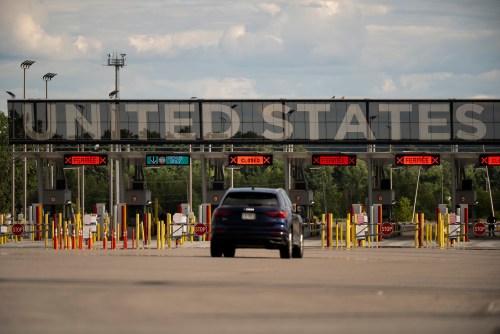
WASHINGTON - U.S. President Donald Trump signed new executive orders on Tuesday, ramping up retaliation after Canada imposed its latest set of duties on the United States. 

The five orders, which will take effect later this month, will completely bar imports of certain Canadian goods, including motorcycles, some dairy products and alcoholic beverages.

U.S. Trade Representative Jamieson Greer, in a statement later Tuesday, said the decision was a "natural consequence" of Canada's "discriminatory" treatment of American exports.

"After weeks of good faith and intensive efforts between U.S. and Canadian negotiators, Canada walked away from a near-final trade deal that offered better treatment than any other trading partner, and instead Canada chose to embark on senseless retaliation against the United States," Greer said in the statement.

Read
Updated: Yesterday at 10:13 PM CDT

Education student designs lesson plans to take a bite out of food marketing

Maggie Macintosh 4 minute read Preview

Education student designs lesson plans to take a bite out of food marketing

Maggie Macintosh 4 minute read Monday, Sep. 7, 2026

Instead of apples, Emma Caronte is handing out lesson plans on local food history to Manitoba teachers this back-to-school season.

The undergraduate researcher spent her summer break creating a social studies unit that investigates food guide evolution, marketing tactics and how honey dill sauce became a pantry staple on the Prairies.

“I want students to develop a greater interest in food and what outside influences affect their choices and what we consider ‘healthy,’” said Caronte, a final-year education student at the University of Manitoba.

She is advertising her 112-page project as a user-friendly resource for classroom teachers and “a fun sub plan” targeted at Grade 6, 7, 8 and 9.

Read
Monday, Sep. 7, 2026

Winkler-based internet provider delivering high-speed service to 30 rural and First Nations Manitoba communities

Nicole Buffie 2 minute read Preview

Winkler-based internet provider delivering high-speed service to 30 rural and First Nations Manitoba communities

Nicole Buffie 2 minute read Yesterday at 7:12 PM CDT

Valley Fiber says it is undertaking one of its largest fibre optic projects and is building infrastructure that will deliver internet to 10,000 homes and businesses in rural and First Nations communities across Manitoba.

“These communities will now have access to the fastest internet network in Manitoba, and it will power their lives and their business,” Ryan Klassen, chief executive officer of the Winkler-based internet provider, said Tuesday from Fisher River Cree Nation.

The province has granted Valley Fiber use of two of its underused cables on the existing Manitoba Hydro fibre optic network for up to 20 years as part of the project, which will connect nearly 30 communities — including Buffalo Point, Hollow Water, Black River and Peguis First Nations, along with Fisher River and Fox Lake Cree Nations — to high-speed internet.

Construction should be finished by 2027.

Read
Yesterday at 7:12 PM CDT

Today’s horoscope

Georgia Nicols 4 minute read Preview

Today’s horoscope

Georgia Nicols 4 minute read 2:00 AM CDT

MOON ALERT: Avoid shopping (except food and gas) and important decisions from 1:30 p.m. until 3:15 p.m. today. After that, the moon moves from Leo into Virgo.

ARIES (March 21-April 19)

This is a solid day for you because you’re motivated to work and accomplish something. (This is half the battle. Motivation is everything.) Roll up your sleeves and dig in. Talk to co-workers and friends. Be of service if you can.

TAURUS (April 20-May 20)

Read
2:00 AM CDT

Double climate whammy hits home

Editorial 4 minute read Preview

Double climate whammy hits home

Editorial 4 minute read 2:00 AM CDT

It’s a bit of a one-two punch. First, the show-and-tell of what global warming could be bringing us. Then, the fact we’ve already failed our best chance of halting climate change.

Read
2:00 AM CDT

Flash, bang … oops: police raid leads to lawsuit

Erik Pindera 4 minute read Preview

Flash, bang … oops: police raid leads to lawsuit

Erik Pindera 4 minute read 6:00 AM CDT

A couple suing the city allege Winnipeg Police Service officers trying to execute a search warrant at their condominium complex rappelled down the side of the building, broke in their glass patio door and fired off a stun grenade before realizing they were in the wrong unit.

Saeid Ghavami and Shahla Shojaei, a married couple who are academics and scientific researchers at the University of Manitoba, filed the lawsuit in Court of King’s Bench last month over the Jan. 31, 2025 incident.

The claim names the City of Winnipeg and several officers involved in the operation, whose identities are, at this point, unknown to the couple, and are referred to as “John Does.”

Officers were attempting to execute the warrant on the third floor of the eight-storey Pembina Highway building, the court filing says. The couple lives on the fourth floor.

Read
6:00 AM CDT