In Halifax, a call to promote old-growth forests as a guard against future wildfires
Advertisement
Read this article for free:
or
Already have an account? Log in here »
To continue reading, please subscribe:

Digital Subscription
One year of digital access for only $205*
- Enjoy unlimited reading on winnipegfreepress.com
- Read the E-Edition, our digital replica newspaper
- Access News Break, our award-winning app
- Play interactive puzzles
*First annual payment billed as $205.00 + GST for one year. This annual subscription will automatically renew at $233.00 + GST every 52 weeks (10% off the regular annual price of $259.35). Offer available to new and qualified returning subscribers only. Cancel any time.
To continue reading, please subscribe:
Add Free Press access to your Brandon Sun subscription for only an additional
$1 for the first 4 weeks*
- Enjoy unlimited reading on winnipegfreepress.com
- Read the E-Edition, our digital replica newspaper
- Access News Break, our award-winning app
- Play interactive puzzles
*Your next Brandon Sun subscription payment will increase by $1.00 and you will be charged $17.95 plus GST for four weeks. After four weeks, your payment will increase to $24.95 plus GST every four weeks.
Read unlimited articles for free today:
or
Already have an account? Log in here »
Hey there, time traveller!
This article was published 11/12/2023 (1009 days ago), so information in it may no longer be current.
HALIFAX – As he stands near a Nova Scotia forest with soaring 150-year-old trees, Mike Lancaster sees a natural, long-term solution to the threat wildfires pose to city dwellers.
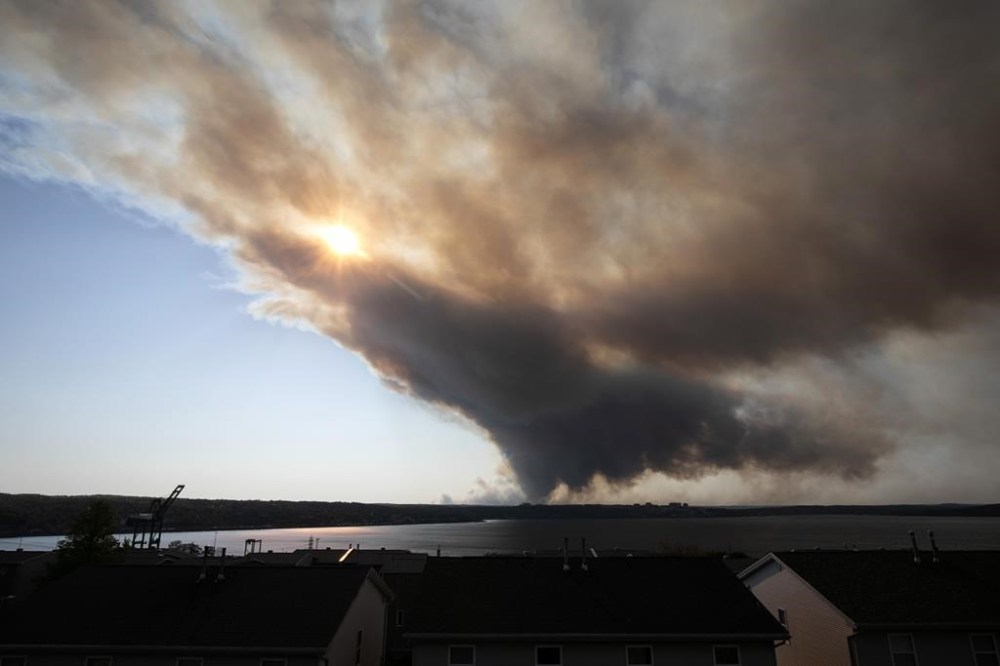
The director of the St. Margaret’s Bay Stewardship Association says much of the 1,000 hectares that ignited in May — destroying 151 homes and businesses in Halifax’s western suburbs — was young, dense, coniferous woodland that had grown after decades of intensive logging.
Pointing to the canopy of older-growth trees just three kilometres from lands scarred by wildfire, Lancaster describes how the space between the trees, the mixture of species and the higher branches decrease flammability.
The 33-year-old forestry consultant says Nova Scotia should plan for centuries of restoration — rather than continuing a cycle of encouraging highly combustible trees and frequent cutting. “If we clear cut forests, it’s going to reduce the risk in the short term, but in decades … we’ll be back into the same problem of fire risk we already had,” he says.
After a historic wildfire season across Canada, experts are turning their eyes to Nova Scotia as a harbinger of the growing risk facing cities on the forest’s edge.
“If Halifax can burn, any place can burn, and that blows all our minds,” says John Vaillant, author of the award-winning “Fire Weather: The Making of a Beast,” which tells the story of the 2016 Fort McMurray forest fire. Vaillant said in an interview that Nova Scotia’s urban wildfires were a shock to fire experts across Canada, making the province’s next steps a matter of national interest.
However, what — if any — changes will be made to Nova Scotia’s forestry practices in 2024 is unclear, as the department has yet to release initial findings on how the Halifax-area blaze ignited and what might prevent a recurrence. Natural Resources Minister Tory Rushton says the report will come “as soon as possible,” before the next wildfire season begins.
Changes are needed, the minister says, and one aspect could be improved forest management at the edge of urban areas to decrease fire risk. “It’s anticipated these fires are going to happen more frequently,” he said in a recent interview, acknowledging climate science that predicts shorter, drier winters and hotter temperatures will lead to more frequent fires.
Rushton says an “ecological forestry” approach in the province could include “taking out some of the lower-grade fibre that is a tinder for an active forest fire.”
James Steenberg, a senior research forester with the department, said in an interview Friday that the reality is that nearly all woodlands near the suburbs are on private land that isn’t controlled by the province.
As a result, the province relies on “tools of outreach and education” to convince owners of wooded lands to take measures to reduce their flammability. He says the province has set up a fund to help private landowners clear piles of brush left by post-tropical storm Fiona in 2022.
When it comes to leaving forests to regenerate, Steenberg says poor soil and other conditions that limit growth mean that about a quarter of the province’s forest will yield shorter-lived trees that are susceptible to frequent fires.
“Old-growth (forests) aren’t necessarily more or less susceptible to fires,” he says. “It depends on the conditions. Old-growths are complex and often have different-aged woods in them and may have coarse, woody materials that can be fuels.”
Eric Rapaport, a Dalhousie University professor of planning who has studied fire risks in the Halifax area since 2012, says the time may have come for the province and city to approach landowners to ask them to consider accepting “a good fire break” between woodlands and homes.

Rapaport is also an advocate for creating the equivalent of floodplain mapping for fires, where publicly available maps would provide tree-by-tree detail of fire dangers.
“We need to have fine-grained data to show what kind of trees are between the forests and the homeowners’ backyards,” he said in a recent interview.
Rapaport says if mapping is put in place, it will prompt fresh questions, including whether the province will help fund the removal of trees on properties, or whether insurance companies may offer lower premiums to owners who take these steps.

Meanwhile, the municipality and province need to create bylaws requiring more fire-resistant building materials and more distance between forest and houses in new developments, he says.
Scott Tingley, manager of fire protection at the Department of Natural Resources, says the department is looking into the idea of providing more detailed mapping.
He also says if communities take the lead to bring in fire prevention principles, the department can assist. He gives the example of Bear River First Nation — a Mi’kmaq community surrounded by woodlands — which sought help from the department to create a buffer zone around the entire reserve in southwestern Nova Scotia.
For Vaillant, the author, better preparation is key to minimizing future destruction. “We live in an era of heightened risk around fire,” he says, “but through being intelligent and coherent management of our surrounding woodlands, we can reduce the risk … probably exponentially.”
This report by The Canadian Press was first published Dec. 11, 2023.