Endangered species list grows by 2,000. Climate change is part of the problem

Advertisement

Advertise with us

Climate change is worsening the planet's biodiversity crises, making environments more deadly for thousands of species and accelerating the precipitous decline in the number of plants and animals on Earth, according to an international organization that tracks species health.

Read this article for free:

or

Already have an account? Log in here »

To continue reading, please subscribe:

Subscribe and receive a limited-edition Free Press branded hat or tote.

Digital Subscription

One year of digital access for only $205*

  • Enjoy unlimited reading on winnipegfreepress.com
  • Read the E-Edition, our digital replica newspaper
  • Access News Break, our award-winning app
  • Play interactive puzzles

*First annual payment billed as $205.00 + GST for one year. This annual subscription will automatically renew at $233.00 + GST every 52 weeks (10% off the regular annual price of $259.35). Offer available to new and qualified returning subscribers only. Cancel any time.

To continue reading, please subscribe:

Add Free Press access to your Brandon Sun subscription for only an additional

$1 for the first 4 weeks*

  • Enjoy unlimited reading on winnipegfreepress.com
  • Read the E-Edition, our digital replica newspaper
  • Access News Break, our award-winning app
  • Play interactive puzzles
Start now

*Your next Brandon Sun subscription payment will increase by $1.00 and you will be charged $17.95 plus GST for four weeks. After four weeks, your payment will increase to $24.95 plus GST every four weeks.

Hey there, time traveller!
This article was published 11/12/2023 (967 days ago), so information in it may no longer be current.

Climate change is worsening the planet’s biodiversity crises, making environments more deadly for thousands of species and accelerating the precipitous decline in the number of plants and animals on Earth, according to an international organization that tracks species health.

Species of salmon and turtles are among those facing a decline as the planet warms.

Atlantic salmon isn’t yet threatened with extinction, but its population dropped by nearly a quarter from 2006 to 2020, the International Union for Conservation of Nature, which tracks biodiversity around the globe, said on Monday. It’s now considered near threatened. They live in fewer places and face human-created hazards like dams and water pollution. Climate change is making it harder for the fish to find food and easier for alien species to compete, according to the group. Although there are some signs of hope: their numbers ticked up in Maine this past year.
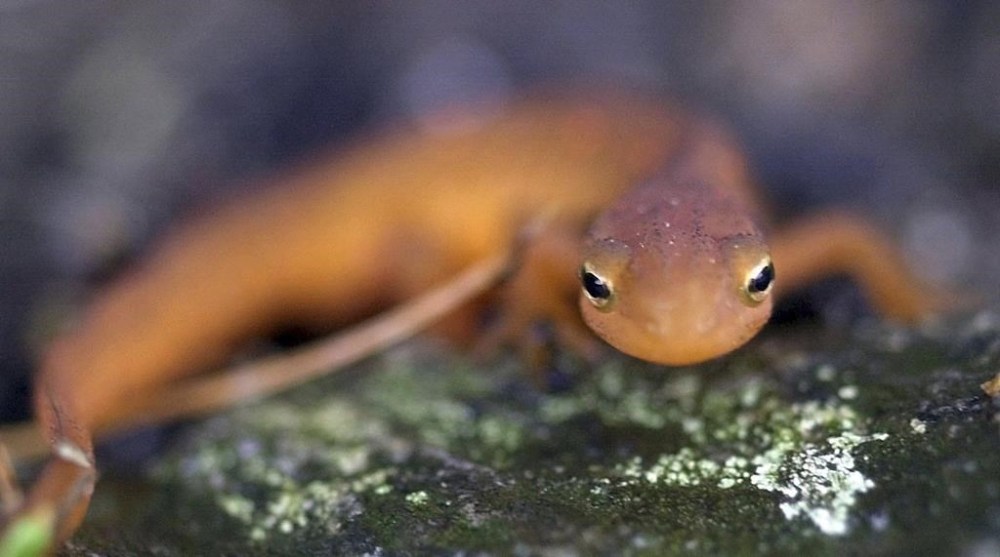
FILE - A spotted newt crawls in the rain on Aug. 1, 2003, in Unity, N.H. The International Union for Conservation of Nature, the leading tracker of global biodiversity, released their new Red List of Threatened Species on Monday, Dec. 11, 2023, at the United Nations climate conference in Dubai. Amphibians are particularly at risk, with 41% under threat of extinction. (AP Photo/Jim Cole/File)

The news was announced at the United Nations climate conference in the United Arab Emirates on Monday. Leaders of the IUCN updated their Red List of Threatened Species, a tracker of biodiversity around the globe. It was mainly bad news. The list includes information on 157,000 species, about 7,000 more than last year’s update.

The IUCN said just over 44,000 species are threatened with extinction. That’s roughly 2,000 more than last year.

“Species around the world are under huge pressure. So no matter where you look, the numbers of threatened species are rising,” said Craig Hilton-Taylor, head of the Red List unit at the IUCN.

Climate change is worsening conditions for about 6,700 species threatened with extinction.

The Central South Pacific and East Pacific green turtle is at greater risk because of climate change, for example. Fewer turtles hatch as higher seas inundate nests. Warming waters can harm its food supply of seagrasses.

The update includes the first broad assessment of the health of freshwater fish species. One-quarter of species — just over 3,000 — face an extinction risk. As climate change raises sea levels, salt water is traveling further up rivers, for example. And these species already face tremendous threats from pollution and overfishing, the IUCN said.

Frogs, salamanders and other amphibians are suffering the most. About 41% of these species are under threat.

“They are climate captives because of higher temperatures, drought — whatever happens amphibians cannot move out of harm’s way and are directly impacted by climate change,” said Vivek Menon, deputy chair of the IUCN’s species survival commission.

There was a bit of good news. Two antelope species are fairing better, although they still have a long way to go before their long-term survival is stabilized. For example, the scimitar-horned oryx, a light-colored animal with curved horns, had previously been categorized as extinct in the wild but is now endangered. It faced a lot of threats: poaching, drought and car accidents all played a role in largely eliminating the species by the turn of the century. But recent efforts to reintroduce the species in Chad have helped and there are now at least 140 adults and more than twice as many calves on a large nature reserve.

IUCN’s director general Grethel Aguilar said it’s clear humans need to act to protect biodiversity and when conservation is done right, it works. To combat the threat posed by climate change, she said fossil fuels need to be phased out, a contentious focus of this year’s COP28 negotiations.

“Nature is here to help us, so let us help it back,” she said.

___

The Associated Press receives support from the Walton Family Foundation for coverage of water and environmental policy. The AP is solely responsible for all content. For all of AP’s environmental coverage, visit https://apnews.com/hub/climate-and-environment

Report Error Submit a Tip

More Stories

Meeting the needs of disabled Indigenous children

Sherry Gott 5 minute read 2:00 AM CDT

Navigating Manitoba’s disability services is difficult under the best circumstances. For Indigenous families, access is further constrained by geography, poverty, jurisdictional confusion, and culturally-inappropriate systems that do not reflect Indigenous approaches to raising and supporting children. Culturally-insensitive intakes, assessments, and treatments in Manitoba also contribute to misunderstanding, misdiagnosis, and inappropriate service responses across the province.

The consequences for Indigenous children with disabilities and their families are profound — they are forced into a system that does not recognize who they are, how they are understood in their communities or what they need to thrive.

Many First Nations families, particularly in remote and northern communities, are faced with the choice of living in their home community with limited or no resources for their child with a disability or relocating to an urban centre to access necessary supports. This further disconnects families from family and community support, connectedness to shared values and teachings and a child’s right to a sense of belonging.

Additionally, First Nations families living with a disabled child experience significant over-involvement with the child welfare system compared to non-Indigenous Manitobans. This is due to a couple of key factors, namely the differing perspectives regarding disabilities between the Western clinical and many First Nations world views and the prevailing systemic default that families be pressured to surrender their disabled child to child and family services care in order to access resources that are otherwise unavailable.

Toronto’s alternative crisis response model deemed a success

Scott Billeck 4 minute read Preview

Toronto’s alternative crisis response model deemed a success

Scott Billeck 4 minute read 2:01 AM CDT

A Toronto emergency response program that helped inspire Winnipeg’s proposed alternative crisis response model has already expanded city-wide, just four years after launching as a pilot project.

The Toronto Community Crisis Service, launched in 2022, has become the city’s fourth emergency service, providing a 24-7, community-based response to people experiencing mental health crises. The service has handled nearly 50,000 calls through 911 and 211, dispatched mobile crisis teams to more than 41,000 incidents, made more than 11,600 referrals to health and social services and resolved the majority of eligible 911 calls without police involvement.

Winnipeg Mayor Scott Gillingham last week proposed creating a similar “fourth crisis response pathway” that would allow 911 calls that aren’t violent or criminal in nature to be transferred to community-based crisis teams.

Under the proposal, which has support from both the Winnipeg Police Service and the Winnipeg Fire Paramedic Service, a centralized crisis dispatch and co-ordination hub would receive triaged calls and match them with citywide response teams, staffed in part through existing community organizations, including the Downtown Community Safety Partnership and The Link’s mobile crisis teams. The goal is to divert appropriate calls away from the WPS and WFPS.

Read
2:01 AM CDT

Crews respond to fire at former restaurant on Main Street

1 minute read Updated: Yesterday at 4:31 PM CDT

For the second time in less than a year, fire broke out in a former restaurant on Main Street.

Winnipeg Fire Paramedic Service crews responded to reports of fire at Boujee Restaurant and Bar, a vacant, single-storey building on the 100 block of Main Street at 5:38 p.m. Sunday. The same building was previously damaged in an October 2025 fire.

Heavy smoke was coming from the building when firefighters arrived on scene. Crews declared the fire under control at 9:40 p.m. No one was found inside the building and no injuries were reported.

The fire is under investigation. No damage estimates were available, but the Winnipeg Fire Paramedic Service stated in a news release Sunday the building sustained significant damage from smoke, fire and water.

240 WestJet flight attendants picket in Winnipeg

Malak Abas 6 minute read Preview

240 WestJet flight attendants picket in Winnipeg

Malak Abas 6 minute read Sunday, Aug. 2, 2026

Winnipeg’s WestJet flight attendants took to the picket line outside of Richardson International Airport on the first day of nationwide strikes Sunday, while inside, frustrated flyers scrambled to re-route cancelled long-weekend flights.

The Canadian Union of Public Employees’ Ontario arm and the airline announced the strike would commence after the strike deadline was passed without a deal early Sunday morning. WestJet attendants have been without a contract since Dec. 31, 2025.

Hours later, the 240 WestJet flight attendants based in Winnipeg had walked off the job and were marching outside of the airport terminal, some carrying signs with slogans including “Tired with WestJet? So are We!” and “Unpaid Work Won’t Fly.”

Key issues causing the stalemate are wages and pay for work on the ground: the union says flight attendants are not being paid for some of that work, while the company says they pay for the work through a “credit hour” system rather than an hourly rate.

Read
Sunday, Aug. 2, 2026

Letters, Aug. 4

7 minute read 2:01 AM CDT

Charge highlights need for action

The recent reporting regarding a Winnipeg Fire Paramedic Service employee accused of violating a protection order, following previous convictions related to criminal harassment and breaches of court orders against former partners, raises concerns that extend beyond a single individual.

I believe this case highlights important questions about how public institutions assess and respond to risks associated with intimate partner violence, stalking, coercive control and repeated violations of court-imposed conditions.

Gender-based violence is a public safety issue. Survivors are encouraged to seek protection orders and to call emergency services for safety and support. When those orders are breached, organizations have a responsibility to carefully consider workplace safety, public safety and survivor safety in their decision-making. Manitobans deserve confidence that public institutions have clear, consistent processes to assess risk and respond appropriately.

‘Definitely a tough one’: Travel delays drag down Sea Bears in 114-90 loss to Vancouver Bandits

Joshua Frey-Sam 5 minute read Preview

‘Definitely a tough one’: Travel delays drag down Sea Bears in 114-90 loss to Vancouver Bandits

Joshua Frey-Sam 5 minute read Sunday, Aug. 2, 2026

The Winnipeg Sea Bears will head into the playoffs on a disheartening note.

Winnipeg’s pro hoops squad had hoped to ride a wave of confidence into the Canadian Elite Basketball League post-season on the strength of locking up the top seed in the Western Conference.

Instead, the Sea Bears ended the regular season after being handed their worst defeat of the season, a 114-90 rout at the hands of the Vancouver Bandits at the Langley Events Centre in British Columbia on Sunday.

“Definitely a tough one, but we got a home game coming next week. Just get ready for that,” said Simon Hildebrandt, who was the only member of the Sea Bears available for a post-game interview.

Read
Sunday, Aug. 2, 2026