As tree species face decline, ‘assisted migration’ gains popularity in Pacific Northwest
Advertisement
Read this article for free:
or
Already have an account? Log in here »
To continue reading, please subscribe:

Digital Subscription
One year of digital access for only $205*
- Enjoy unlimited reading on winnipegfreepress.com
- Read the E-Edition, our digital replica newspaper
- Access News Break, our award-winning app
- Play interactive puzzles
*First annual payment billed as $205.00 + GST for one year. This annual subscription will automatically renew at $233.00 + GST every 52 weeks (10% off the regular annual price of $259.35). Offer available to new and qualified returning subscribers only. Cancel any time.
To continue reading, please subscribe:
Add Free Press access to your Brandon Sun subscription for only an additional
$1 for the first 4 weeks*
- Enjoy unlimited reading on winnipegfreepress.com
- Read the E-Edition, our digital replica newspaper
- Access News Break, our award-winning app
- Play interactive puzzles
*Your next Brandon Sun subscription payment will increase by $1.00 and you will be charged $17.95 plus GST for four weeks. After four weeks, your payment will increase to $24.95 plus GST every four weeks.
Read unlimited articles for free today:
or
Already have an account? Log in here »
Hey there, time traveller!
This article was published 28/12/2023 (1017 days ago), so information in it may no longer be current.
PORTLAND, Oregon (AP) —
As native trees in the Pacific Northwest die off due to climate changes, the U.S. Forest Service, Portland, Oregon and citizen groups around Puget Sound are turning to a deceptively simple climate adaptation strategy called “assisted migration.”
As the world’s climate warms, tree growing ranges in the Northern Hemisphere are predicted to move farther north and higher in elevation.
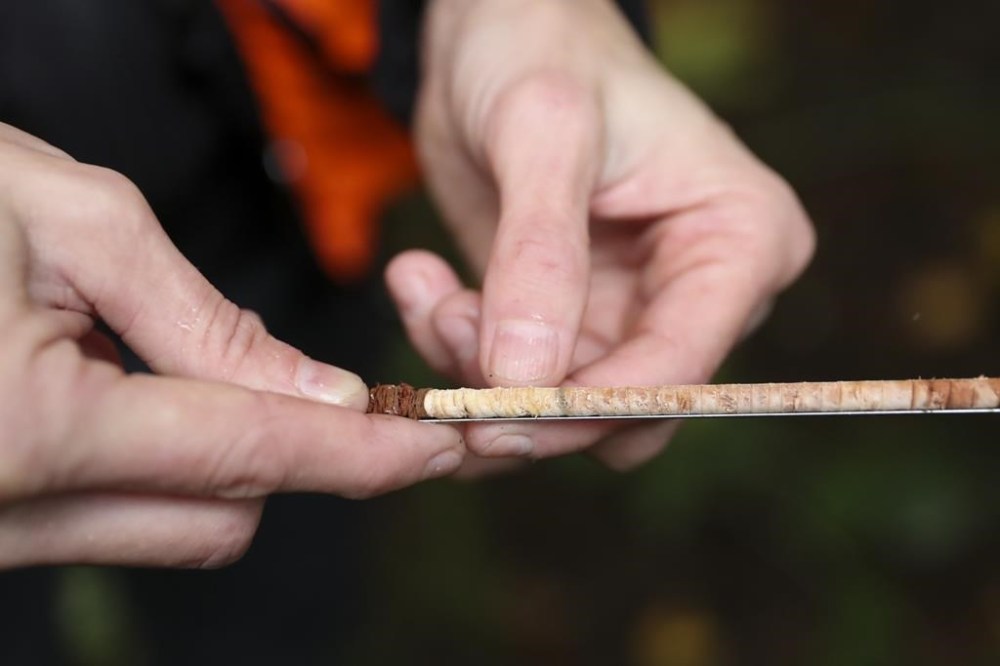
Trees, of course, can’t get up and walk to their new climatic homes. This is where assisted migration is supposed to lend a hand.
The idea is that humans can help trees keep up with climate change by moving them to more favorable ecosystems faster than the trees could migrate on their own.
Yet not everyone agrees on what type of assisted migration the region needs — or that it’s always a good thing.
In the Pacific Northwest, a divide has emerged between groups advocating for assisted migration that would help struggling native trees, and one that could instead see native species replaced on the landscape by trees from the south, including coast redwoods and giant sequoias.
“There is a huge difference between assisted population migration and assisted species migration,” said Michael Case, forest ecologist at the Virginia-based Nature Conservancy.
Case currently runs an assisted population migration experiment at the Conservancy’s Ellsworth Creek Preserve in western Washington.
Assisted population migration involves moving a native species’ seeds, and by extension its genes, within its current growing range.
By contrast, assisted species migration involves moving a species well outside its existing range, such as introducing redwoods and sequoias to Washington.
A third form of assisted migration, called “range expansion,” amounts to moving a species just beyond its current growing range.
Case’s project involves testing whether breeds of native Douglas fir and western hemlock from drier parts of the Pacific Northwest can be used to help western Washington forests adapt to climate change. He says the Nature Conservancy is focusing on population migration because it has fewer ecological risks.
“Whenever you plant something in an area where it is not locally found you increase the risk of failure,” Case said. “You increase the risk of disturbing potential ecosystem functions and processes.”
——
EDITOR’S NOTE: This story is part of a collaboration between The Associated Press and Columbia Insight, exploring the impact of climate on trees in the Pacific Northwest.
——
Population migration is the only form of assisted migration currently practiced nationwide by the Forest Service, according to Dr. David Lytle, the agency’s deputy chief for research and development.
“We are very, very cautious and do not engage in the long-distance movement and establishment of plant material outside and disjunct from the historic range of a species,” said Lytle.
The Forest Service is pursing assisted population migration because it’s likely to have few if any “negative consequences” to ecosystems, he said.
Douglas Tallamy, professor of entomology and wildlife ecology at the University of Delaware, said one potential negative consequence of species migration is the possibility that native caterpillars might not eat the leaves of migrated nonnative tree species. Because caterpillars feed birds and other animals, this could lead to disruptions to the food web.
This could happen if the City of Portland migrates oak species from places to the south, Tallamy noted. “Oaks are the most important plant for supporting wildlife that we have in North America,” he said, “but when you move them out of range, the things that are adapted to eating them no longer have access to them.”
The City of Portland’s Urban Forestry program is currently experimenting with the assisted migration of 11 tree species, including three oak species to the south: California black oak, canyon live oak and interior live oak.
Asked via email about potential ecological disruptions Portland’s City Forester & Urban Forestry Manager Jenn Cairo responded: “We use research from universities, state and federal sources, and local and regional field practitioner experience.”
Another advocate for species migration is the Puget Sound-based, citizen-led PropagationNation. The organization has planted trees in several parks in the Seattle area and has the ambitious goal of “bringing a million coast redwoods and giant sequoias to the Northwest,” according to its website.
The PropagationNation website also recommends planting redwoods in areas where native western red cedar, western hemlock, Sitka spruce and big leaf maple already grow.
Western red cedar, western hemlock and big leaf maple have all seen die-offs and growth declines in recent years tied to climate.
Philip Stielstra, PropagationNation’s founder and president, and a retired Boeing employee, declined to comment for this story.
David Milarch, founder of the Michigan-based Archangel Ancient Tree Archive, which has supplied PropagationNation with redwoods and sequoias, says his trees aren’t intended to replace Pacific Northwest native species.
“All we are doing is extending the range (of redwoods and sequoias) north in the hopes that they will still be here in 100 to 200 years and not join the list of trees that are going extinct,” said Milarch.
Robert Slesak, research forester at the Pacific Northwest Research Station, runs the Forest Service’s Experimental Network for Assisted Migration and Establishment Silviculture, or ENAMES project, which oversees population migration sites in Washington, Oregon and California.
Slesak called moving redwoods north a “risky proposition.” He said he has serious concerns about both assisted species migration and assisted migration efforts that lack experimental rigor.
“Widespread assisted species migration without a lot of experimental results to guide it is risky,” said Slesak. “Everyone knows we need to do some kind of action related to climate, but there’s a real risk of making it worse.”
Nevertheless, with the effects of climate change increasing, it’s a risk increasingly being assumed by public and private groups around the Pacific Northwest.
___

Nathan Gilles is a science writer and journalist based in Vancouver, Washington.
___
Columbia Insight is an Oregon-based nonprofit news website covering environmental issues affecting the Pacific Northwest.
___
Associated Press climate and environmental coverage receives support from several private foundations. See more about AP’s climate initiative here. The AP is solely responsible for all content.