Clocked-out trade talks will curdle supply of British cheese on Canadian shelves
Advertisement
Read this article for free:
or
Already have an account? Log in here »
To continue reading, please subscribe:
Digital Subscription
One year of digital access for only $1.44 a week*
- Enjoy unlimited reading on winnipegfreepress.com
- Read the E-Edition, our digital replica newspaper
- Access News Break, our award-winning app
- Play interactive puzzles
*Billed as $5.77 plus GST every four weeks. After 52 weeks, price increases to the regular rate of $19.95 plus GST every four weeks. Offer available to new and qualified returning subscribers only. Cancel any time.
To continue reading, please subscribe:
Add Free Press access to your Brandon Sun subscription for only an additional
$1 for the first 4 weeks*
- Enjoy unlimited reading on winnipegfreepress.com
- Read the E-Edition, our digital replica newspaper
- Access News Break, our award-winning app
- Play interactive puzzles
*Your next Brandon Sun subscription payment will increase by $1.00 and you will be charged $17.95 plus GST for four weeks. After four weeks, your payment will increase to $24.95 plus GST every four weeks.
Read unlimited articles for free today:
or
Already have an account? Log in here »
Hey there, time traveller!
This article was published 29/12/2023 (1026 days ago), so information in it may no longer be current.
OTTAWA – Canadian supermarkets will soon see their supply of British cheese crumble, as both countries seek fair trade terms following the United Kingdom’s exit from the European Union.
Dec. 31 will mark the end of a temporary arrangement in which Ottawa offered London a special quota of cheese that could be imported under low tariffs.
While Canadians will still be able to buy Wensleydale, Stilton and Red Leicester, most of it will likely be taxed at a much higher rate.
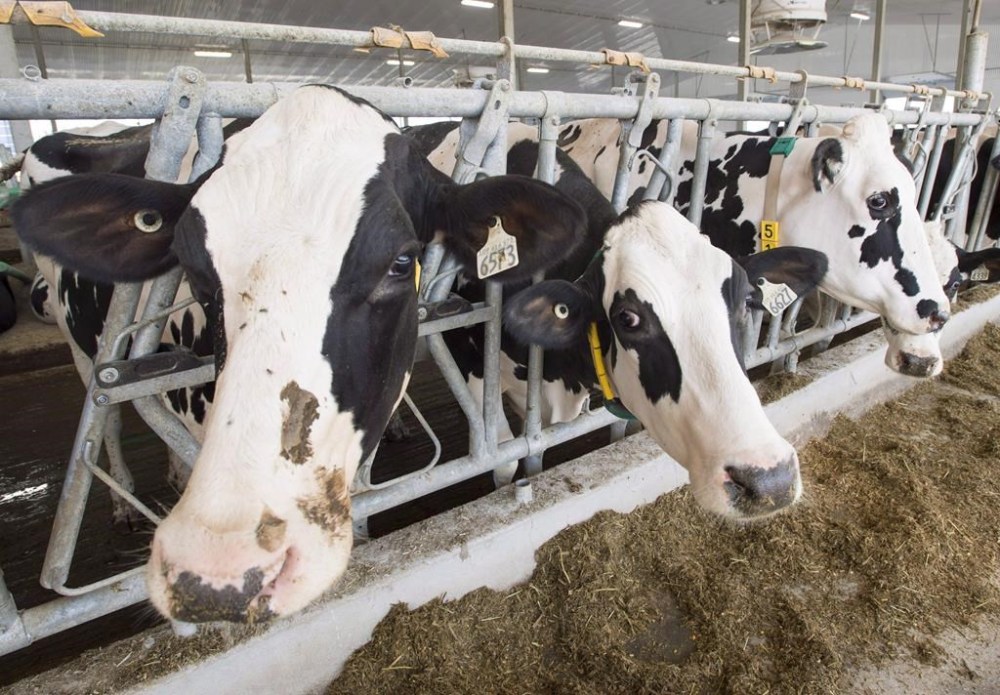
Canada had temporarily offered the U.K. the same tariff rate for cheese that the European Union gets, in the hopes Ottawa would have signed a permanent trade agreement with the country by this year.
Even with that clause nixed, a 2020interim continuity agreement remains in place that eliminates tariffs on 98 per cent of Canadian exports to the U.K..
During the first round of talks for a new, permanent trade deal, Canada told the U.K. it couldn’t have a larger quota for tariff-free cheese than what it had under the previous deal between Canada and the European Union.
Now that the U.K. is no longer getting its own slice of the total quota, this leaves EU countries with more access in 2024. Cheesemakers in places like France and Germany will be able to sell more product at a preferable rate using quota that was originally offered to the British.
Like other countries outside the EU such as Switzerland or Norway, the U.K. will be able to sell some of its cheese at a lower tariff rate, but it will be a drastically smaller amount.
Canadian governments of various stripes have tried to shield the country’s milk, cheese and egg sectors from international competition, with a politically powerful dairy sector urging Ottawa to avoid undercutting the supply-management system in trade deals.
Still, Canadian and British negotiators remain at the table looking for a full trade deal.
The U.K. is holding firm against Canada’s demands to allow for exports of hormone-raised beef, which its envoy in Ottawa has said is a non-starter for the British public.
The country is Canada’s third-largest trading partner when counting both goods and services, and London projects imports to nearly double from 2022 to 2035.
Peter Holmes, a fellow with the U.K. Trade Policy Observatory, says Canada has the upper hand, since the British government wants new trade deals to convince voters it has managed Brexit well.
“Canada is certainly not going to lean over backwards to give Britain what it wants to make the (trade agreement) work smoothly,” said the retired University of Sussex professor.
“Trade with the U.K. doesn’t matter that much to Canada (compared to) the U.K. getting this symbolic post-Brexit trade policy up and running.”
This week, Global Affairs Canada confirmed that Trade Minister Mary Ng had not yet taken the first step of having Parliament ratify the country’s membership in a Pacific Rim trade bloc.
In March, Ng had praised the U.K.’s completion of negotiations to join the Comprehensive and Progressive Agreement for Trans-Pacific Partnership, which covers a smaller range of areas than a bilateral trade deal.
But for that to be finalized, countries like Canada need to pass domestic legislation, and Ng hasn’t served the formal notice that her department says will start a 21-day clock for the legislation to be tabled.
Holmes said the disagreements over cheese access and beef hormones are likely causing Canada to stall its final approval.
“Canada is using its leverage on trade policy with the U.K., not to get market access in the U.K., but to put diplomatic pressure on the British,” said Holmes, who briefly taught at the University of British Columbia.
“It’s an example of just how Brexit has put Britain into tremendously weak negotiating position.”
In a statement, Global Affairs Canada said it has good relations with the U.K., noting Canada was first to sign an interim trade agreement with the country after it left the European Union in 2020.
“Steady progress has been made on (free-trade deal) negotiations, and both sides are committed to a comprehensive and ambitious outcome,” wrote spokesman Pierre Cuguen.
An agreement “will be tailored to the bilateral trade relationship, and all areas across the scope of an ambitious agreement are subject to discussion,” he said.
He added that the ninth round of talks will take place in February, a month before the negotiations hit their two-year anniversary.
A spokeswoman for the British Department for Business and Trade said the U.K. can still sell cheese to Canada through World Trade Organization rules.
“The U.K. has a right to access Canada’s dairy market at the WTO. We are in constant discussion with dairy farmers and producers about the potential changes at the end of the year, including ensuring that they have all the information they need to prepare,” she said in a written statement.

“We also continue to talk to Canada about this issue, emphasizing U.K. exports benefit businesses on both sides of the Atlantic and demand in Canada for British cheese is on the rise, with exports up 11 per cent this year.”
The department declined to comment on reporting by Politico, which The Canadian Press has not verified, that the British government had slowed its trade talks with Ottawa in the hopes of signing a deal with the U.S. ahead of next year’s American presidential election.
“We don’t comment on leaks,” the department said. “We continue to prioritize securing a good agreement over arbitrary deadlines.”
This report by The Canadian Press was first published Dec. 29, 2023.
— With files from Rosa Saba in Toronto.