

Digging up history
Preston’s collection offers incredible stories of buried tombs, Native American ancestors and more
Advertisement
Read this article for free:
or
Already have an account? Log in here »
To continue reading, please subscribe:
Monthly Digital Subscription
$1 per week for 24 weeks*
- Enjoy unlimited reading on winnipegfreepress.com
- Read the E-Edition, our digital replica newspaper
- Access News Break, our award-winning app
- Play interactive puzzles
*Billed as $4.00 plus GST every four weeks. After 24 weeks, price increases to the regular rate of $19.95 plus GST every four weeks. Offer available to new and qualified returning subscribers only. Cancel any time.
Monthly Digital Subscription
$4.99/week*
- Enjoy unlimited reading on winnipegfreepress.com
- Read the E-Edition, our digital replica newspaper
- Access News Break, our award-winning app
- Play interactive puzzles
*Billed as $19.95 plus GST every four weeks. Cancel any time.
To continue reading, please subscribe:
Add Free Press access to your Brandon Sun subscription for only an additional
$1 for the first 4 weeks*
*Your next subscription payment will increase by $1.00 and you will be charged $16.99 plus GST for four weeks. After four weeks, your payment will increase to $23.99 plus GST every four weeks.
Read unlimited articles for free today:
or
Already have an account? Log in here »
Hey there, time traveller!
This article was published 30/12/2023 (835 days ago), so information in it may no longer be current.
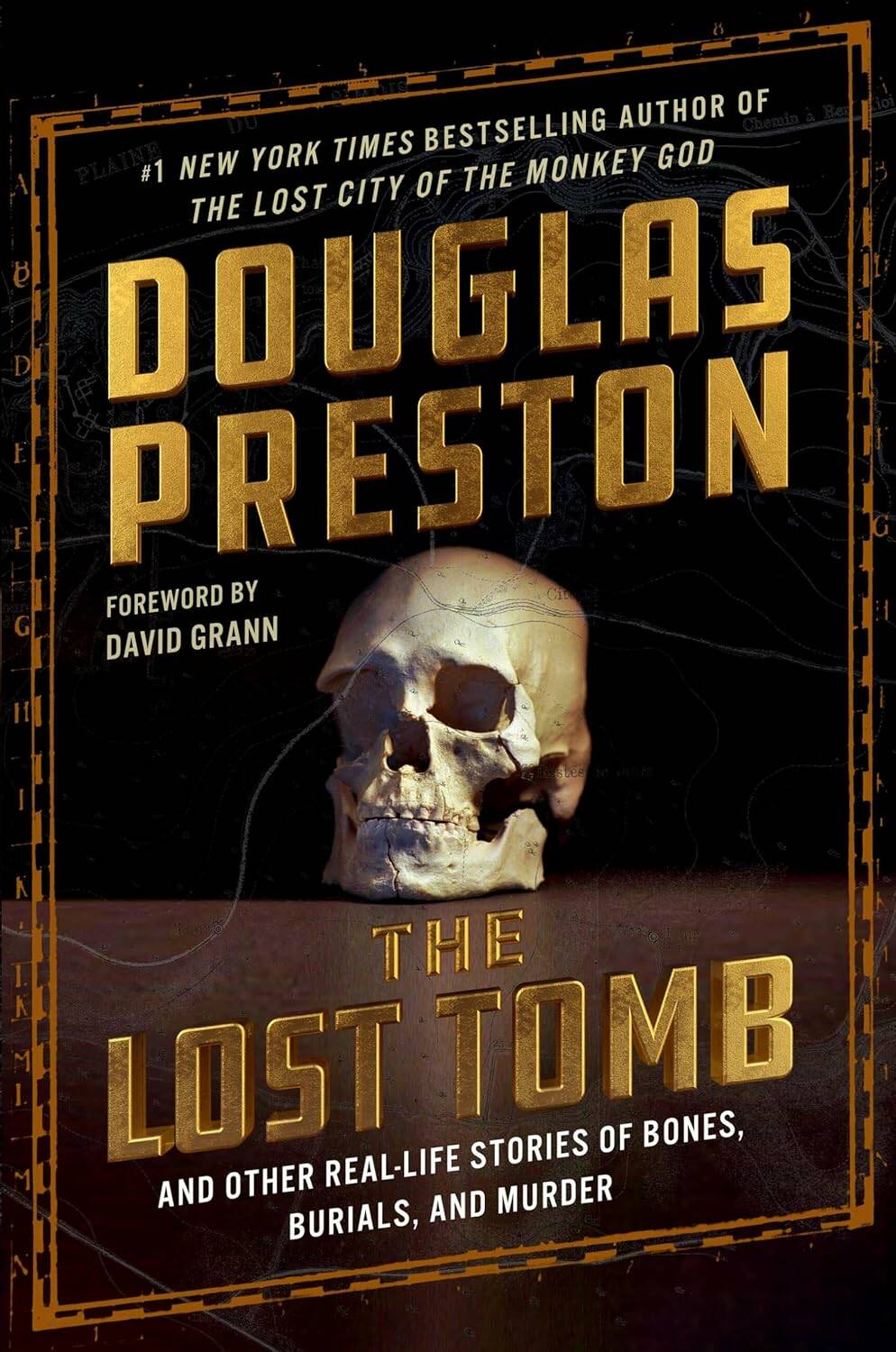
Douglas Preston’s The Lost Tomb as a book is a rat-tat-tat of one true and fascinating event after another — some violent, vengeful and venomous, others suspenseful and savory, 13 true stories in all. And well told they are.
In fact, a couple of Preston’s tales are so scary in his telling that you may wish to avoid reading late at night.
Douglas Preston is the hugely successful author of 38 books, fiction and non-fiction, and the co-author (with Lincoln Child) of the FBI Special Agent Pendergast series of fiction thrillers. He divides his time between Maine and New Mexico.

R.F. Morgan / Wikimedia Commons
This diagram shows isometric, plan and elevation images of KV5 taken from a 3D model. Kent Weeks discovered the entrance in 1987.
In two very lucid chapters in The Lost Tomb — Skeletons in the Closet and the titular closing story — Preston elicits the uncomfortable question indigenous people around the world keep asking: who owns the bodies and artifacts of their ancestors, if not them? How would we feel if the bones of our forebearers were stuffed in boxes piled to the ceiling in a museum?
In Skeletons in the Closet, Preston explores the ongoing combat between American museums and Native American tribes for return to them of the bodies and bones of their ancestors for reburial — only then, they believe, will their forefathers find rest.
The museums say they need the bones for continuing scholarship and study but, Preston counters, “How, say, could the needs of science compare with the fact that their grandfathers’ spirits are forced to wander unceasingly because their bones are in boxes at the Smithsonian?” It is an uncomfortable question.
Preston writes that the Native American Rights Fund estimates there might be as many as 600,000 specimens — anything from a few bones to complete skeletons or mummies — in museums, historical societies, universities and private collections in the U.S., and not just of Native Americans but also of others: Aleut, Inuit and native Hawaiian. They all want their history back.
In the title chapter, Ahmed is an aristocratic young man from a prominent Egyptian family and is chief supervisor of the dig in KV5, the lost tomb of the book’s title. Preston, visiting the tomb in Egypt with Ahmed, asks him how he personally feels about working to restore something of his ancestors that may someday challenge the grandeur of the 1920s find of Tutankhamun’s sepulcher of vast riches, also in the Valley of the Kings.
Ahmed ponders the question. “I can’t express the feeling, but it’s not so strange for me to be in this tomb,” he says. “I feel something in there about myself. I am descended from these people who built this tomb.” When inside the tomb, he says, “I can feel their blood is in me.”
Thanks to Preston, Ahmed’s reply illustrates just how much this meeting with his ancestral past shines a light on his intellect and makes him content being in fellowship with the dead. But with other indigenous people it’s not what they have that satisfies their spirituality, but what has been stolen from them that prevents it from being fulfilled.
Incidentally, the site of the tomb Ahmed is supervising was vaguely noted by Napoleon’s passing army in his Egyptian expedition in 1798-1801. They passed it by, presumably because it was just another hole in the ground filled with rubble.

Deborah Feingold photo
Douglas Preston has written dozens of books of fiction and non-fiction, including co-authoring the Special Agent Pendergast thrillers with Lincoln Child.
More significantly, his soldiers elsewhere accidently discovered the precious Rosetta Stone that allowed Egyptian hieroglyphs to be translated for the first time, a momentous leap forward in understanding the Egyptian past.
Preston explains how archaeologist Kent Weeks discovered the entrance to KV5 in 1987. It was all because of a tourist bus turnaround that would, if built, have sealed the entrance to the tomb in asphalt. That’s why Weeks had to find tomb — and did, thanks to Napoleon and old maps and reports. The turnaround was cancelled.
Preston tells with ardor what happened years later, when Weeks found himself 30 metres inside the passageway to the tomb and spotted ahead of him a doorway, unopened for 3,100 years.
Weeks expected to enter a small plain room marking the end of the tomb. Instead, it was the beginning of a 30-metre hallway with 20 doorways lining it, some opening into whole suites of rooms. At the end of it was a statue of Osiris, the god of resurrection. In front of Osiris the corridor became a T, branching into two transverse passageways each 24 metres long and featuring 32 more rooms. A descending staircase was blocked by rubble.
Says Preston: “Because of the tomb’s size and complexity, Weeks had to consider the possibility that it was a catacomb for as many as 50 of the sons of Ramesses the Great — the first example of a royal mausoleum in ancient Egypt.”
As of today, says Preston, less than 10 per cent of KV5 has been cleared of rubble.

Preston spent time with Weeks, now 82, and Weeks’ wife in the tomb.
The Lost Tomb
“I run my fingers along the ancient chisel marks, which are as fresh as if they were made yesterday, and I think of the workmen who carved out this room, three millennia ago,” he writes. “Crouching in the hot stone chamber, I suddenly get a powerful sense of the enormous religious faith of the Egyptians. Nothing less could have motivated an entire society to pound these tombs out of rock.”
Preston’s other real-life stories in The Lost Tomb include The Clovis Point Con, Cannibals of the Canyon, Trial by Fury, The Monster of Florence, The Skeletons at the Lake and The Mystery of Hell Creek.
All are eloquent.
Barry Craig is a retired journalist.