Genealogy test led to Ibrahim Ali’s murder arrest, but methods face ethical debate
Advertisement
Read this article for free:
or
Already have an account? Log in here »
To continue reading, please subscribe:

Digital Subscription
One year of digital access for only $205*
- Enjoy unlimited reading on winnipegfreepress.com
- Read the E-Edition, our digital replica newspaper
- Access News Break, our award-winning app
- Play interactive puzzles
*First annual payment billed as $205.00 + GST for one year. This annual subscription will automatically renew at $233.00 + GST every 52 weeks (10% off the regular annual price of $259.35). Offer available to new and qualified returning subscribers only. Cancel any time.
To continue reading, please subscribe:
Add Free Press access to your Brandon Sun subscription for only an additional
$1 for the first 4 weeks*
- Enjoy unlimited reading on winnipegfreepress.com
- Read the E-Edition, our digital replica newspaper
- Access News Break, our award-winning app
- Play interactive puzzles
*Your next Brandon Sun subscription payment will increase by $1.00 and you will be charged $17.95 plus GST for four weeks. After four weeks, your payment will increase to $24.95 plus GST every four weeks.
Read unlimited articles for free today:
or
Already have an account? Log in here »
Hey there, time traveller!
This article was published 18/01/2024 (1000 days ago), so information in it may no longer be current.
VANCOUVER – Forensic genealogy is still in the research and development phase, and while its value is clear for solving crime, the ethics debate has a long way to go, says an expert in the field.
“Genealogy has kind of taken on a life of its own and we’re catching up,” Nicole Novroski, an assistant professor of forensic genetics at the University of Toronto, said in an interview.
The debate was highlighted in an investigation by The Canadian Press that revealed this week undercover police in Burnaby, B.C., disguised themselves as tea marketers to secretly collect the DNA of people attending a 2018 Kurdish New Year celebration.
They were investigating the murder of a 13-year-old girl, whose body was found sexually assaulted and strangled in a Burnaby park.
Police handed out free tea samples in numbered cups that were later swabbed for DNA, court recordings revealed.
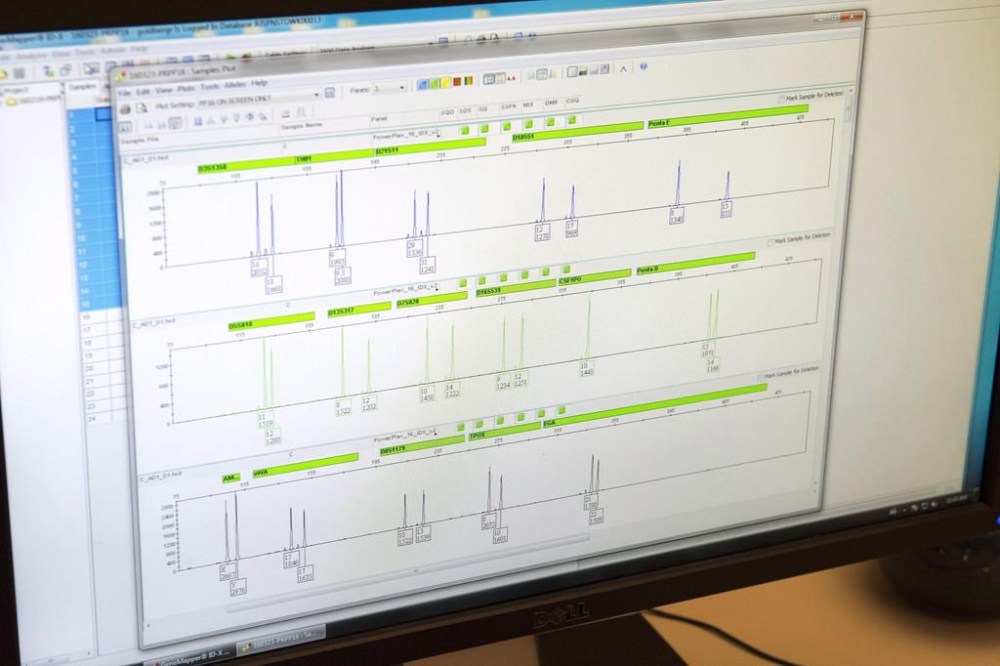
DNA testing and forensic genealogical techniques led to the identification of the suspect’s brother, and that breakthrough led to the arrest of Ibrahim Ali.
Ali was convicted last month of first-degree murder of the girl whose name is protected by a publication ban.
The police operation sparked debate over whether the secret collection of DNA violated the civil liberties of Kurdish community members who attended the celebration, while others, including B.C. Premier David Eby, backed the sting because it led to Ali’s identification and arrest.
Novroski did not comment on case specifics, but said forensic genealogy — police use of DNA analysis to identify genetic links to people involved in unsolved crimes — is still in its infancy.
“Right now, is like that hot-spot time for genealogy and working out all of the kinks,” she said.
She said the use of the science exploded after it led to the 2018 arrest of the Golden State Killer, who committed at least 13 murders, 51 rapes and 120 burglaries across California between 1974 and 1986.
In that case, the unidentified suspect’s DNA was sent to an ancestry-tracing website, which identified several relatives of the killer, Joseph James DeAngelo.
“I’d say in the last five years we’ve really seen investigators taking advantage of the science to develop new investigative leads for both active and cold-case violent crime and identifications,” she said.
The interest led to private companies in the United States, such as Parabon NanoLabs in Virginia, offering forensic lab services to help identify suspects in cold cases, Novroski explained.
One of the “major issues facing forensic genealogy” is the outsourcing of DNA to private companies, she said.
“That potentially impacts the chain of custody if you’re sending a sample to an unaccredited, private company and you don’t know how they’re handling the sample because it’s not kept within one of our accredited forensic labs,” Novroski said.
However, she is not aware of any Canadian lab, public or private, that offers genetic genealogical services, which she said is likely why so many Canadian police agencies outsource to the United States.
Parabon NanoLabs was used in the Ali investigation. It was also the subject of a pretrial abuse-of-process application filed by Ali’s lawyers that ultimately failed, something cited among 25 grounds submitted in a notice of appeal of the conviction.
The notice of appeal, filed Dec. 11, asserts “the court erred in its consideration and scrutiny of the abusive conduct of using Parabon NanoLabs and the associated privacy concerns.”
During a pretrial abuse-of-process application by the defence, police testified that they chose Parabon because it was able to conduct familial testing to the sixth degree of relatedness, which was much more advanced than Canadian labs at the time.
One officer testified at pretrial hearings that DNA collected by police was first analyzed at the RCMP’s National Forensic Laboratory in Vancouver to see if it matched DNA in semen found inside the victim. If a sample was sent on to Parabon for further genealogical testing, it was numbered and no identifying information was ever included, he said.
The officer said only the DNA sample found inside the victim, DNA from persons of interest and the one sample from the 2018 undercover operation was sent to the U.S. lab.
The officer testified that all DNA samples sent to the RCMP lab were to be destroyed when they were no longer needed.
Crown lawyer Daniel Porte said in December 2022 that Parabon had contractually agreed to keep all of the information classified.
Paula Armentrout, vice-president of Parabon NanoLabs, said in a statement on Friday that it is a private company, that all DNA samples are “consumed” during analysis and the U.S. federal government has no access to analyses.
“Parabon adheres to a strict privacy policy, ensuring that the information and genetic data provided by its customers is handled with the utmost confidentiality and security,” the email said.
Sgt. Kim Chamberland of the RCMP National Forensic Laboratory Services said in an email Wednesday that the lab “does not enter profiles generated from known samples, which includes warrant samples from persons of interest, cast-off samples, or voluntary samples into any database or databank.”
“For a specific investigation, the profiles generated from any known samples can only be used for comparison purposes to profiles that have been generated from the crime scene samples for that specific investigation.”
Chamberland said she could not comment on the Ali case, and did not immediately respond to requests for comment about whether police intend to implement forensic genetic genealogical testing in Canada.
While the ethics debate continues, Novroski said legislation around forensic genealogy has not caught up to the science.
“But I think the conversations are being had,” she said. “The genealogy cases are in the media. There’s no way that the federal government or policymakers aren’t taking notice.”
The United States introduced guidelines for forensic genetic genealogical DNA analysis in 2019, which Novroski said could be used as a framework for labs in Canada.
She said it’s difficult to comment on the merits of surreptitious collection versus informed consent collection as different jurisdictions have various laws around investigative techniques.
“I think the best-practice approach moving forward in genetic genealogy is to be paying attention to what the federal government or how federal agencies are responding, and to be staying in accordance with the most up-to-date policies and regulations to ensure that you’re not compromising the integrity of that sample (and) you’re not compromising the integrity of the investigation.”
This report by The Canadian Press was first published Jan. 18, 2024.