More Quebecers donated organs after MAID but Canada needs standardized data: study

Advertisement

Advertise with us

Quebec researchers say organ donation appears to be increasing among people who received an assisted death but they're calling for greater collaboration to support those who choose to give, along with respect for their autonomy and dignity.

Read this article for free:


or

Already have an account? Log in here »

To continue reading, please subscribe:

Subscribe and receive a limited-edition Free Press branded hat or tote.

Digital Subscription

One year of digital access for only $205*

  • Enjoy unlimited reading on winnipegfreepress.com
  • Read the E-Edition, our digital replica newspaper
  • Access News Break, our award-winning app
  • Play interactive puzzles

*First annual payment billed as $205.00 + GST for one year. This annual subscription will automatically renew at $233.00 + GST every 52 weeks (10% off the regular annual price of $259.35). Offer available to new and qualified returning subscribers only. Cancel any time.

To continue reading, please subscribe:

Add Free Press access to your Brandon Sun subscription for only an additional

$1 for the first 4 weeks*

  • Enjoy unlimited reading on winnipegfreepress.com
  • Read the E-Edition, our digital replica newspaper
  • Access News Break, our award-winning app
  • Play interactive puzzles
Start now

*Your next Brandon Sun subscription payment will increase by $1.00 and you will be charged $17.95 plus GST for four weeks. After four weeks, your payment will increase to $24.95 plus GST every four weeks.

Hey there, time traveller!
This article was published 29/01/2024 (930 days ago), so information in it may no longer be current.

Quebec researchers say organ donation appears to be increasing among people who received an assisted death but they’re calling for greater collaboration to support those who choose to give, along with respect for their autonomy and dignity.

Researchers say 64 people in Quebec donated their organs after receiving medical assistance in dying between 2018 and the end of 2022 and that donations from this group rose to comprise 14 per cent of all gifted organs in the final year of their study.

They analyzed data on all MAID recipients referred to Transplant Québec over the five-year study period for possible organ donation and found the number of donors climbed to 24 in 2022 — up from eight in 2018.
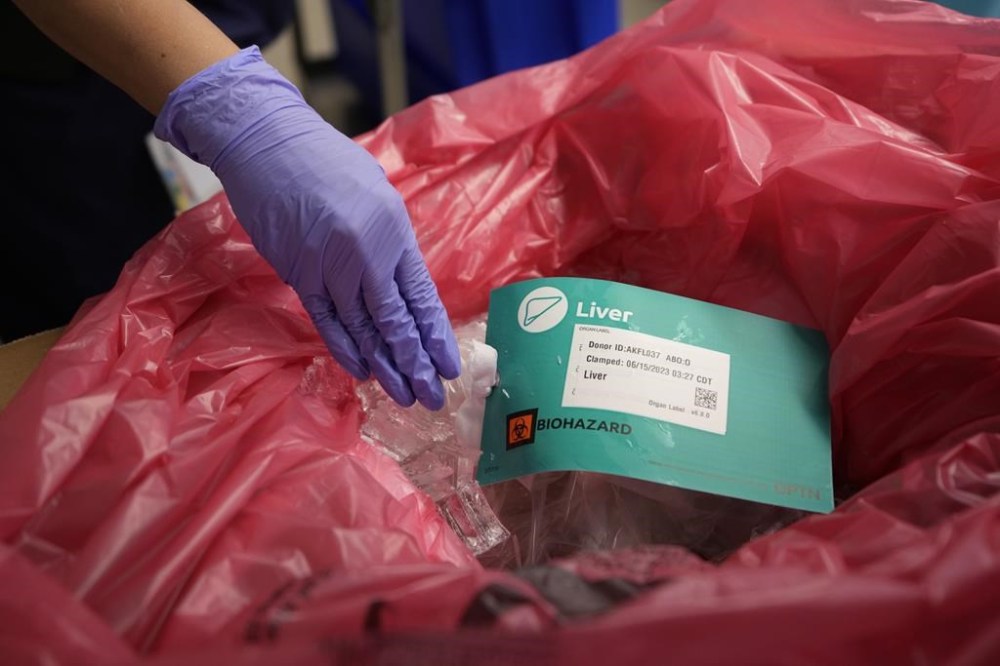
A study from Quebec says 64 people donated their organs after medical assistance in dying over five years, representing 14 per cent of all such donations in that province in 2022. A liver is prepared for transport after it has been removed from an organ donor June 15, 2023, in Jackson, Tenn. THE CANADIAN PRESS/AP-Mark Humphrey

Of 245 people referred after MAID, 82 were retained. From those, 64 were found medically suitable and donated a total of 182 organs — mostly kidneys, but also the liver and lungs, in many cases. Those are the same organs usually retrieved through standard donation after someone has died.

Among the 163 referred patients who did not donate, 91 were deemed medically unsuitable and 21 withdrew from MAID entirely.

However, 34 patients — nearly 21 per cent — refused for unspecified reasons that demand further study, said lead author Dr. Matthew Weiss, medical director at Transplant Québec.

Weiss said some people may have decided not to donate after learning they would be required to receive MAID medications in hospital instead of at home, so that their organs could be retrieved quickly after their heart stopped beating.

“One of the things that we need to understand better is what are the barriers?” he said of MAID-related organ donation.

“I strongly suspect the fact that they can’t die at home is a major contributor, but I can’t say that with certainty right now,” Weiss said from Thun, Switzerland, where he was speaking about Canada’s ethical and clinical framework of MAID-related organ donation.

Switzerland does not allow such donations, unlike Belgium, the Netherlands and Spain.

Weiss said he hopes the research can help create a consortium of organ donation organizations across Canada that standardizes data collection.

The study, published Monday in the Canadian Medical Association Journal, says that at the start of the research period, a total of 164 donors in Quebec gifted organs, with eight of them having undergone MAID. In 2022, a total 171 people donated their organs and 24 had received MAID.

The overall number of organ recipients in Quebec jumped significantly over the same time period — from 968 in 2018 to 3,663 in 2022, following the lifting of COVID-19 restrictions.

There were no donations from MAID recipients between March and October 2020 because of limited resources and concerns around donor-to-recipient transmission of the SARS CoV-2 virus, the study says. Eight people donated organs that year, compared to 24 in 2022.

During the study period, 10,124 people had MAID in Quebec, the study says.

In British Columbia, BC Transplant spokeswoman Elaine Yong said 24 people donated their organs after receiving MAID between 2016 and 2022.

“The perspective of BC Transplant, and other organ donation organizations across Canada, is that organ donation should be considered a normal part of quality end-of-life care, and every eligible person deserves the opportunity to be considered an organ donor, including someone choosing medical assistance in dying,” Yong said in an emailed statement.

Weiss said the coding system in Quebec’s database should be updated to include more details about why some people declined to donate their organs.

“This is such a new process that the databases weren’t even set up to code this type of donation,” said Weiss, also a pediatric critical care physician in Quebec City.

“If you have a patient who is undergoing MAID there’s no legal obligation to mention (donation) to that patient. And therefore there’s no organization that (records) the total number of patients who have been approached and who have or have not consented to donation.”

Patients who die in an intensive care unit or emergency department are referred to a transplant organization for a donation eligibility assessment.

A MAID provider should be educated to discuss organ donation with eligible patients, excluding those who have metastatic cancer because of the risk of transmitting the disease to a recipient, Weiss said.

At that point, the provider could contact an organ donation organization to assess whether the person is suitable to become a donor, he added.

However, he said patients’ autonomy and dignity must be respected by doctors and nurse practitioners who provide MAID, though the latter group is currently not permitted to work in that capacity in Quebec.

“Under no circumstances do we want to mix the decision of MAID and organ donation. We only want the mention of donation to even become a possibility after the decision to pursue MAID is finalized,” Weiss said.

“As you can imagine, the worst thing that could happen is the public thinks we are encouraging people to do MAID to get their organs.”

If MAID is legalized in Canada for people whose sole underlying condition is a mental illness, Weiss said they should initially be excluded from donating their organs.

“We’re going to wait because we want to make sure that system, independent of us, is well-established and accepted and functioning well without controversy before we add the additional controversy of organ donation.”

This report by The Canadian Press was first published Jan. 29, 2024

Canadian Press health coverage receives support through a partnership with the Canadian Medical Association. CP is solely responsible for this content.


Report Error Submit a Tip

More Stories

Impaired driving victim honoured

Morgan Modjeski 5 minute read Preview

Impaired driving victim honoured

Morgan Modjeski 5 minute read Yesterday at 6:16 PM CDT

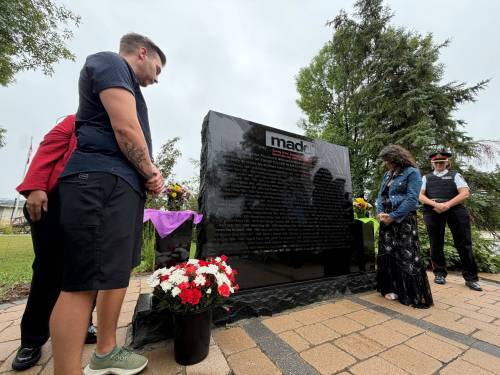
Ten years after he was killed in a collision involving an impaired driver in 2016, Robbie Anderson’s name has been added to MADD Canada’s Manitoba Memorial honouring those killed in drunk and drug-impaired-related crashes.

His older brother Chris Anderson, was one of two dozen people who gathered at the Glen Eden Funeral Home and Cemetery in West St. Paul Saturday to remember their loved ones, 86 victims whose names are etched into the granite monument near the heart of the graveyard.

“It’s heavy,” said Anderson when asked what it was like to be part of the ceremony and see his brother’s name added. “It’s been something I’ve been thinking about for a while.”

Grateful for MADD’s work and its efforts to honour Robbie, who was 27 when he died, Anderson said his brother, represented the “absolute best of us.”

Read
Yesterday at 6:16 PM CDT

West Kildonan Industrial residents call for speed bumps after child hit by truck

Morgan Modjeski 3 minute read Preview

West Kildonan Industrial residents call for speed bumps after child hit by truck

Morgan Modjeski 3 minute read Updated: Yesterday at 3:09 PM CDT

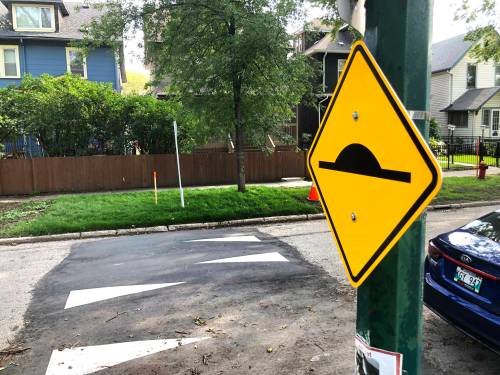
Residents in the West Kildonan Industrial neighbourhood are calling on the city to install speed bumps in their area after a child was hit and dragged by a vehicle Thursday.

Katelyn Bemister lives near the area where the child — who was hospitalized as a result of the incident and has been upgraded to stable condition — was struck. She says people frequently speed in the area.

“They’re going really fast, and they’re not really paying attention at all to the pedestrians in the area,” says Bemister.

In video supplied to the Free Press by a resident, the child can be seen riding a bike down a sidewalk along the 500 block of North Point Boulevard.

Read
Updated: Yesterday at 3:09 PM CDT

Foster mom pleads guilty to assault that left six-year-old-girl paralyzed

Dean Pritchard 4 minute read Preview

Foster mom pleads guilty to assault that left six-year-old-girl paralyzed

Dean Pritchard 4 minute read Friday, Aug. 14, 2026

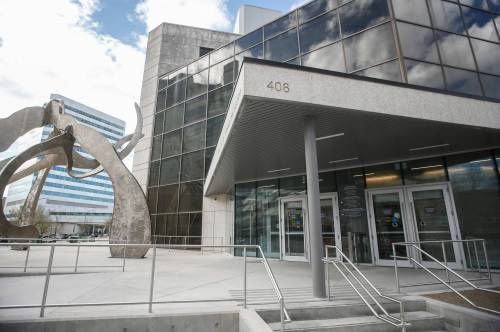
A Winnipeg foster mother has admitted to violently assaulting her ill foster daughter and leaving her paralyzed after the girl resisted the woman’s efforts to provide her with medication, a court has heard.

Marilyn Keno, 26, pleaded guilty Friday to one count of aggravated assault.

Keno remains in custody and will be sentenced at a later date following the completion of a court-ordered pre-sentence report.

The maximum sentence for aggravated assault is 14 years in prison. Crown attorney Alanna Littman and defence lawyer Jeremy Kostiuk did not disclose what sentences they will be recommending.

Read
Friday, Aug. 14, 2026

Development turning long-vacant gas station in Selkirk into commercial hub

By Tiago Resko 2 minute read Preview

Development turning long-vacant gas station in Selkirk into commercial hub

By Tiago Resko 2 minute read Thursday, Aug. 13, 2026

A plot of land that has sat vacant in Selkirk for 30 years is being redeveloped to host new businesses in the heart of the city.

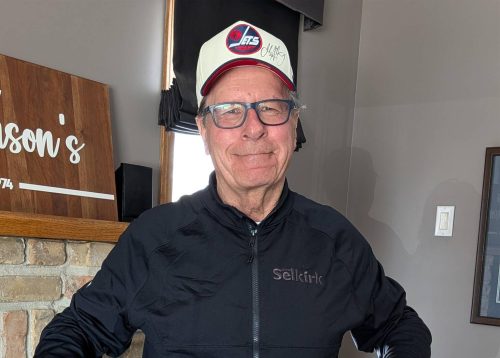
The former gas station site on Main Street — between Rosser and Pacific avenues — will be turned into a commercial hub that will be home to six local businesses, and will be a big stepping stone for economic growth in Selkirk, Mayor Larry Johannson said Thursday.

“For decades this site has been a reminder of what once was. Today, it represents what is possible when investors see the potential of our community and choose to be a part of its future,” he said in a news release announcing the project and Thursday’s groundbreaking.

“This development reflects confidence in Selkirk, our economy and the direction we are heading.”

Read
Thursday, Aug. 13, 2026

Corroded Arlington overpass yields way for new hope of spanning urban chasm

Melissa Martin 6 minute read Preview

Corroded Arlington overpass yields way for new hope of spanning urban chasm

Melissa Martin 6 minute read Yesterday at 2:00 AM CDT

It’s an interesting quirk of timing, perhaps, that the end of two of Winnipeg’s most unlovely features are coming into view in the same few weeks. The rail lines that split the city in half, and the bridge that was built to tie it back together. The original problem, and the solution.

And in the confluence of those two ends, we have an opportunity to dream of what a better Winnipeg can be.

At a news conference on Wednesday, former federal transport minister Lloyd Axworthy laid out a vision for a rail line bypass that would remove more than 120 railway crossings from Winnipeg, route them through Crown and Manitoba Hydro corridor land south of the city, and reclaim 250 acres in the urban core for greenspace and development.

The next step is to focus on how to make it happen. Nothing of this scope comes easy. This new bypass plan emerged from a two-year feasibility study that Premier Wab Kinew had tasked Axworthy with back in 2024. Now, Axworthy will helm a new 90-day feasibility study zooming in on that route specifically.

Read
Yesterday at 2:00 AM CDT

More Quebecers donated organs after MAID but Canada needs standardized data: study

Camille Bains, The Canadian Press 5 minute read Preview

More Quebecers donated organs after MAID but Canada needs standardized data: study

Camille Bains, The Canadian Press 5 minute read Monday, Jan. 29, 2024

Quebec researchers say organ donation appears to be increasing among people who received an assisted death but they're calling for greater collaboration to support those who choose to give, along with respect for their autonomy and dignity.

Researchers say 64 people in Quebec donated their organs after receiving medical assistance in dying between 2018 and the end of 2022 and that donations from this group rose to comprise 14 per cent of all gifted organs in the final year of their study.

They analyzed data on all MAID recipients referred to Transplant Québec over the five-year study period for possible organ donation and found the number of donors climbed to 24 in 2022 — up from eight in 2018.

Of 245 people referred after MAID, 82 were retained. From those, 64 were found medically suitable and donated a total of 182 organs — mostly kidneys, but also the liver and lungs, in many cases. Those are the same organs usually retrieved through standard donation after someone has died.

Read
Monday, Jan. 29, 2024