Are insects drawn to light? New research shows it’s confusion, not fatal attraction
Advertisement
Read this article for free:
or
Already have an account? Log in here »
To continue reading, please subscribe:

Digital Subscription
One year of digital access for only $205*
- Enjoy unlimited reading on winnipegfreepress.com
- Read the E-Edition, our digital replica newspaper
- Access News Break, our award-winning app
- Play interactive puzzles
*First annual payment billed as $205.00 + GST for one year. This annual subscription will automatically renew at $233.00 + GST every 52 weeks (10% off the regular annual price of $259.35). Offer available to new and qualified returning subscribers only. Cancel any time.
To continue reading, please subscribe:
Add Free Press access to your Brandon Sun subscription for only an additional
$1 for the first 4 weeks*
- Enjoy unlimited reading on winnipegfreepress.com
- Read the E-Edition, our digital replica newspaper
- Access News Break, our award-winning app
- Play interactive puzzles
*Your next Brandon Sun subscription payment will increase by $1.00 and you will be charged $17.95 plus GST for four weeks. After four weeks, your payment will increase to $24.95 plus GST every four weeks.
Read unlimited articles for free today:
or
Already have an account? Log in here »
Hey there, time traveller!
This article was published 30/01/2024 (971 days ago), so information in it may no longer be current.
WASHINGTON (AP) — Like a moth to flame, many scientists and poets have long assumed that flying insects were simply, inexorably drawn to bright lights.
But that’s not exactly what’s going on, a new study suggests.
Rather than being attracted to light, researchers believe that artificial lights at night may actually scramble flying insects’ innate navigational systems, causing them to flutter in confusion around porch lamps, street lights and other artificial beacons.
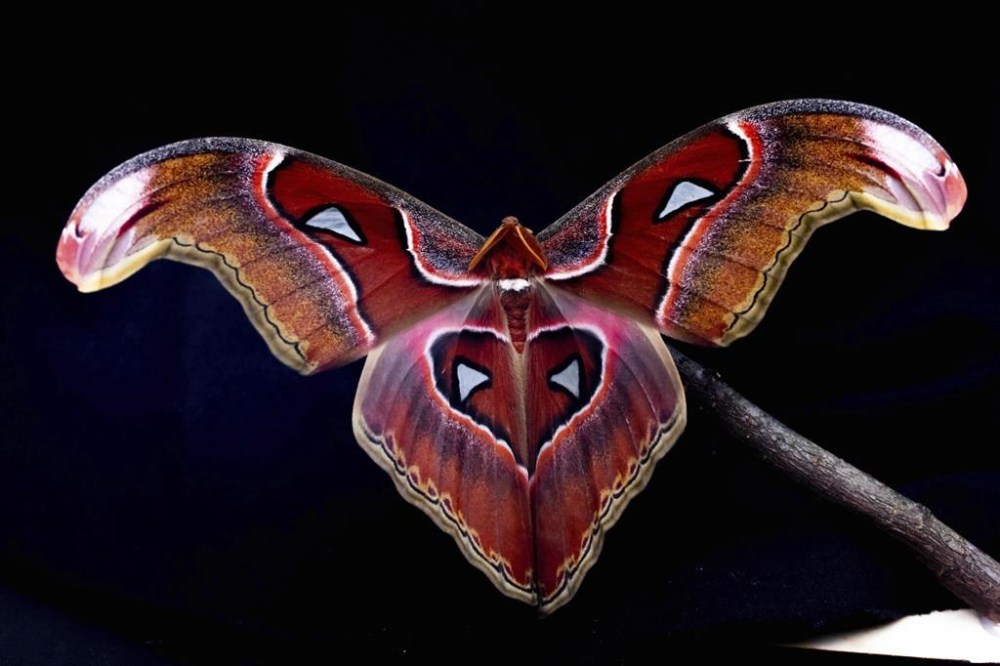
“Insects have a navigational problem,” said Tyson Hedrick, a biologist at the University of North Carolina, Chapel Hill, who was not involved in the research. “They’re accustomed to using light as a cue to know which way is up.”
Insects do not fly directly toward a light source, but actually “tilt their backs toward the light,” said Sam Fabian, an Imperial College London entomologist and co-author of the study published Tuesday in the journal Nature Communications.
That would make sense if the strongest light source was in the sky. But in the presence of artificial lights, the result is midair confusion, not attraction.
For the study, researchers attached tiny sensors to moths and dragonflies in a laboratory to film “motion-capture” video of flight — similar to how filmmakers attach sensors to actors to track their movements.
They also used high-resolution cameras to film insects swirling around lights at a field site in Costa Rica.
This allowed them to study in detail how dragonflies will circle endlessly around light sources, positioning themselves with their backs facing the beams. They also documented that some insects will flip upside down — and often crash land — in the presence of lights that shine straight upward like search lights.
Insect flight was least disrupted by bright lights that shine straight downward, the researchers found.
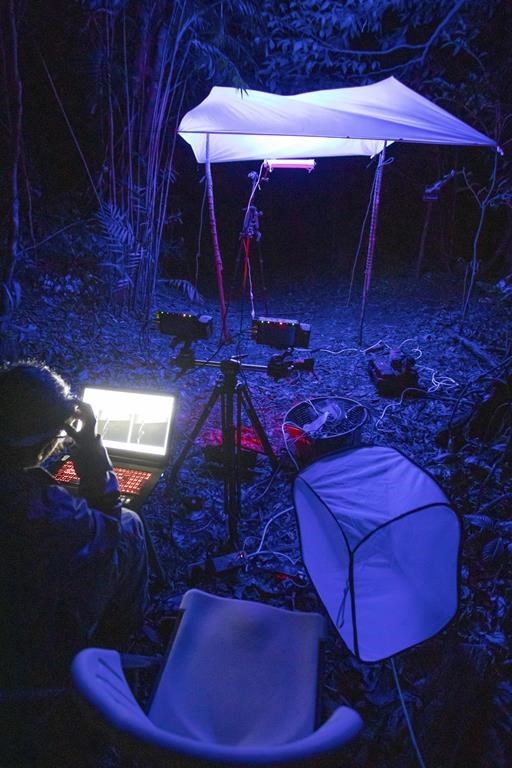
“For millions of years, insects oriented themselves by sensing that the sky is light, the ground is dark” — until people invented artificial lights, said Avalon Owens, a Harvard entomologist who was not involved in the research.
___
The Associated Press Health and Science Department receives support from the Howard Hughes Medical Institute’s Science and Educational Media Group. The AP is solely responsible for all content.