Getting a dental X-ray? A new recommendation says you don’t need a lead apron
Advertisement
Read this article for free:
or
Already have an account? Log in here »
To continue reading, please subscribe:

Digital Subscription
One year of digital access for only $205*
- Enjoy unlimited reading on winnipegfreepress.com
- Read the E-Edition, our digital replica newspaper
- Access News Break, our award-winning app
- Play interactive puzzles
*First annual payment billed as $205.00 + GST for one year. This annual subscription will automatically renew at $233.00 + GST every 52 weeks (10% off the regular annual price of $259.35). Offer available to new and qualified returning subscribers only. Cancel any time.
To continue reading, please subscribe:
Add Free Press access to your Brandon Sun subscription for only an additional
$1 for the first 4 weeks*
- Enjoy unlimited reading on winnipegfreepress.com
- Read the E-Edition, our digital replica newspaper
- Access News Break, our award-winning app
- Play interactive puzzles
*Your next Brandon Sun subscription payment will increase by $1.00 and you will be charged $17.95 plus GST for four weeks. After four weeks, your payment will increase to $24.95 plus GST every four weeks.
Read unlimited articles for free today:
or
Already have an account? Log in here »
Hey there, time traveller!
This article was published 01/02/2024 (981 days ago), so information in it may no longer be current.
Those heavy lead aprons may be on their way out at the dentist office, depending on where you live.
The nation’s largest dental association said Thursday it will no longer recommend the use of lead aprons and thyroid collars on patients who are getting dental X-rays.
There are two main reasons for the change. X-ray beams are now more focused, so there is less concern about radiation hitting other parts of the body. Also, the aprons and collars can sometimes block dentists from getting the images they need.
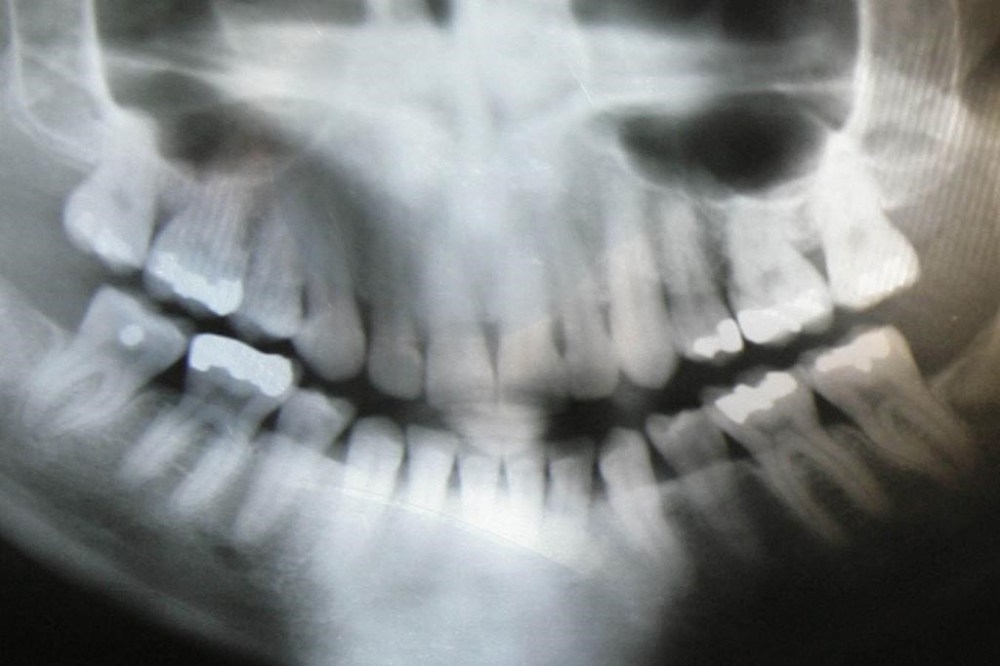
The best thing to lower radiation exposure is to make sure the patient needs the X-ray and to do it right the first time, said Dr. Purnima Kumar, who chairs the American Dental Association Council on Scientific Affairs, which released the recommendation.
Dental X-rays use a relatively small amount of radiation to begin with, she said.
“It’s like taking a flight from, let’s say, from Michigan to San Francisco, it gives you the equivalent of one dental X-ray,” Kumar said.
The association’s recommendation is just that. True change depends on state dental boards, dentists and patients, Kumar said. For example, California state rules require dentists to use the aprons.
Sanjay Mallya, a radiologist and professor at the University of California, Los Angeles, said there is “no hard science,” that the aprons are needed.
“Yet at the same time, we do have the letter of the law that requires that,” said Mallya, who helped write the American Academy of Oral and Maxillofacial Radiology’s recommendation in the fall against the use of lead aprons and thyroid collars. Kumar noted it was that group’s recommendation that spurred the American Dental Association to look at the topic.
The most recent guidance is also backed by medical physicists with the U.S. Food and Drug Administration.

Mallya also said X-rays may cause patients and dentists to be complacent about the things that should be done to prevent unnecessary radiation exposure — such as making sure an X-ray is necessary and using digital X-ray instead of film ones because they use less radiation.
It will take advocacy and education to change more minds around the use of the aprons among patients, dentists and policymakers, he said.
“That is going to be the next step for us,” he said.
___
The Associated Press Health and Science Department receives support from the Robert Wood Johnson Foundation. The AP is solely responsible for all content.