WEATHER ALERT

Time capsules Prized clocks on display at Manitoba Museum

The Mennonite wall clock has marked — with metronomic tick-tock precision — political and societal upheaval throughout the centuries.

Read this article for free:

or

Already have an account? Log in here »

To continue reading, please subscribe:

Subscribe and receive a limited-edition Free Press branded hat or tote.

Digital Subscription

One year of digital access for only $205*

  • Enjoy unlimited reading on winnipegfreepress.com
  • Read the E-Edition, our digital replica newspaper
  • Access News Break, our award-winning app
  • Play interactive puzzles

*First annual payment billed as $205.00 + GST for one year. This annual subscription will automatically renew at $233.00 + GST every 52 weeks (10% off the regular annual price of $259.35). Offer available to new and qualified returning subscribers only. Cancel any time.

To continue reading, please subscribe:

Add Free Press access to your Brandon Sun subscription for only an additional

$1 for the first 4 weeks*

  • Enjoy unlimited reading on winnipegfreepress.com
  • Read the E-Edition, our digital replica newspaper
  • Access News Break, our award-winning app
  • Play interactive puzzles
Start now

*Your next Brandon Sun subscription payment will increase by $1.00 and you will be charged $17.95 plus GST for four weeks. After four weeks, your payment will increase to $24.95 plus GST every four weeks.

Hey there, time traveller!
This article was published 15/02/2024 (892 days ago), so information in it may no longer be current.

The Mennonite wall clock has marked — with metronomic tick-tock precision — political and societal upheaval throughout the centuries.

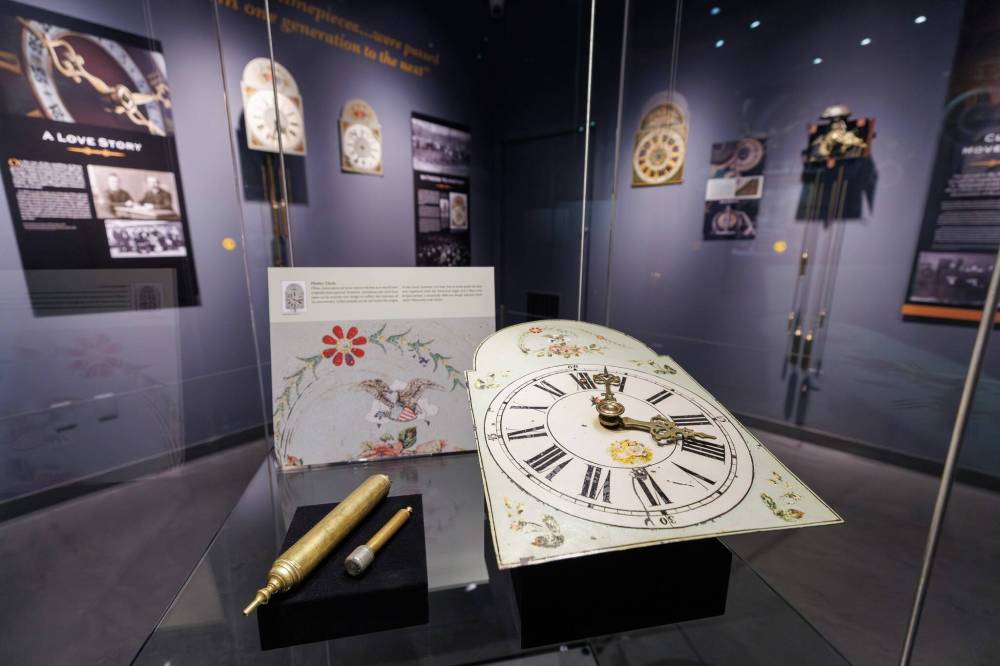
Fifteen are on temporary display at the Manitoba Museum in an exhibition developed by the Kroeger Clocks Heritage Foundation, in partnership with the Mennonite Heritage Village museum.

The timepieces were made between the late 1700s and early 1900s in Mennonite workshops in Ukraine, as meticulous clock builders passed the craft down through generations.
MIKE DEAL / WINNIPEG FREE PRESS
                                The ‘Mielitz’ clock was made by Abraham Kroeger (1791–1872) in Rosenthal, Russian Empire (now Ukraine), ca. 1835.

MIKE DEAL / WINNIPEG FREE PRESS

The ‘Mielitz’ clock was made by Abraham Kroeger (1791–1872) in Rosenthal, Russian Empire (now Ukraine), ca. 1835.

The clocks were prized possessions and were carefully transported to Manitoba by the Mennonite diaspora. Beyond providing rhythmic structure to the day, they represent Mennonite stories of migration, ingenuity, art and life.

The exhibit, which opened last October, is set to close Feb. 25.
MIKE DEAL / WINNIPEG FREE PRESS
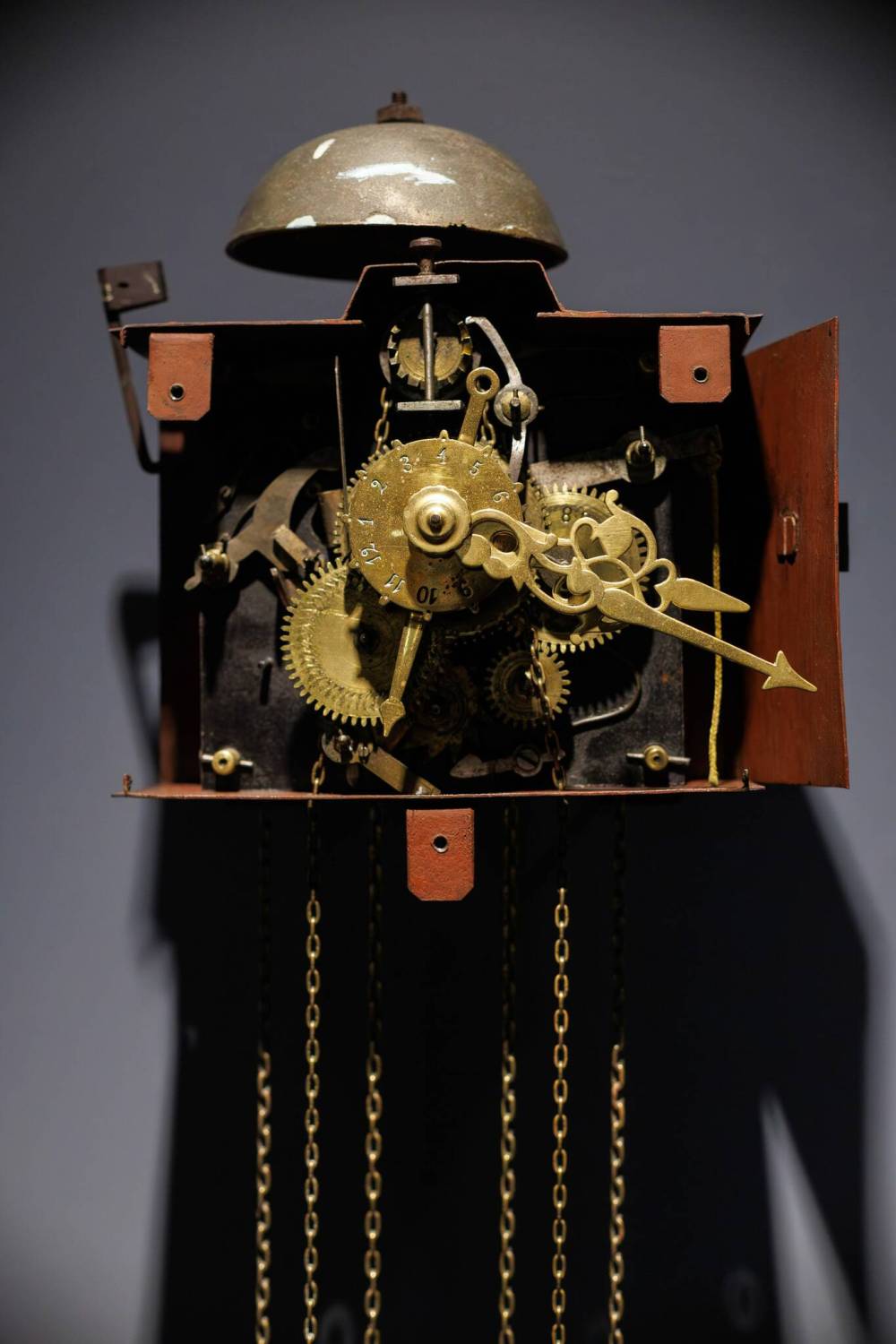
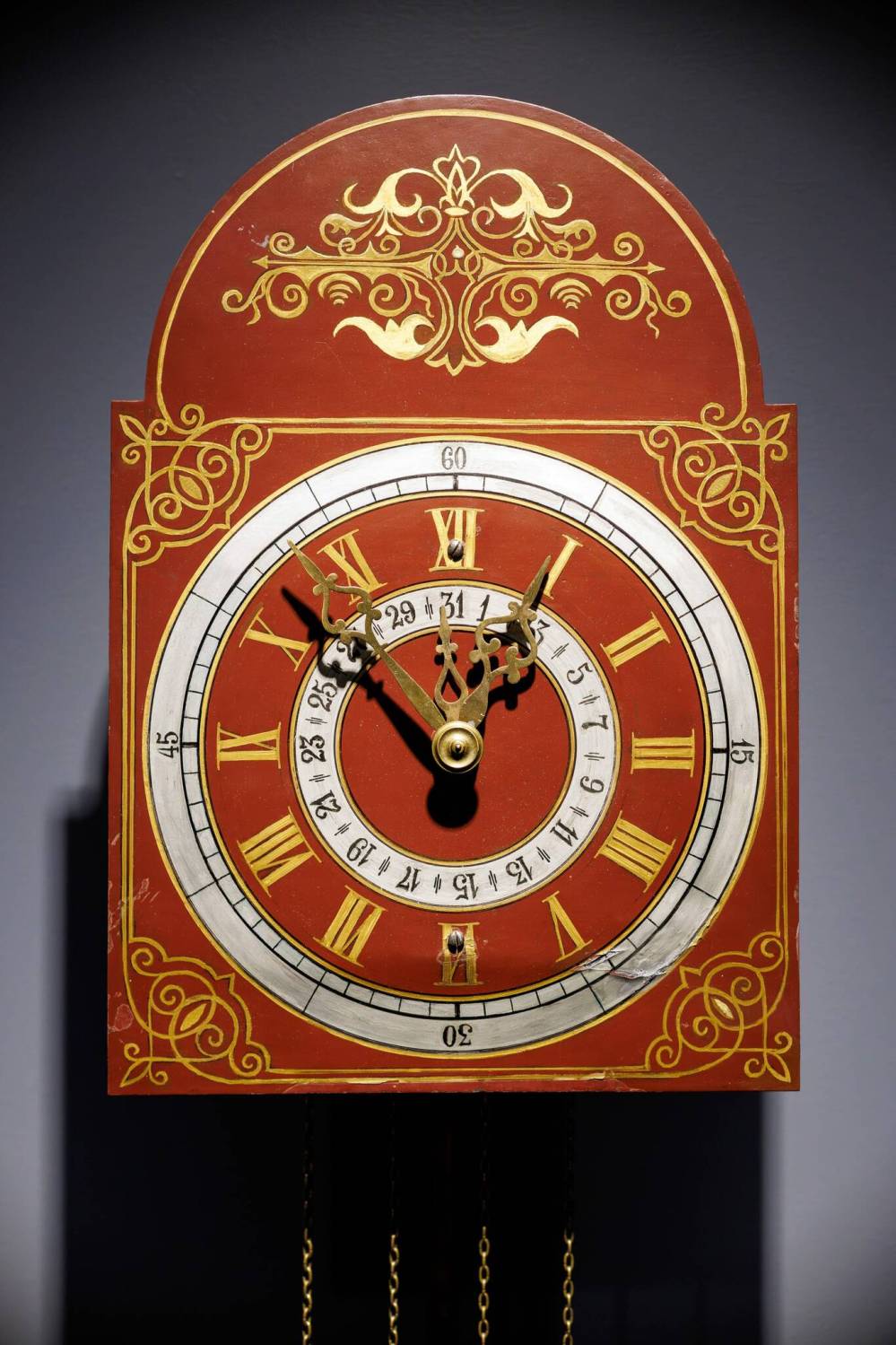
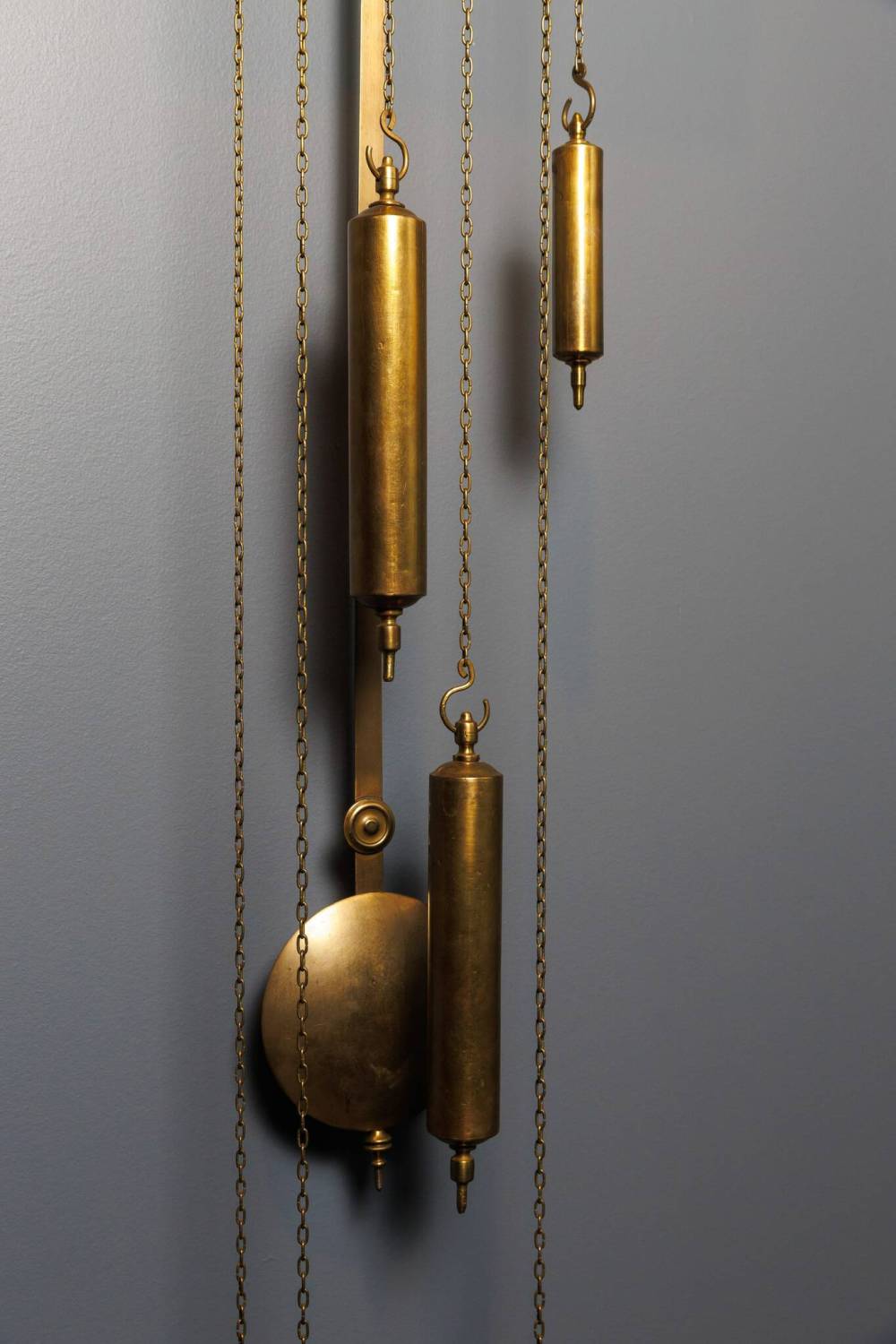
                                This “Cadillac Clock” has all the bells and whistles! It demonstrates the highest sophistication of Mennonite wall clocks, telling the hour, minute, month, and day, and also features an alarm setting (gears and mechanisms, above and below). In contrast to the rope-driven clock, this one has a chain drive. Rope drives required frequent cleaning, as the fibres clogged the mechanism. Chain drives were more expensive but practical.
MIKE DEAL / WINNIPEG FREE PRESS

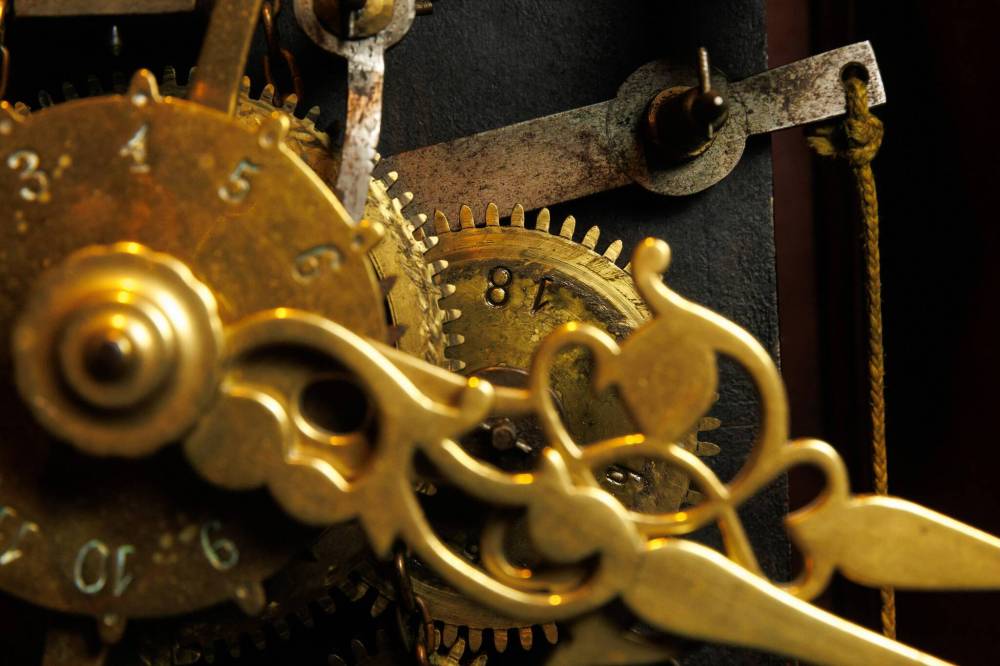
This “Cadillac Clock” has all the bells and whistles! It demonstrates the highest sophistication of Mennonite wall clocks, telling the hour, minute, month, and day, and also features an alarm setting (gears and mechanisms, above and below). In contrast to the rope-driven clock, this one has a chain drive. Rope drives required frequent cleaning, as the fibres clogged the mechanism. Chain drives were more expensive but practical.

MIKE DEAL / WINNIPEG FREE PRESS
                                The “Cadillac” clock showcases the sophistication and ingenuity of the timepieces.
MIKE DEAL / WINNIPEG FREE PRESS

The “Cadillac” clock showcases the sophistication and ingenuity of the timepieces.

MIKE DEAL / WINNIPEG FREE PRESS
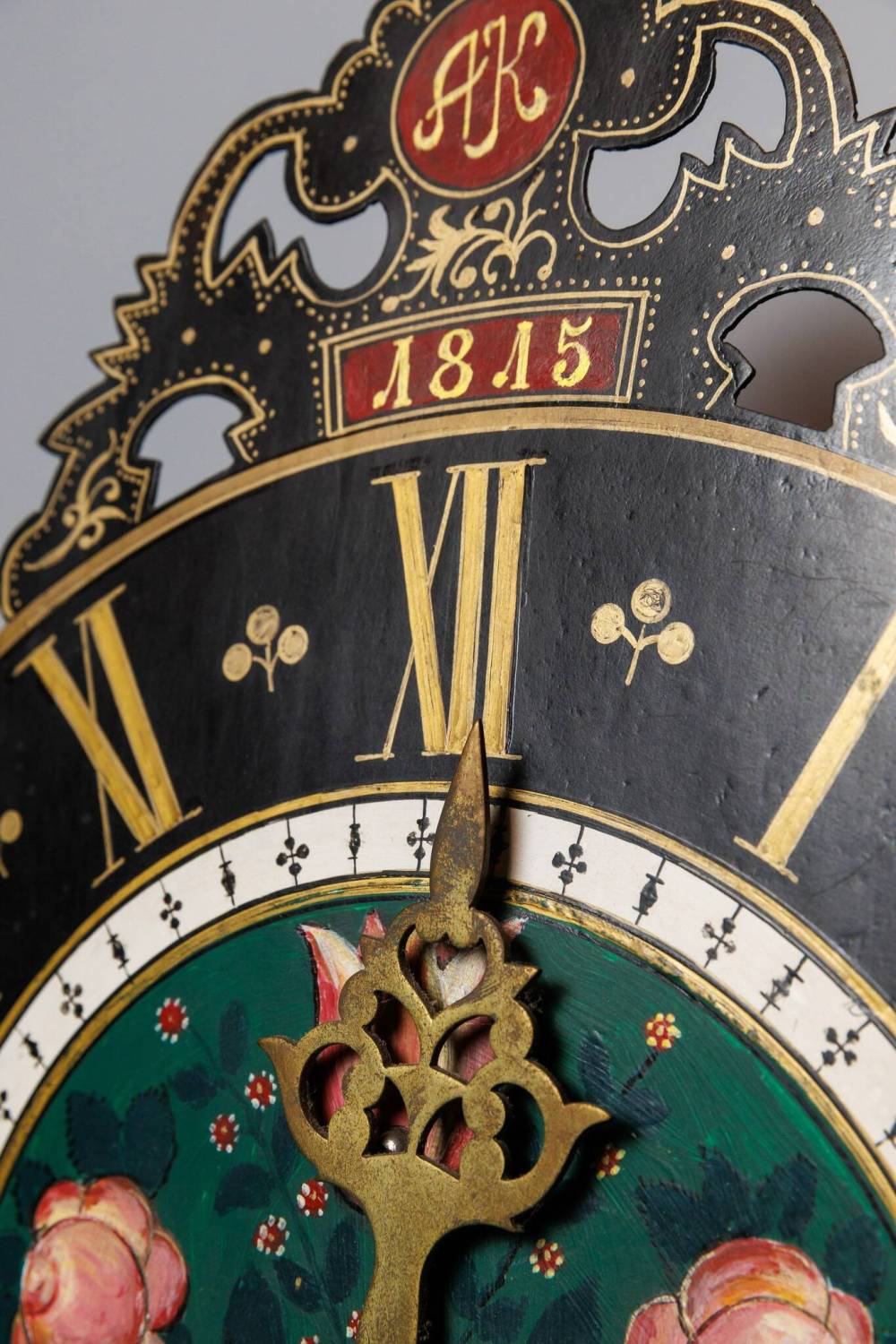
                                Abraham Kroeger (1791–1872) likely made this clock in Rosenthal around 1815.
MIKE DEAL / WINNIPEG FREE PRESS

Abraham Kroeger (1791–1872) likely made this clock in Rosenthal around 1815.

MIKE DEAL / WINNIPEG FREE PRESS
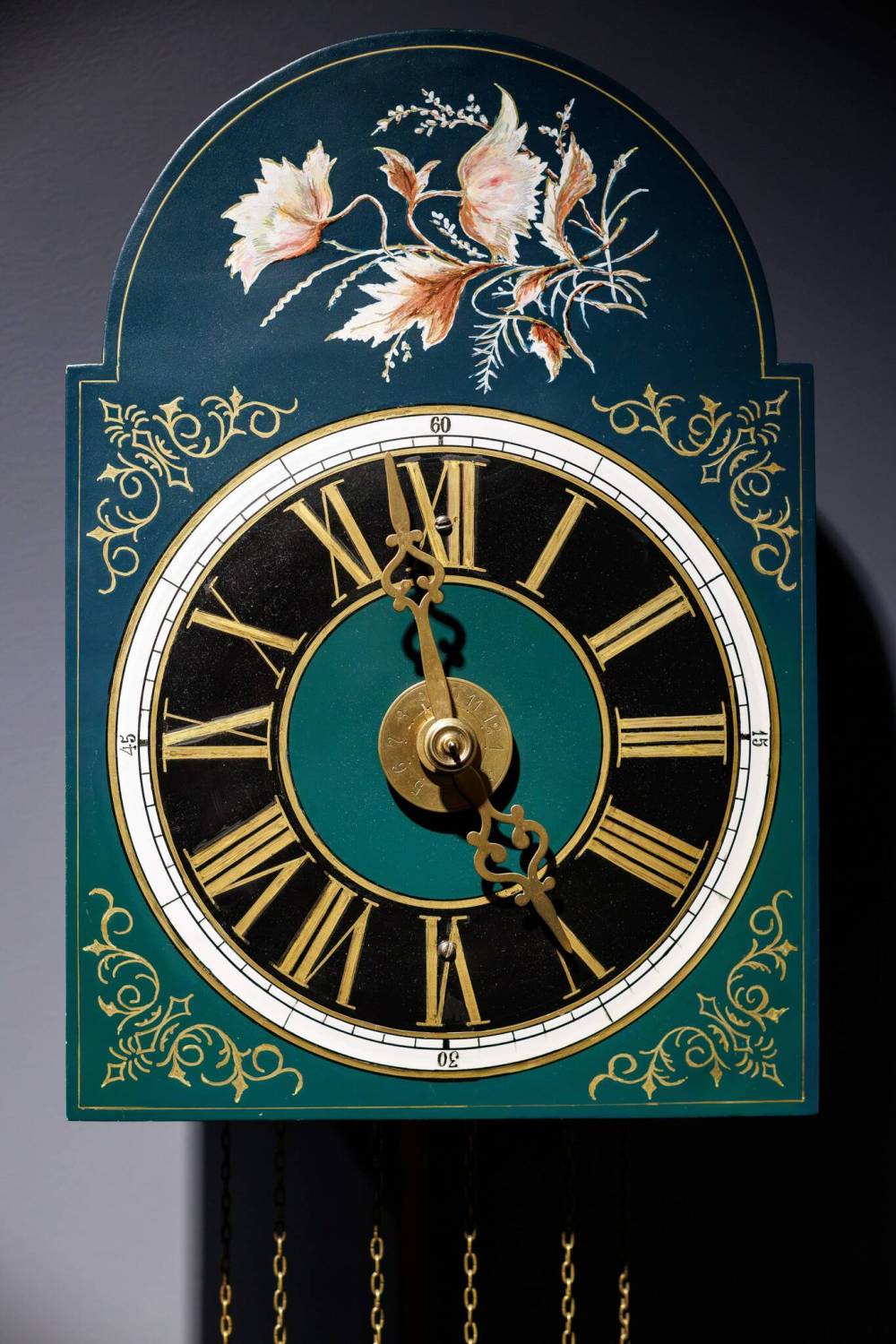
                                The 'Schulz' clock was made during the peak period of Kroeger clock manufacturing, between 1890 and 1910. It was commissioned by a wealthy Mennonite factory owner and would have been one of the most expensive models Kroeger Clockmakers made.
MIKE DEAL / WINNIPEG FREE PRESS

The 'Schulz' clock was made during the peak period of Kroeger clock manufacturing, between 1890 and 1910. It was commissioned by a wealthy Mennonite factory owner and would have been one of the most expensive models Kroeger Clockmakers made.

MIKE DEAL / WINNIPEG FREE PRESS
On the eve of the wedding of Anna Zacharias and Peter Schulz in 1893, the groom's father presented the couple with a Kroger clock to celebrate their marriage. The beautiful clock would become part of their family heritage for generations to follow. The couple's happiness, however, was not to last. In 1914, as war broke out in Europe, Peter died of a heart condition and left Anna a widow. In 1927, the family journeyed across the Atlantic Ocean to Canada, with the precious clock packed in their luggage, a reminder of life and family in Russia. Like Anna and Peter, Mennonite couples often received wall clocks as wedding gifts. Clocks represented a new start for young couples and symbols of prosperity and legacy as they were passed down from one generation to the next.
MIKE DEAL / WINNIPEG FREE PRESS

On the eve of the wedding of Anna Zacharias and Peter Schulz in 1893, the groom's father presented the couple with a Kroger clock to celebrate their marriage. The beautiful clock would become part of their family heritage for generations to follow. The couple's happiness, however, was not to last. In 1914, as war broke out in Europe, Peter died of a heart condition and left Anna a widow. In 1927, the family journeyed across the Atlantic Ocean to Canada, with the precious clock packed in their luggage, a reminder of life and family in Russia. Like Anna and Peter, Mennonite couples often received wall clocks as wedding gifts. Clocks represented a new start for young couples and symbols of prosperity and legacy as they were passed down from one generation to the next.

MIKE DEAL / WINNIPEG FREE PRESS 
                                The ‘Zaporoshye’ clock belonged to a family that, despite extreme hardship and suffering, stayed in the Soviet Union.

MIKE DEAL / WINNIPEG FREE PRESS

The ‘Zaporoshye’ clock belonged to a family that, despite extreme hardship and suffering, stayed in the Soviet Union.

MIKE DEAL / WINNIPEG FREE PRESS
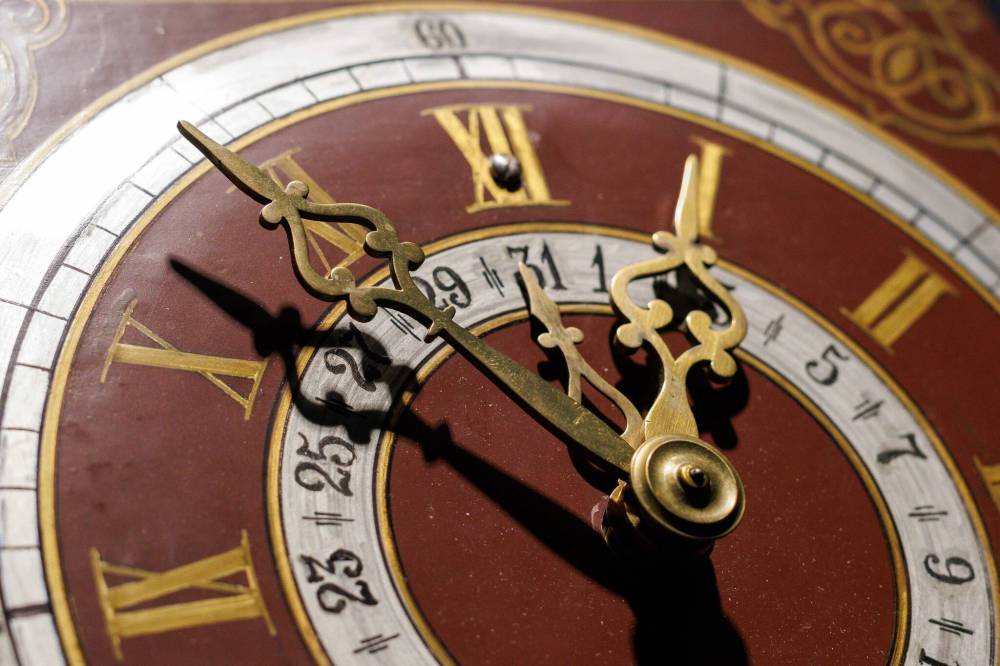
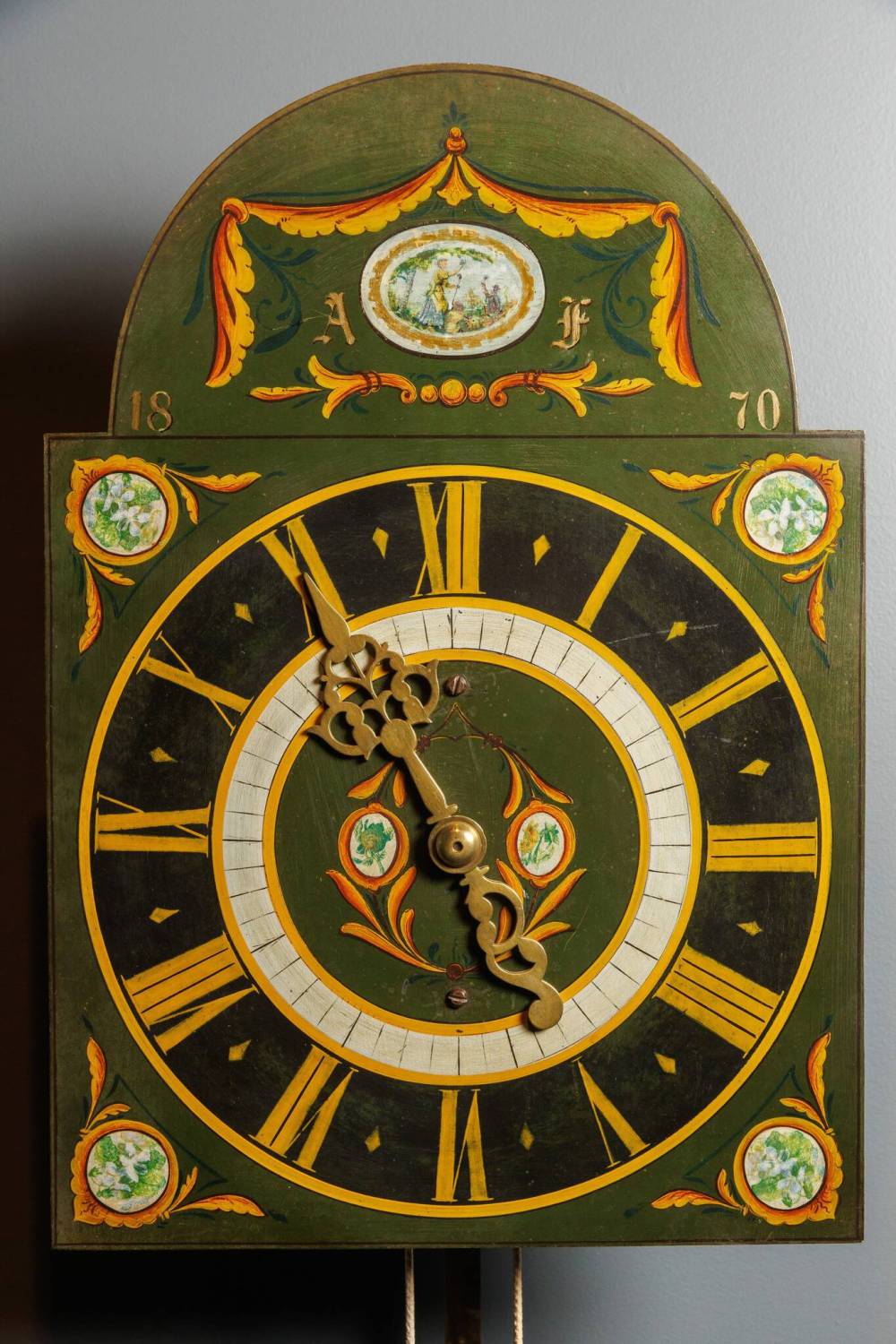
This clock beautifully illustrates the decal decorations that adorned Mennonite clocks at the turn of the twentieth century. Replacing hand-painted artwork on clock faces with decals became more efficient when the Industrial Revolution made large-scale production possible.
MIKE DEAL / WINNIPEG FREE PRESS

This clock beautifully illustrates the decal decorations that adorned Mennonite clocks at the turn of the twentieth century. Replacing hand-painted artwork on clock faces with decals became more efficient when the Industrial Revolution made large-scale production possible.

MIKE DEAL / WINNIPEG FREE PRESS 
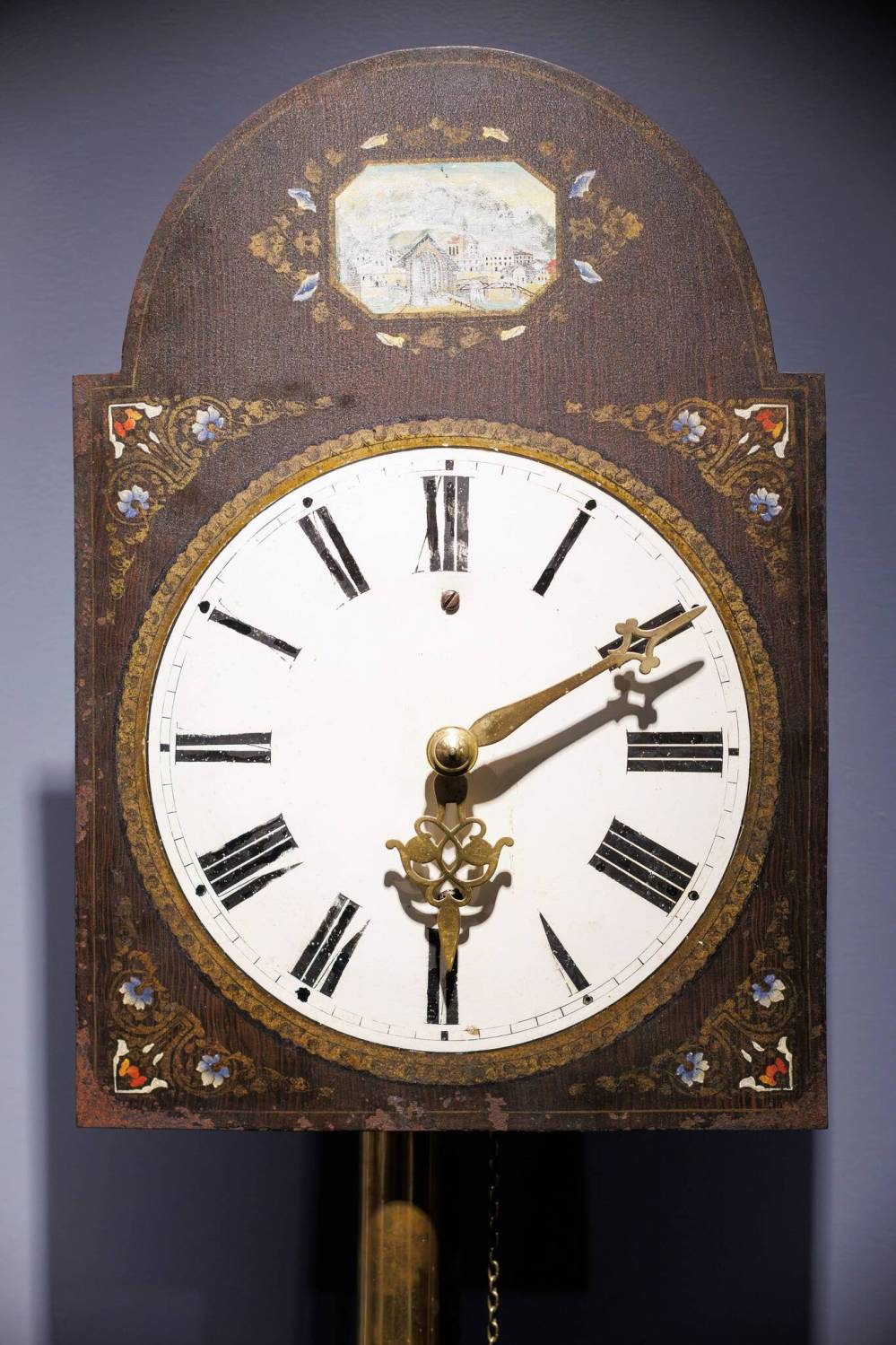
                                The ‘Lilac’ Mandtler (1870) is a one-handed clock. At the time, knowing the exact minute of the day was not crucial.
MIKE DEAL / WINNIPEG FREE PRESS

The ‘Lilac’ Mandtler (1870) is a one-handed clock. At the time, knowing the exact minute of the day was not crucial.

MIKE DEAL / WINNIPEG FREE PRESS 
                                Gerhard Mandtler made this clock in 1865. The painted wood grain pattern was unique to Mennonite clocks.
MIKE DEAL / WINNIPEG FREE PRESS

Gerhard Mandtler made this clock in 1865. The painted wood grain pattern was unique to Mennonite clocks.

MIKE DEAL / WINNIPEG FREE PRESS
Fifteen Mennonite wall clocks are on temporary display at the Manitoba Museum in an exhibition developed by the Kroeger Heritage Clocks Foundation, in partnership with the Mennonite Heritage Museum.

MIKE DEAL / WINNIPEG FREE PRESS

Fifteen Mennonite wall clocks are on temporary display at the Manitoba Museum in an exhibition developed by the Kroeger Heritage Clocks Foundation, in partnership with the Mennonite Heritage Museum.

Mike Deal

Mike Deal
Photojournalist

Mike Deal started freelancing for the Winnipeg Free Press in 1997. Three years later, he landed a part-time job as a night photo desk editor.

Our newsroom depends on a growing audience of readers to power our journalism. If you are not a paid reader, please consider becoming a subscriber.

Our newsroom depends on its audience of readers to power our journalism. Thank you for your support.

History

Updated on Thursday, February 15, 2024 2:42 PM CST: Corrects location of exhibit

Updated on Saturday, February 17, 2024 10:17 AM CST: Corrects name of the museums

Report Error Submit a Tip

More Stories

Trailblazer returns to share success, inspire next generation

Grace Penner 6 minute read Preview

Trailblazer returns to share success, inspire next generation

Grace Penner 6 minute read 5:14 PM CDT

Starstruck kids and fans zigzagged throughout the rink, anxiously waiting to get an autograph from Kati Tabin and to see their role model on the same side of the glass.

Tabin, Montreal Victoire defender and Team Canada silver medallist, on Saturday came home to the rink where it all began, the Oakbank Community Club. She brought the PWHL championship trophy, the Walter Cup, won in her third season with the club, as well as her 2026 Milan Cortina Olympic medal.

The arena was packed to the brim with fans from all over coming to see Tabin — the local player who made history in women’s hockey. Hundreds of enthusiasts of all ages lined up with their Victoire or Team Canada merchandise, some waiting over two hours to see their idol.

Eight-year-old Loxley Cierzan came with her mother, Ainsley, and other family members to meet the one and only Tabin. Cierzan has loved seeing other girls grace the ice and play the competitive sport she adores. When the PWHL takeover stopped in Winnipeg in March, she not only got to watch the game but also a practice beforehand where Tabin signed her Victoire hat.

Read
5:14 PM CDT

Animal rescue groups shaken by advocate’s death

Carol Sanders 4 minute read Preview

Animal rescue groups shaken by advocate’s death

Carol Sanders 4 minute read Yesterday at 5:40 PM CDT

A week after an animal rescue volunteer died doing what she loved at Sandy Bay First Nation, the charity she dedicated herself to has paused rescues as groups rally to prevent another mauling.

Winnipeg’s Amanda Nobiss, 37, was found dead July 17 after police were contacted by a friend trying to locate her. She often visited the community 180 kilometres northwest of Winnipeg to save animals.

Several “aggressive dogs” were found near where Nobiss’s body was located, Manitoba First Nation Police Service has said. It did not respond Friday when asked for an update on its investigation into her death.

“What happened is the most tragic, heartbreaking thing that could have possibly happened,” said Chelsea Kork, president of K9 Advocacy Manitoba, the charity Nobiss volunteered with.

Read
Yesterday at 5:40 PM CDT

Up to the challenge

Zoe Pierce 3 minute read Preview

Up to the challenge

Zoe Pierce 3 minute read 6:13 PM CDT

There may not be another restaurant in Manitoba that can say it has welcomed visitors from as many communities across the province and beyond as the Somerset Food Bar & Lounge has this summer.

In just over a two week span, visitors from more than 100 towns have come out to the family-owned restaurant tucked away in Somerset, a community of roughly 450 people in the Pembina Valley 130 kilometres southwest of Winnipeg.

It started as a challenge, “60 Towns in 60 Days,” where the restaurant wanted to document how many different places they could reach, as it often sees people travelling across Canada stop at the restaurant. The goal was also to encourage people to make a drive they normally wouldn’t.

“The more we started sharing, the more people really started getting behind it, and it turned into this really big thing fairly quickly,” said Jay Friesen, restaurant manager.

Read
6:13 PM CDT

Safety assessment planned following drownings

Nicole Buffie 4 minute read Preview

Safety assessment planned following drownings

Nicole Buffie 4 minute read Thursday, Jul. 23, 2026

The Manitoba government will conduct an assessment of high-risk trails and areas in its parks system following the drownings of two siblings at Nutimik Lake in the Whiteshell.

Environment Minister Mike Moyes has ordered his department to identify high-risk areas after Maximo Au Ramirez, 10, slipped on rocks near Sturgeon Falls and fell in the lake Saturday. His brother, Aaron Au Ramirez, 13, went in to try to save him.

The body of Aaron was recovered Thursday evening, 24 hours after his brother’s body was found Wednesday.

“We have a lot of beautiful parks and spaces, but to flag any areas that could need greater improvements for safety, and so we’re going to take a really comprehensive approach to ensuring that Manitobans can enjoy nature, but do it in a way that’s safe,” Moyes said Thursday.

Read
Thursday, Jul. 23, 2026

Daycare grapples with five-year-old’s outbursts, choking incidents

Maggie Macintosh 4 minute read Preview

Daycare grapples with five-year-old’s outbursts, choking incidents

Maggie Macintosh 4 minute read Yesterday at 6:09 PM CDT

A Windsor Park child-care facility is weighing a five-year-old’s right to care versus the safety of other children who have been choked.

Little People’s Place expelled a pre-schooler in the spring in response to his aggressive behaviour toward other children and staff.

The child’s family has appealed to the province for him to be reinstated.

The case is raising concerns about inclusion support resources and measures to protect everyone at the Cottonwood Road daycare.

Read
Yesterday at 6:09 PM CDT

Vacant Bay store on road to redevelopment, St. Vital Centre owner says

Gabrielle Piche 6 minute read Preview

Vacant Bay store on road to redevelopment, St. Vital Centre owner says

Gabrielle Piche 6 minute read Yesterday at 5:29 PM CDT

Entertainment attractions are coming to fill the former Hudson’s Bay space in St. Vital Centre.

Montreal-based real estate firm Leyad, the south Winnipeg mall’s owner, says it is finalizing an agreement for the vacant property. Further details should appear in the next couple months, said president Henry Zavriyev.

“We’re looking at what other types of experiences we can bring to the mall that aren’t just typical retail,” he said during a visit to Winnipeg this week.

“We want to create an experience where you can just come to the mall, hang out here for hours, no matter if you’re a kid, an adult, a retiree.”

Read
Yesterday at 5:29 PM CDT